

Peru is a country defined by the grandeur of the Andes, which stretch along the western edge of South America and shape much of its geography, culture, and biodiversity. The mountains of Peru are not only scenic landmarks but also living testimonies of history and tradition. Exploring these mountains allows travelers to experience ecosystems that change dramatically with altitude, from high-altitude plains and glaciers to cloud forests and fertile valleys, while tracing ancient paths that connect communities and archaeological sites.
This guide provides an in-depth overview of the top ten treks and experiences across the Andes mountains of Peru, combining geographical, cultural, and practical information for travelers, researchers, and enthusiasts who wish to fully understand and enjoy these remarkable regions.
You might also be interested in: Lesser Known Treks in Peru: Hidden Trails Beyond Machu Picchu
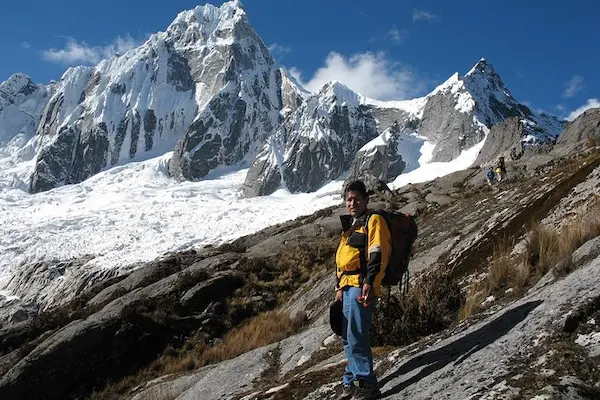
Geography and Formation of the Mountains of Peru
The mountains of Peru are part of the vast Andes mountain range, formed by the subduction of the Nazca Plate beneath the South American Plate. This tectonic activity has created volcanic peaks, deep valleys, and glaciers that feed rivers and sustain ecosystems. The geological complexity of these mountains contributes to their diversity in landscapes and hiking experiences.
Cordillera Divisions
Peru’s Andes are divided into three main ranges. The Western Cordillera runs parallel to the Pacific coast and contains active volcanoes such as Misti near Arequipa, combining arid terrains with glacial peaks. The Central Cordillera features rugged terrain, deep canyons, and high plateaus, including peaks like Huaytapallana and the northern Huascarán area. The Eastern Cordillera stretches toward the Amazon Basin, with cloud forests and unique biodiversity. Each range presents distinct climate conditions, flora, and fauna, essential knowledge for planning trekking routes through the mountains in Peru.
Climate Zones and Altitude
Altitude creates dramatic microclimates across the Andes mountains of Peru. The Quechua zone, between 2,300 and 3,500 meters, has mild temperatures suitable for agriculture. The Suni and Puna zones, ranging from 3,500 to 4,800 meters, feature sparse vegetation adapted to cold conditions. Above 4,800 meters, landscapes are dominated by glaciers and rocky terrain, requiring physical preparation and acclimatization for any expedition.
Inca Trail to Machu Picchu
The Inca Trail is one of the most iconic trekking routes in the mountains of Peru, blending natural beauty with rich cultural heritage. The trail spans approximately 42 kilometers, passing through cloud forests, alpine meadows, and ancient stone paths, with panoramic views of the surrounding mountain ranges.
Historical and Archaeological Significance
Constructed by the Incas to connect ceremonial and urban centers, the trail includes notable archaeological sites such as Wiñay Wayna, Intipata, and Phuyupatamarca. The final approach to Machu Picchu through the Sun Gate showcases how architecture harmoniously integrates with the Andes mountains of Peru, revealing centuries-old engineering adapted to the terrain.
Trekking Considerations
The trail reaches elevations of over 4,200 meters, making acclimatization critical. Permits must be obtained months in advance due to high demand. The Inca Trail requires physical endurance but rewards trekkers with an unparalleled combination of history, nature, and panoramic mountain landscapes.
You might also be interested in: The Mita System: Inca Obligation and Its Colonial Transformation
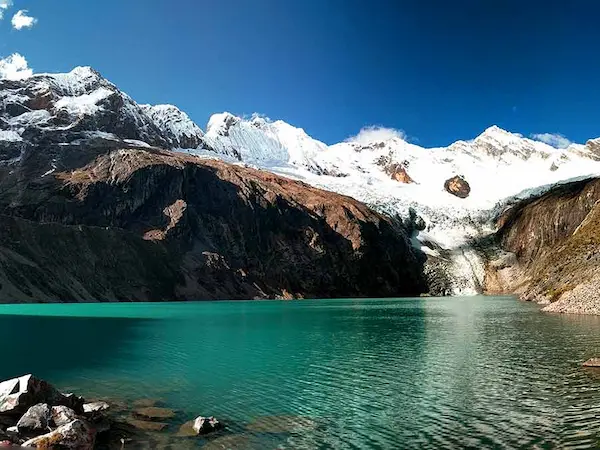
Santa Cruz Trek in the Cordillera Blanca
The Santa Cruz Trek offers breathtaking alpine scenery, glacial lakes, and secluded valleys, representing the pristine beauty of the mountains of Peru. This trek, typically completed in four days, combines dramatic peaks, turquoise lakes, and diverse ecosystems.
Landscape and Biodiversity
Trekking through Santa Cruz, visitors encounter Laguna 69 and iconic peaks such as Alpamayo and Taulliraju. Vegetation includes Polylepis forests and high-altitude grasslands, while wildlife ranges from Andean condors to vizcachas. These features illustrate the ecological richness that characterizes the mountains in Peru.
Trek Logistics
The route requires moderate trekking experience and high-altitude acclimatization. The dry season, from May to September, provides the best conditions, while heavy rains during other months can make trails slippery and dangerous.
Ausangate Trek
Ausangate is a sacred mountain known for its extreme altitude and cultural significance. Its circuit offers access to glacial landscapes and colorful lakes, including the famous Rainbow Mountain (Vinicunca), formed by mineral deposits over millennia.
Sacred Mountain and Rainbow Mountain
The trek around Ausangate allows travelers to witness local communities preserving ancient traditions, from textile weaving to rituals dedicated to Apus, the mountain spirits. This connection between culture and landscape makes the trek one of the most profound experiences in the mountains of Peru.
Preparation and Acclimatization
With elevations exceeding 5,200 meters, proper acclimatization is essential. Hiring local guides ensures safety and provides insights into the region’s geography, wildlife, and cultural practices.
Choquequirao Trek
Known as the “sister city of Machu Picchu,” Choquequirao stands out for its remote location and remarkable archaeological ruins embedded in steep mountain slopes.
Nature and Archaeology
The trail traverses cloud forests and deep valleys, habitats for species like the spectacled bear and numerous endemic birds. Inca terraces and temples reflect sophisticated engineering techniques adapted to challenging mountainous terrain, demonstrating the ingenuity of ancient civilizations in the Andes mountains of Peru.
Trekking Challenges
Reaching Choquequirao involves steep ascents and uneven paths, requiring significant physical effort. The experience offers solitude, deep cultural immersion, and contact with largely untouched ecosystems.
Huascarán Trek
Huascarán, the highest peak in Peru, is located within a national park featuring glaciers, lakes, and high-altitude grasslands. Trekking in this area provides an opportunity to experience the extreme biodiversity and geography of the mountains of Peru.
Glacial Landscapes and Wildlife
Lakes such as Laguna Parón and Laguna Llanganuco reflect the surrounding snowy peaks. Wildlife includes species such as the taruca, Andean fox, and condor, highlighting the ecological significance of these high-altitude habitats in the Andes mountains of Peru.
Preparation and Safety
Trekking requires careful acclimatization, physical fitness, and guidance from experienced local guides to navigate glaciers, steep ascents, and varying terrain safely.
You might also be interested in: Hidden Trails of the Andes: Ancient Routes, Timeless Landscapes
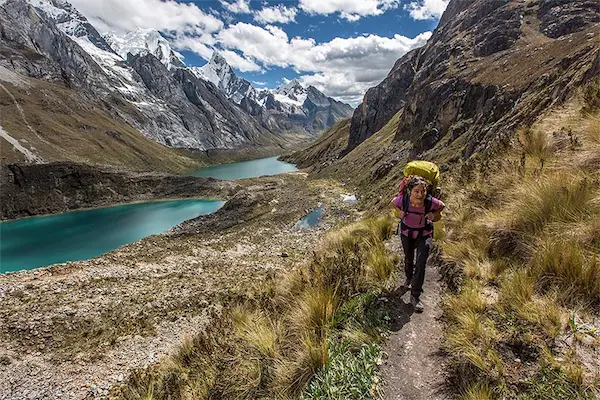
Cordillera Huayhuash Circuit
The Cordillera Huayhuash Circuit is one of the most remote and challenging trekking routes in Peru, attracting experienced hikers who seek dramatic high-altitude landscapes and glacial panoramas. Spanning approximately 130 kilometers, the circuit traverses jagged peaks, alpine meadows, and turquoise glacial lakes, offering an immersive experience in the mountains of Peru.
Peaks and Natural Highlights
The circuit is renowned for peaks such as Yerupajá (6,635 meters) and Siula Grande (6,344 meters), which present breathtaking alpine scenery. Lakes such as Jahuacocha and Carhuacocha reflect the surrounding mountains, while the flora includes high-altitude grasses and cushion plants adapted to extreme conditions. The wildlife is equally remarkable, with Andean condors soaring above the valleys and occasional sightings of mountain vizcachas. These features illustrate the unique ecosystems that define the Andes mountains of Peru.
Trekking Logistics
The trek typically takes seven to ten days, requiring a high level of physical preparation and self-sufficiency. Camping along the circuit is necessary, as there are limited facilities. Local guides are recommended for navigation, safety, and to provide insights into the geography and ecology of the region.
Lares Trek
The Lares Trek offers an alternative to the more crowded Inca Trail, emphasizing cultural immersion alongside natural beauty. This route passes through highland valleys, glacial lakes, and traditional Andean communities, providing a glimpse into the daily life and customs of the region.
Cultural and Natural Significance
Along the trek, travelers can observe weaving traditions, agricultural practices, and local festivals, which are intimately connected to the mountains of Peru. The landscape features snow-capped peaks, verdant valleys, and high-altitude lakes, showcasing the ecological diversity of the Andes mountains of Peru.
Trekking Considerations
The Lares Trek typically takes three to five days. Hikers must be prepared for moderate altitude challenges and changing weather conditions. Natural hot springs along the route provide rest and recuperation, making this trek suitable for those seeking both adventure and cultural engagement.
Salkantay Trek
The Salkantay Trek combines high-altitude mountain landscapes with subtropical forests, creating a unique contrast within the mountains of Peru. It is a five-day trek that traverses snowy peaks, lush valleys, and river gorges.
Highlights and Biodiversity
Salkantay Peak, at 6,271 meters, dominates the skyline, while surrounding cloud forests support diverse flora and fauna, including orchids, bromeliads, and the elusive Andean bear. The route showcases the ecological richness of the mountains in Peru, highlighting how altitude and climate shape ecosystems in the Andes.
Trekking Preparation
Hikers should be prepared for temperature fluctuations, ranging from freezing nights to warm daytime conditions in the lower valleys. Guided tours are recommended for navigation, safety, and educational context, providing insights into the historical and natural significance of the region.
Vilcabamba Trek
The Vilcabamba Trek is historically significant as the final refuge of the Inca Empire. Its remote and rugged terrain offers solitude and a deep connection with the mountains of Peru.
Nature and Archaeology
The trek passes through dense forests and steep valleys, with archaeological remnants scattered throughout the landscape. Wildlife includes spectacled bears, parrots, and high-altitude orchids, creating a rich ecosystem unique to the Andes mountains of Peru.
Trekking Logistics
The Vilcabamba Trek requires good physical conditioning due to uneven trails and significant elevation changes. Guides provide essential knowledge of local history, safety procedures, and ecological features, ensuring a complete understanding of the natural and cultural environment.
Cordillera Blanca Snow-Capped Peaks Exploration
For experienced mountaineers, the Cordillera Blanca offers a high-altitude adventure through some of the most impressive snow-capped peaks in the mountains of Peru. This region contains numerous peaks exceeding 6,000 meters, glaciers, and ice fields that provide a challenge for climbers and a visual feast for nature enthusiasts.
Flora, Fauna, and Geography
The high-altitude environment supports specialized flora such as cushion plants and alpine grasses. Wildlife includes Andean condors and mountain vizcachas. The glaciers feed into pristine lakes and rivers, illustrating the ecological importance of these Andes mountains of Peru.
Safety and Mountaineering Considerations
Climbing in this area requires technical skills, proper acclimatization, and experience in navigating snow and ice terrain. Guided expeditions are strongly recommended to ensure safety and to provide insights into the geological, ecological, and cultural significance of the Cordillera Blanca.

Practical Tips for Trekking the Mountains of Peru
When planning a trek in the mountains of Peru, understanding seasonal patterns, altitude adaptation, and cultural context is essential. The dry season, from May to September, offers the best conditions, while rainy months can make trails slippery and challenging. Permits are required for certain routes, such as the Inca Trail, and hiring local guides enhances both safety and the educational experience.
Acclimatization is crucial for preventing altitude sickness, as elevations in the Andes mountains of Peru frequently exceed 4,000 meters. Trekking gear should include sturdy boots, layered clothing for temperature variations, rain protection, and trekking poles. Engaging respectfully with local communities provides cultural insights and supports the preservation of traditions tied to the mountains.
Cultural Significance of the Mountains in Peru
Beyond their natural beauty, the mountains of Peru are deeply embedded in Andean culture. Many peaks are considered sacred, or Apus, and play central roles in rituals and festivals. These traditions reflect a profound connection between the communities and their environment, highlighting how cultural practices and natural landscapes are intertwined. Understanding this spiritual dimension enhances the trekking experience and appreciation for the historical and ecological importance of the Andes mountains of Peru.
Conclusion
The mountains of Peru provide an unparalleled combination of adventure, natural splendor, and cultural richness. From the well-known Inca Trail to the remote Huayhuash Circuit, each trek offers unique perspectives on Peru’s geography, biodiversity, and history. Careful planning, respect for local culture, and awareness of environmental conditions allow travelers to experience the Andes mountains of Peru safely and meaningfully. For anyone seeking both exploration and education, these mountains offer some of the most rewarding experiences in the world.
