
When travelers plan their journey to Peru, the high-altitude wonders of Cusco and the ancient citadel of Machu Picchu often dominate the conversation. However, located in the southern heart of the Arequipa region lies a geological giant that commands equal respect: the Colca Canyon. Known as one of the deepest canyons in the world, reaching depths of over 3,270 meters (10,725 feet) the Colca Canyon is a place where nature’s raw power meets centuries of resilient human history.
At Climb Sunday, we view the Colca Canyon not just as a destination, but as an essential extension of the Peruvian experience. Whether you are coming from our base in Calca or traveling from the White City of Arequipa, the canyon offers a sensory explosion of volcanic peaks, thermal waters, and the iconic flight of the Andean Condor. In this definitive guide, we will explore why the Colca Canyon should be the cornerstone of your next adventure, breaking down the logistics, the difficulty levels, and the hidden gems that only a local expert can reveal.
You might also be interested in: Rainbow Mountain vs Palccoyo: Choosing the Right Trek for Your Fitness Level
The Geology and Grandeur of the Abyss
To understand the Colca Canyon, one must first understand the volcanic forces that shaped it. Situated in the “Ring of Fire,” the canyon is flanked by massive volcanoes like Sabancaya and Ampato. This isn’t just a valley; it’s a tectonic rift carved by the Colca River over millions of years.
A Comparative Perspective
Many visitors from the USA are familiar with the Grand Canyon in Arizona. When comparing the two, the Colca Canyon is roughly twice as deep. However, unlike the arid, largely uninhabited depths of the Grand Canyon, the Colca Canyon is a “living canyon.” Its slopes are covered in ancient agricultural terraces that are still in use today, creating a green, stepped landscape that defies the verticality of the terrain. The geological diversity within the Colca Canyon is staggering, ranging from high-altitude desert plateaus at the rim to lush, tropical microclimates at the bottom near the river.
The Volcanic Influence
The geothermal activity around the Colca Canyon is a double-edged sword. While it creates the stunning hot springs that travelers love, it also reminds us of the earth’s volatility. The presence of obsidian and volcanic ash in the soil makes the Colca Canyon incredibly fertile, which explains why civilizations have thrived here for over 2,000 years despite the challenging environment.
The Biodiversity of the Colca Canyon
The Colca Canyon is a sanctuary for some of South America’s most elusive wildlife. Because the canyon spans multiple ecological zones, from the Puna grasslands at 4,500 meters to the valley floor, the variety of life is exceptional.
The King of the Skies: The Andean Condor
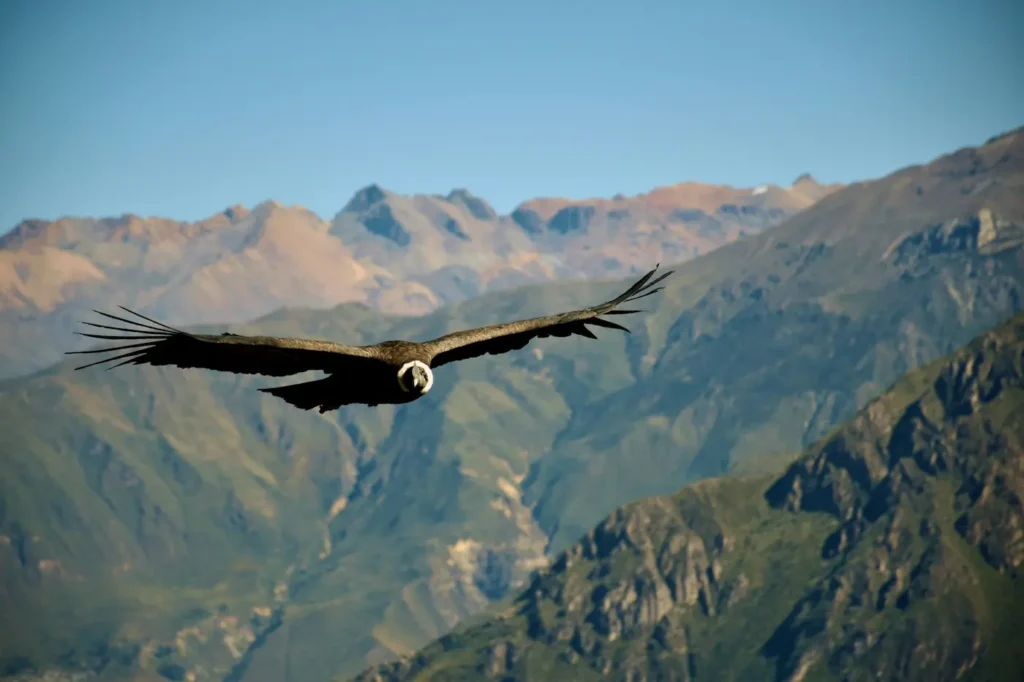
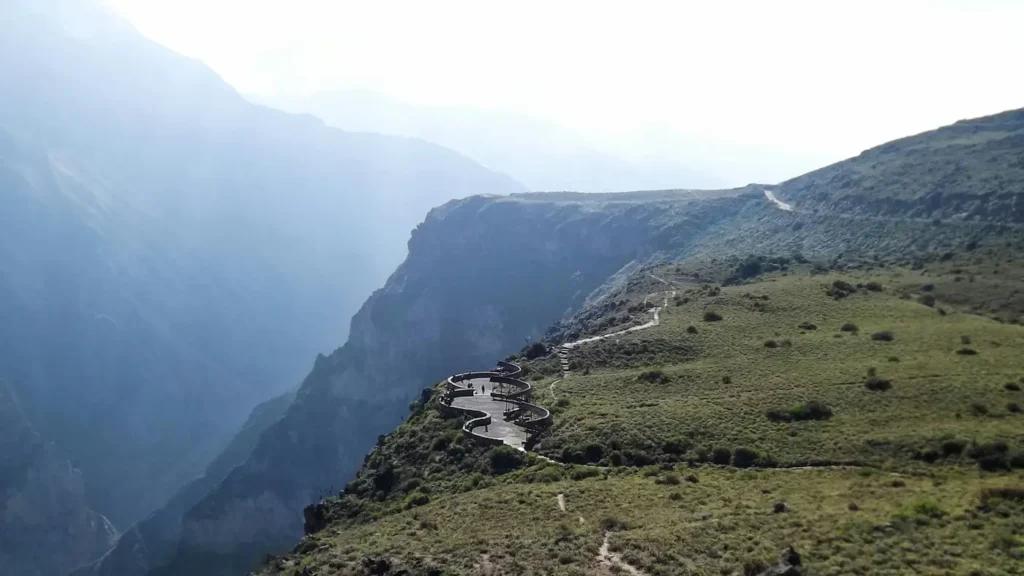
The primary reason thousands of people visit the Colca Canyon every year is to witness the Andean Condor. At the viewpoint known as Cruz del Condor, the canyon walls drop vertically into the abyss, creating the perfect thermal currents for these massive birds. With a wingspan reaching up to 3 meters (10 feet), seeing a condor glide just meters above your head is the defining moment of any Colca Canyon trip. These birds are sacred in Andean mythology, representing the connection between the earthly realm and the heavens.
Mammals and Flora
Beyond the condors, the rim of the Colca Canyon is home to the Vicuña, a wild relative of the alpaca known for the world’s finest wool. You may also spot the Vizcacha, a rabbit-like rodent with a long tail that hides among the volcanic rocks. The flora of the Colca Canyon is equally adapted to the extremes, featuring the giant Puya Raimondii and various species of cacti that bloom with vibrant flowers during the transition from the rainy to the dry season.
The Living History of the Cabanas and Collaguas
What truly separates the Colca Canyon from other natural wonders is its human history. Long before the Incas expanded their empire, two distinct ethnic groups inhabited the Colca Canyon: the Collaguas and the Cabanas.
Cultural Identity Through Textiles
Even today, you can distinguish the inhabitants of the Colca Canyon by their traditional clothing. The Collagua women wear flat, circular hats with intricate embroidery, while the Cabana women wear rounded hats decorated with sequins and colorful threads. These traditions are not for show; they are a vital part of the Colca Canyon’s identity.
Ancient Engineering: The Terraces
The thousand-year-old terraces (andenes) that line the Colca Canyon are a marvel of pre-Columbian engineering. By modifying the steep slopes into flat planting surfaces, these ancient cultures managed to grow corn, quinoa, and potatoes in a vertical landscape. Walking through these terraces today, you realize that the Colca Canyon is a monument to human ingenuity and its ability to harmonize with a harsh environment.
Trekking the Colca Canyon: Routes and Difficulty
For the adventurous traveler, the only way to truly experience the Colca Canyon is to descend into it. However, trekking here is not for the faint of heart.
The Classic 2-Day Trek
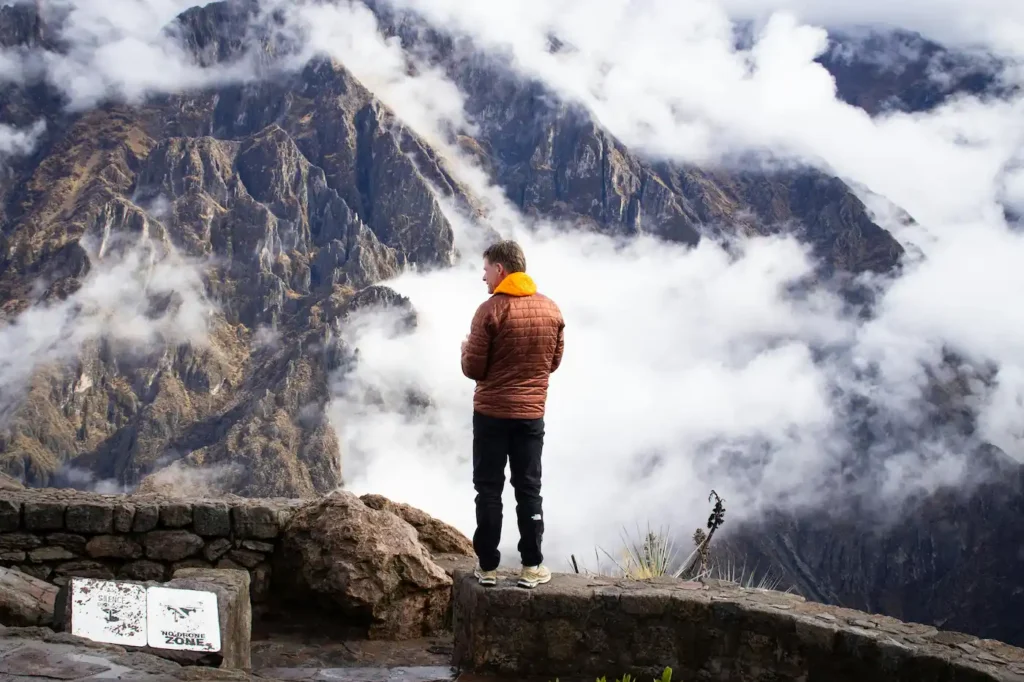
The most popular route into the Colca Canyon starts in the village of Cabanaconde. You descend nearly 1,000 vertical meters to the Oasis of Sangalle. The descent is steep and dusty, testing your knees and your resolve. After a night under the stars in the oasis, the real challenge begins: the early morning ascent back to the rim of the Colca Canyon. This climb is a rite of passage for hikers, usually undertaken at 4:00 AM to avoid the punishing midday sun.
The Llahuar and Fure Alternatives
For those who want to escape the main tourist trail, the Colca Canyon offers longer, 3 or 4-day routes. These paths lead to Llahuar, famous for its riverside hot springs, and the Huaruro Waterfall near the village of Fure. These routes provide a much deeper look into the remote life of the Colca Canyon, where mules are still the primary mode of transport and the silence of the Andes is absolute.
Thermal Relaxation and Wellness
After the physical exertion of trekking or the long drive to reach the Colca Canyon, the region’s geothermal gifts offer the perfect remedy.
La Calera and Chacapi
The town of Chivay is the gateway to the Colca Canyon and home to the La Calera hot springs. These natural pools are rich in minerals and offer a soothing soak with views of the surrounding mountains. However, for a more “wild” experience, we often recommend the Chacapi baths in Yanque. These pools sit right on the edge of the river, allowing you to hear the rush of the water as you soak. Integrating wellness into a Colca Canyon itinerary is essential for the modern traveler seeking a balance between adventure and rejuvenation.
Photography and Lighting in the Abyss
For professional and amateur photographers from the UK and USA, the Colca Canyon presents unique challenges and rewards. The scale of the canyon is so vast that it is often difficult to capture in a single frame.
Golden Hour at the Rim
The best time for photography in the Colca Canyon is the first hour after sunrise. The low sun casts long shadows across the terraces, highlighting the textures of the stone walls. At Cruz del Condor, the lighting between 8:00 AM and 10:00 AM is critical; this is when the condors begin their flight, and the light is soft enough to capture the details of their feathers without harsh glares from the volcanic rocks.
Night Photography
Due to its remote location and high altitude, the Colca Canyon has some of the darkest skies in Peru. The Milky Way is visible to the naked eye, stretching over the jagged peaks. For those staying overnight in the canyon villages or the oasis, the canyon offers a world-class opportunity for astrophotography.
Logistics: Connecting Cusco to Colca Canyon
As an agency based in Calca, we are often asked about the best way to link the Sacred Valley with the Colca Canyon. While many travelers start in Arequipa, the “Road Trip” route from Cusco is becoming the ultimate extension for high-end adventurers.
The Route of the Volcanoes
The drive from Cusco to the Colca Canyon takes you through the “Three Canyons” of Suykutambo and across the high Altiplano. It is a full day of travel, but the scenery makes it one of the best drives in South America. By choosing this route, you avoid the “back-and-forth” logistics of returning to Arequipa, allowing for a seamless flow through the southern circuit of Peru. At Climb Sunday, we specialize in these complex logistics, ensuring that your transition to the canyon is comfortable, safe, and rich with guided insights.
Sustainability and Responsible Tourism
The Colca Canyon is a fragile ecosystem under pressure from climate change and increasing tourism. Glacier retreat in the surrounding peaks is affecting the water supply for the ancient terraces, and the condor population requires careful monitoring.
The Climb Sunday Commitment
When you visit the Colca Canyon with us, you are supporting a model of tourism that prioritizes the local community. We work with local guides who are descendants of the Collagua people, ensuring that the history of the canyon is told from an authentic perspective. We advocate for “Leave No Trace” principles, especially on the trekking routes to the Oasis, to ensure that the beauty of the canyon remains intact for generations to come.
Frequently Asked Questions (FAQ)
Is Colca Canyon deeper than the Grand Canyon?
Yes, the Colca Canyon is approximately 3,270 meters deep, making it nearly twice as deep as the Grand Canyon in the United States.
Can I see condors every day?
While condors are wild animals and sightings are never 100% guaranteed, the Colca Canyon has one of the highest success rates in the world, especially between 8:00 AM and 10:00 AM at the Cruz del Condor viewpoint.
What is the best time of year to visit the Colca Canyon?
The dry season (April to October) offers clear skies and the best trekking conditions. However, the “green season” (March) is beautiful as the terraces of the canyon are in full bloom.
The Adventure That Awaits
The Colca Canyon is more than just a destination; it is a testament to the scale of the natural world and the resilience of human culture. Whether you are peering into the abyss to spot a soaring condor, soaking in volcanic hot springs, or testing your limits on a steep trekking trail, the canyon will leave an indelible mark on your soul.
For the traveler who wants to see the “real” Peru beyond the famous landmarks this canyon offers a depth of experience that is unmatched. At Climb Sunday, we are proud to be your bridge to this incredible region. From our roots in the Sacred Valley to the volcanic depths of the south, we ensure that your journey through the Colca Canyon is handled with the expertise, care, and local passion it deserves.
