
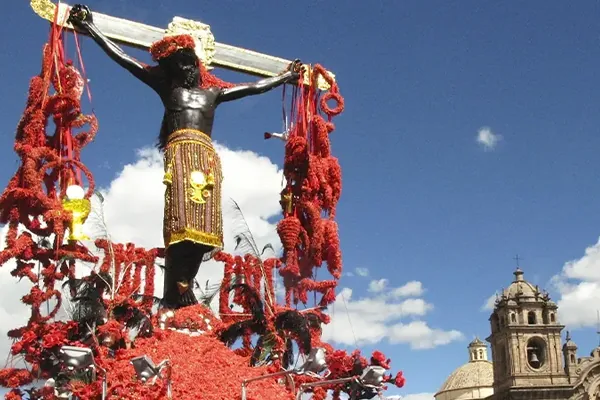
Lord of the Earthquakes is one of the most meaningful traditions in Cusco, deeply rooted in the city’s history and collective faith. Each year, this procession brings together local communities in a powerful expression of devotion, memory, and identity that has endured for centuries.
More than a religious event, the celebration reflects how Cusco has learned to preserve its cultural soul through rituals that connect past and present. For travelers, understanding this tradition offers a deeper way to experience the city beyond its landmarks and landscapes
You might also be interested in Summer in Peru 2026
What is the Lord of the Earthquakes?
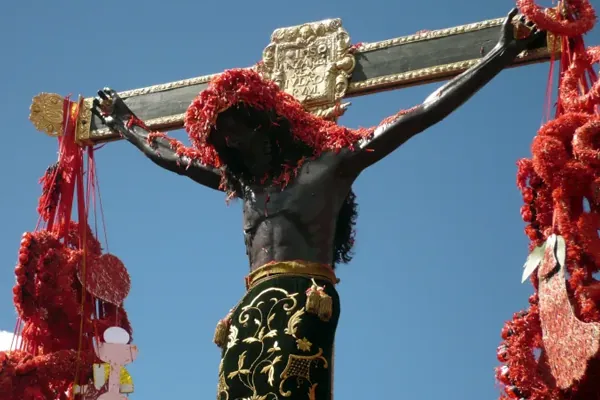
The Lord of the Earthquakes is one of the most significant religious icons in Cusco, deeply embedded in the city’s cultural and spiritual life. The image represents faith, protection, and continuity, and has been venerated for centuries by local communities who see it as a source of comfort and guidance.
Beyond its religious meaning, this devotion reflects how tradition and identity remain closely connected in Cusco. Understanding its role helps visitors appreciate why the procession holds such importance and why it continues to be one of the most meaningful events on the local calendar.
Origins and historical background
The image dates back to the early colonial period, when it was brought to Cusco from Spain. Over time, it became associated with moments of uncertainty, especially after strong earthquakes that marked the city’s history. As devotion grew, the image gained symbolic value as a protector of the city and its people.
Historical records show that public acts of faith surrounding the image became more frequent following these natural events. This strengthened its presence in local tradition and established a lasting connection between spiritual belief and the collective memory of Cusco.
Why the Lord of the Earthquakes is important to Cusco?
Its importance lies not only in religious devotion but also in what it represents for the community. The figure has become a symbol of unity, bringing people together across generations during moments of reflection and shared belief.
For Cusco, this tradition highlights resilience and continuity. It shows how faith has helped shape the city’s identity, offering visitors a deeper perspective on the values that continue to guide local life today.
When is the procession of the Lord of the Earthquakes in 2026?
The procession of the Lord of the Earthquakes in 2026 will take place during Holy Week, a period of deep religious significance in Cusco. This timing reinforces the spiritual meaning of the event and places it within a broader context of reflection and tradition observed throughout the city.
For travelers planning their visit, knowing the exact dates is essential, as this celebration draws large crowds and transforms the historic center. Many visitors choose to complement their stay with excursions beyond the city, such as the Q’eswachaka bridge tour full day, which highlights living traditions that, like the procession, preserve ancestral heritage.
Date and schedule of the 2026 procession
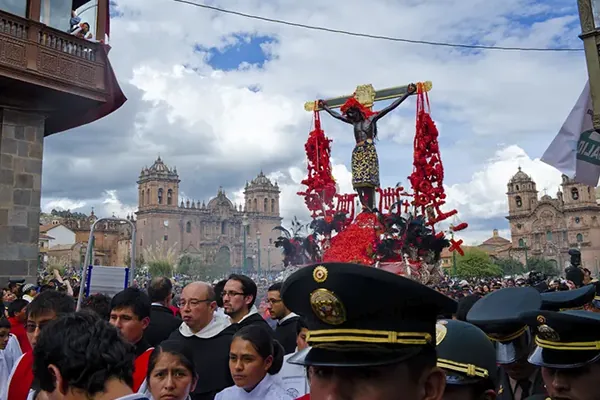
In 2026, the main procession is expected to be held on Holy Monday, following a long-standing tradition observed year after year. The image is carried through the streets of Cusco, departing from the cathedral and moving along a route that includes key landmarks in the historic center.
The event usually begins in the afternoon and extends into the evening, allowing both locals and visitors to participate. While the exact schedule may vary slightly, the procession maintains a consistent structure that reflects centuries of practice and community involvement.
Why the celebration takes place during Holy Week?
Holy Week is one of the most important moments in the Christian calendar, making it a meaningful time for this procession. The celebration aligns with themes of faith, remembrance, and spiritual connection, which resonate deeply with the devotion surrounding the Lord of the Earthquakes.
Holding the event during this period also highlights its role within Cusco’s religious life. It allows the procession to become part of a wider sequence of ceremonies, offering a deeper understanding of how tradition, belief, and cultural identity come together during one of the city’s most significant weeks.
You might also be interested in Top 7 best carnivals in Peru
History of the Lord of the Earthquakes procession
The history of the Lord of the Earthquakes procession is deeply connected to Cusco’s collective memory and spiritual resilience. Over the centuries, this devotion has become one of the most meaningful expressions of faith in the city, shaped by moments of crisis, hope, and communal unity.
As the tradition grew, the procession moved beyond a purely religious act and became a cultural landmark. Travelers interested in understanding this historical depth often combine the event with visits to lesser known archaeological sites, such as those included in a Waqrapukara Tour full day, which further illustrate the continuity of belief and ritual in the Cusco region.
The legend behind the image
According to tradition, the image gained its significance after a devastating earthquake struck Cusco in the seventeenth century. When the city was overwhelmed by destruction, residents turned to the sacred image in prayer, believing it could bring protection and calm.
As the story goes, the tremors ceased shortly after the image was displayed, strengthening the devotion surrounding it. This moment marked the beginning of a lasting bond between the people of Cusco and the Lord of the Earthquakes, rooted in gratitude and faith.
How the procession evolved over time
In its early years, the procession was a modest act of devotion carried out by local communities. Over time, it became more structured, incorporating specific routes, rituals, and symbols that reflected both religious and social traditions.
As Cusco expanded and welcomed travelers from around the world, the procession also gained international recognition. Despite this growth, the essence of the Lord of the Earthquakes celebration remains unchanged, centered on collective belief, respect, and continuity across generations.
How the procession of the Lord of the Earthquakes takes place
The procession unfolds as a deeply organized and symbolic journey through the historic center of Cusco. From early hours, the city adopts a slower rhythm as streets are prepared and locals gather with a sense of reverence and anticipation that feels both intimate and collective.
As the image moves through the city, the atmosphere blends silence, prayer, and emotion. For many participants, witnessing the Lord of the Earthquakes procession is not only a religious moment but also a cultural experience that reflects the soul of Cusco and its enduring traditions.
Route of the procession through Cusco
The procession follows a traditional route that begins at Cusco Cathedral in the Plaza de Armas. From there, it moves through some of the city’s most historic streets, passing colonial buildings and neighborhoods that hold centuries of shared memory.
Each section of the route carries its own significance, as residents prepare altars, decorate balconies, and observe in respectful silence. The path reinforces the connection between sacred ritual and everyday urban life in Cusco.
Key moments during the procession
One of the most moving moments occurs when the image is raised and blessed at specific points along the route. These pauses allow the crowd to reflect, pray, and express devotion through gestures, songs, and offerings.
Another meaningful moment is the return of the image to the cathedral. This closing act symbolizes protection and continuity, marking the end of the procession while reaffirming the spiritual bond between the city and its most revered figure.
You might also be interested in: Chilcano week 2026
Symbols and traditions of the Lord of the Earthquakes
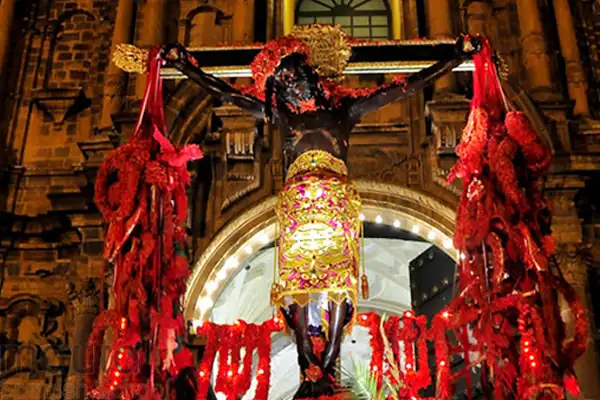
The procession is rich in symbols that blend religious belief with Andean cultural heritage. Every element, from flowers to colors, carries meaning that has been preserved and passed down through generations.
These traditions transform the event into more than a religious ceremony. They create a shared language of faith and identity that both locals and visitors can feel, even without fully understanding each symbol.
The meaning of the ñucchu flower
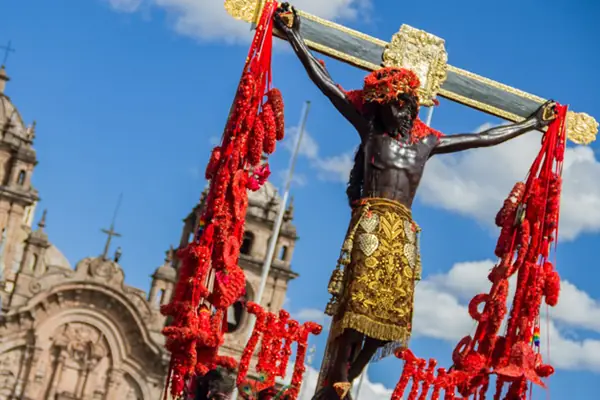
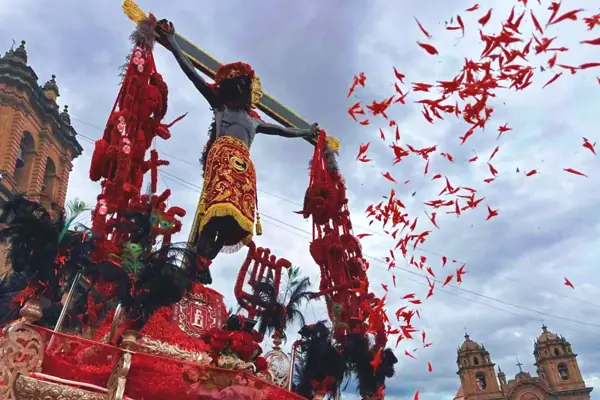
The ñucchu flower is one of the most recognizable elements associated with the procession. Traditionally offered to the image, it symbolizes protection, devotion, and a connection to Andean beliefs that predate colonial times.
Its deep red color is often interpreted as a sign of sacrifice and resilience. By including the ñucchu flower, the celebration honors both spiritual faith and ancestral traditions that continue to shape Cusco’s identity.
Religious and cultural symbols seen during the procession
Along the route, participants carry candles, crosses, and sacred garments that reflect Catholic devotion. These symbols are often accompanied by traditional music and attire that highlight the blending of cultures present in Cusco.
This coexistence of religious and cultural elements gives the Lord of the Earthquakes procession its unique character. It stands as a living expression of how faith, history, and community remain intertwined in everyday life.
You might also be interested in: 10 Christmas traditions in Peru
What to expect during the procession in Cusco
Attending the procession is an immersive experience that reflects the emotional and spiritual depth of the city. Streets fill gradually as locals arrive with flowers, candles, and personal offerings, creating an atmosphere that feels solemn yet deeply communal.
For travelers, witnessing the Lord of the Earthquakes procession offers insight into how faith and daily life intersect in Cusco. The event moves at a measured pace, allowing moments of quiet reflection alongside collective expressions of devotion.
Atmosphere, crowds, and local participation
The atmosphere during the procession is respectful and contemplative, even as large crowds gather along the route. Families, elders, and young people participate together, many of them attending year after year as part of a shared tradition.
Local involvement is central to the experience. Residents prepare their homes and balconies, while volunteers and religious groups help guide the procession, reinforcing the sense of collective responsibility and pride.
Tips for visitors attending the procession
Visitors should plan to arrive early to find a good viewing spot and allow time for street closures. Comfortable clothing and patience are essential, as the event can last several hours and movement may be limited.
Observing quietly, following the guidance of locals, and avoiding disruptive behavior helps ensure a meaningful experience. Photography is generally acceptable, but it should always be done with discretion and respect.
Experiencing the Lord of the Earthquakes as a traveler
For travelers, the procession is an opportunity to engage with Cusco beyond its landmarks. Experiencing this tradition offers a deeper understanding of the city’s spiritual rhythm and the values that shape local life.
Rather than simply watching, travelers are invited to observe with intention and openness. This approach transforms the experience into a moment of cultural connection rather than passive tourism.
Best places to watch the procession
The Plaza de Armas is one of the most popular places to observe the procession, offering clear views and a strong sense of the event’s scale. Nearby streets along the historic route also provide meaningful vantage points with slightly smaller crowds.
Choosing a location near the cathedral allows visitors to witness key moments of departure and return. These areas often carry the most emotional intensity and symbolic importance.
Cultural etiquette and respectful behavior
Respectful behavior is essential throughout the procession. Standing quietly, dressing modestly, and following local customs demonstrate consideration for the significance of the event.
Travelers should avoid blocking pathways or interrupting participants. By observing with humility and awareness, visitors honor the tradition and contribute to a positive shared experience.
Why the Lord of the Earthquakes is one of Cusco’s most important traditions
Its importance lies not only in religious devotion but also in what it represents for the community. The figure has become a symbol of unity, bringing people together across generations during moments of reflection and shared belief. For many visitors, understanding this devotion adds depth to their time in the city, especially when combined with cultural experiences such as a Cusco half day tour, which offers historical context and insight into local traditions.
Beyond its religious meaning, the celebration reflects how Cusco preserves its identity through living traditions. The Lord of the Earthquakes is not only remembered as a historical symbol, but also as a presence that continues to shape community life today.
Spiritual significance for local communities
For local communities, this tradition is deeply personal. Many families participate as an act of gratitude, protection, or fulfillment of promises passed down through generations. The procession becomes a space where private intentions and shared faith come together.
This spiritual connection goes beyond a single day. It influences how people relate to their city, their history, and each other, reinforcing a sense of belonging rooted in devotion and trust.
Cultural heritage and identity in Cusco
The celebration also plays a vital role in preserving Cusco’s cultural heritage. It reflects the blending of Andean traditions and Catholic beliefs, a combination that defines much of the region’s cultural identity.
Through music, symbols, and collective participation, the event reinforces values such as respect, resilience, and community. These elements help maintain Cusco’s cultural continuity in a rapidly changing world.
You might also be interested in: Cusco in December 2025
Planning your visit to Cusco during Holy Week 2026
Experiencing this procession is an opportunity to witness Cusco at its most authentic. The tradition reveals how spirituality, history, and daily life remain closely intertwined, shaping the rhythm of the city and the values of its people.
For those visiting during Holy Week, observing the celebration with respect and curiosity allows for a more meaningful connection with local culture. It becomes not just something to see, but something to understand and remember.
