

Native Peruvian animals are part of what makes a trip through Peru feel so different from one region to another. A visitor can move from vicuñas in high Andean plains to river otters in Amazon lakes, then continue to a Pacific coast where penguins, sea lions and seabirds share the same cold-current ecosystem.
This guide focuses on native Peruvian animals that travelers may encounter, learn about or actively look for during a Peru itinerary. It also explains the difference between native, endemic and domesticated species, because those terms are often mixed together and can create inaccurate expectations.

You might also be interested in: Maido: World’s best restaurant 2025 is Peruvian
What Animals Are Native to Peru?
The phrase native Peruvian animals refers to species that occur naturally in Peru without being introduced by people from another region. A native species does not have to exist only in Peru. The vicuña, Andean condor and spectacled bear, for example, are native to Peru but also occur naturally in neighboring South American countries.
Peru supports an unusually wide range of habitats. High mountains, Pacific desert, cloud forest, Amazon rainforest, wetlands, puna grasslands and cold marine waters create ecological conditions for very different animals. That diversity is why searches move beyond the familiar llama or alpaca.
Native vs Endemic Animals in Peru
When researching native Peruvian animals, it helps to separate two concepts. A native animal occurs naturally in Peru, even if its range continues into Bolivia, Chile, Ecuador, Brazil or another country. An endemic animal has a naturally restricted distribution and occurs only within a particular geographic area.
This distinction matters because “endemic to Peru” is a stronger claim than “native to Peru.” The yellow-tailed woolly monkey is endemic to Peru, while the Andean condor has a broader South American range. The Titicaca water frog is native to the Lake Titicaca basin shared by Peru and Bolivia, so it should not be described as endemic to Peru alone.
15 Native Peruvian Animals Travelers Should Know
The following native Peruvian animals represent different ecosystems and travel regions. Some can be seen relatively often in protected areas, while others are rare and should never be treated as guaranteed sightings. For wildlife travelers, understanding habitat and behavior matters more than checking species off a list.
1. Vicuña
The vicuña is one of the most recognizable native Peruvian animals of the high Andes. Smaller and more delicate than the llama, it is a wild camelid adapted to cold puna grasslands. Its fine fiber has been valued for centuries, and the animal appears on Peru’s national coat of arms. Unlike llamas and alpacas, vicuñas remain wild.

2. Andean Condor
The Andean condor ranks among iconic native animals of Peru, soaring above cliffs and high valleys. It uses rising air currents to travel long distances. Colca Canyon is one of Peru’s best-known places for watching condors, especially during morning thermals.

3. Spectacled Bear
The spectacled bear, also called the Andean bear, is South America’s only native bear species. Among native Peruvian animals, it is especially important because it inhabits mountain and cloud forests. The Machu Picchu landscape forms part of its habitat, but sightings are uncommon.

4. Andean Cock-of-the-Rock
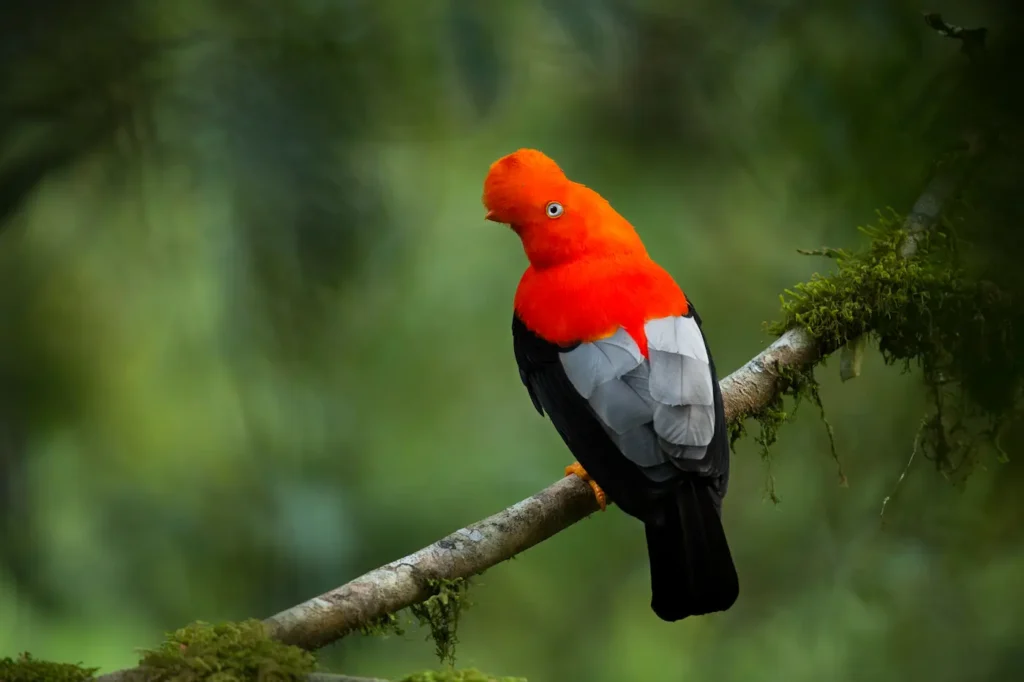
The Andean cock-of-the-rock is Peru’s national bird and one of the most distinctive species in Andean cloud forests. Males have bright orange-red plumage and gather at display sites for courtship. Among native Peruvian animals, it shows how dramatically fauna changes when travelers descend from dry highlands into humid eastern mountain forests.
5. Southern Viscacha
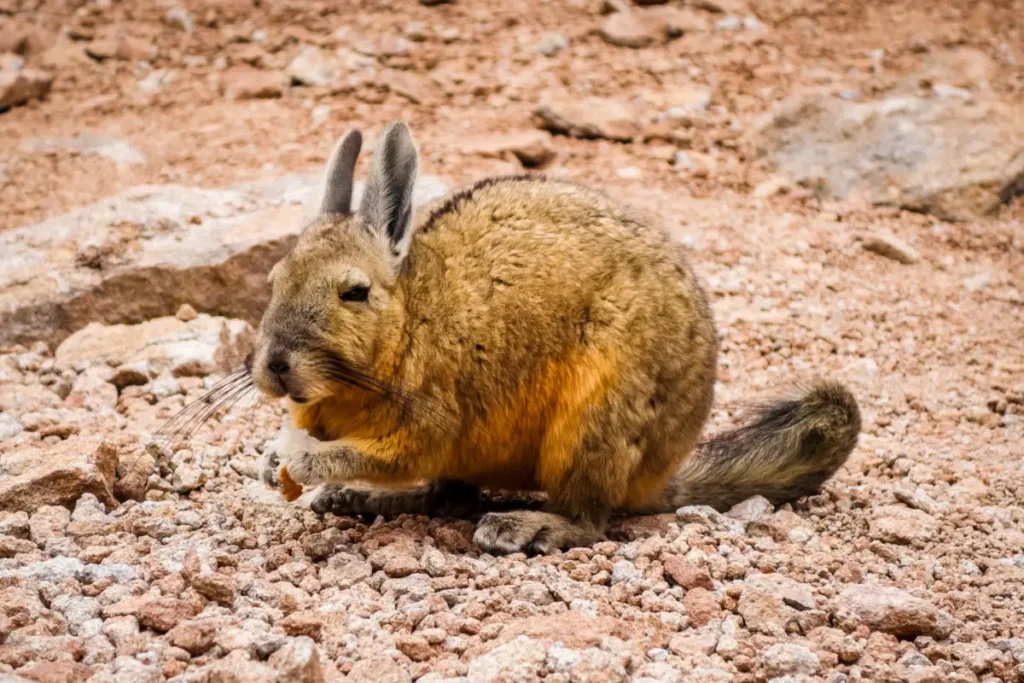
Viscachas resemble long-tailed rabbits at first glance, but they are rodents adapted to rocky Andean terrain. Travelers looking for native Peruvian animals around highland landscapes may occasionally spot them resting on boulders or near stone formations. Their camouflage makes patience more useful than approaching too closely for a photograph.
6. Culpeo or Andean Fox
The culpeo is a South American canid commonly called the Andean fox. It occupies highlands, shrublands and open habitats where it feeds on rodents, birds, insects and other available prey. It is one of the less predictable wild species for tourists to see, so travelers should never try to attract one with food.

7. Jaguar
The jaguar is the largest cat in the Americas and one of the strongest symbols of Amazonian wildlife. Although jaguars are famous native Peruvian animals, seeing one is rare. Travelers should choose Amazon trips for the complete ecosystem rather than a promised sighting. Tracks or guide observations may still be part of the experience.

8. Giant River Otter
Giant river otters live in freshwater systems of the Amazon basin and often move in family groups. For travelers interested in native Peruvian animals, Tambopata offers opportunities to observe them in suitable lakes and waterways. Wildlife viewing should keep enough distance to avoid interrupting natural behavior.

9. Amazon River Dolphin
The Amazon river dolphin, often called the pink river dolphin, inhabits major river systems and seasonally flooded forests in the Amazon basin. These native Peruvian animals belong to the lowland Amazon rather than the Andean tourism circuit. Travelers around Iquitos and other river destinations may see them from boats when local conditions are favorable.

10. Yellow-Tailed Woolly Monkey
The yellow-tailed woolly monkey is particularly important because it is endemic to Peru. It lives in montane forests in the north and depends on habitat that has faced fragmentation. Including it among native Peruvian animals shows why Peru’s wildlife story extends beyond Cusco and why “native” and “endemic” are not synonyms.
11. Humboldt Penguin
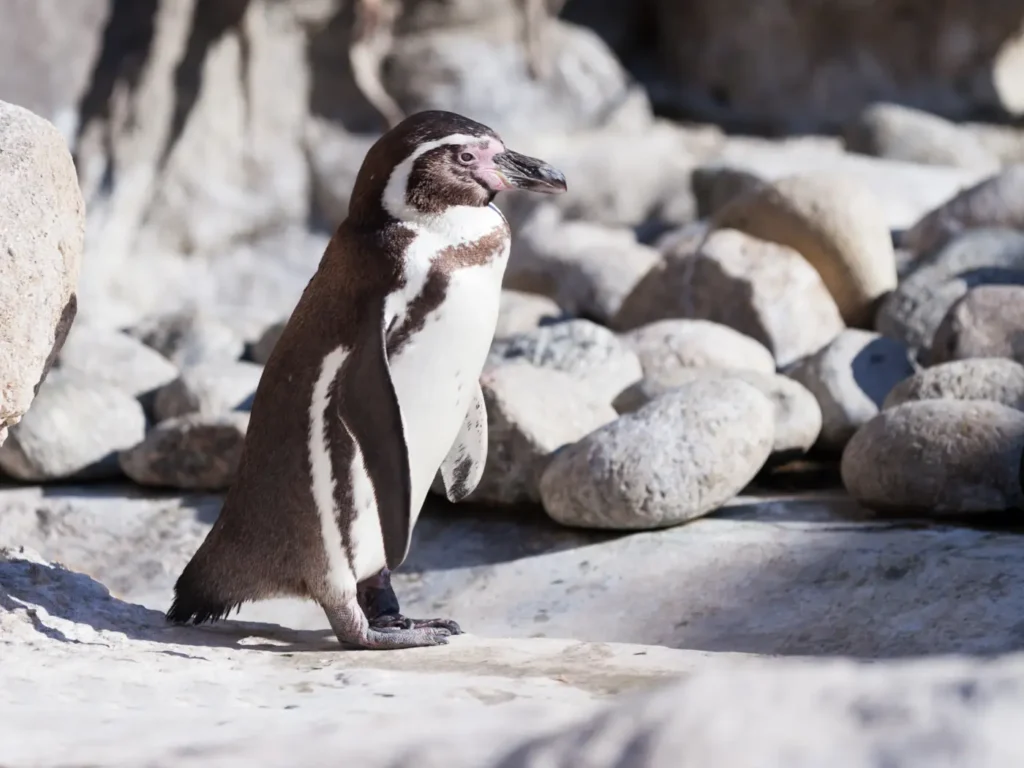
The Humboldt penguin lives along sections of the Pacific coast influenced by the cold Humboldt Current. It is one of the most unexpected native Peruvian animals for first-time visitors. Boat excursions around protected coastal islands may offer sightings, but responsible operators should maintain enough distance from nesting and resting birds.
12. South American Sea Lion
South American sea lions are common representatives of Peru’s productive marine ecosystem. When travelers think only about Andean native Peruvian animals, they miss an important part of the country’s biodiversity. Paracas and the Ballestas Islands are among the best-known destinations for combining desert landscapes with sea lions and marine birds.
13. Peruvian Pelican
The Peruvian pelican is a large coastal bird found along the Pacific shores of western South America. Its long bill and throat pouch make it easy to recognize near beaches and rocky islands. These birds show that native Peruvian animals are not limited to rare mammals; seabirds are also essential to marine food webs.

14. Titicaca Water Frog
The Titicaca water frog is highly adapted to aquatic life in the high-elevation Lake Titicaca basin. Its folded skin increases surface area for gas exchange in cold, oxygen-poor water. Unlike easily photographed native Peruvian animals, this frog is not something travelers should expect to see casually, and its habitat should never be disturbed for a sighting.
15. Llama and Alpaca: Native Heritage, but Domesticated
Llamas and alpacas dominate travel imagery of Peru, yet both are domesticated South American camelids. They belong in conversations about Peruvian animal heritage, but they should not be presented as wild species. That distinction makes a guide to native Peruvian animals more accurate: seeing a llama beside a trail is very different from observing a wild vicuña on the puna.

Where to See Native Wildlife in Peru
The best places to observe native Peruvian animals depend on the ecosystem. Peru is too geographically diverse for one destination to represent its wildlife, so travelers should plan by region instead of building a trip around a single species wish list.
Tambopata and the Peruvian Amazon
Tambopata is one of the strongest additions to an itinerary focused on wildlife in Peru. Forest trails, rivers, oxbow lakes and clay licks can produce sightings of monkeys, macaws, caimans, giant river otters and many smaller species. Jaguars occur in the region, but encounters are rare and should never be guaranteed.
A multi-day stay reveals more of Amazon ecology than a rushed visit. Early mornings and experienced local guides also improve wildlife observation. Climb Sunday travelers can connect this experience with Madre de Dios tours when building a broader Peru route.
Colca Canyon and the High Andes
For Andean native Peruvian animals, southern Peru offers important high-elevation landscapes. Colca Canyon is especially associated with condor watching, while puna areas may support vicuñas, viscachas and other species adapted to cold, dry conditions. Travelers should consider altitude too, because a slower pace benefits observation and acclimatization.
Machu Picchu and the Cloud Forest
Searches for animals in Machu Picchu often create unrealistic expectations. The protected landscape around the sanctuary supports important biodiversity, including spectacled bears and numerous bird species, but many animals are shy or difficult to detect.
The most responsible way to approach native Peruvian animals around Machu Picchu is to treat any sighting as a bonus. Visitors should follow designated routes rather than pursuing wildlife and combine Machu Picchu with dedicated nature experiences elsewhere.
Paracas and the Ballestas Islands
The Pacific coast provides a completely different wildlife experience. Sea lions, pelicans, cormorants and Humboldt penguins may be observed around protected islands and marine environments. Paracas is therefore a valuable complement to an Andes-heavy itinerary and a reminder that Peruvian native animals live far beyond mountain landscapes.
How to Watch Wildlife Responsibly
Seeing native Peruvian animals should never depend on feeding, touching or chasing them. Ethical wildlife tourism protects animals and habitats while supporting local conservation incentives.
- Keep distance: A closer photograph is not worth changing an animal’s movement, feeding or resting behavior. Use zoom rather than approaching wildlife, especially around nesting birds or animals with young.
- Never feed wild animals: Feeding can alter natural diets, increase dependence on people and create aggressive behavior. A responsible encounter lets animals continue behaving naturally.
- Follow authorized trails: Protected areas use routes to reduce erosion and disturbance. Leaving them can damage habitat and create safety risks.
- Accept uncertainty: Responsible guides cannot guarantee wild species. A genuine encounter depends on season, weather, habitat and animal behavior.
Frequently Asked Questions About Native Peruvian Animals
What is Peru’s most famous animal?
The llama may be the animal most international visitors associate with Peru, but it is domesticated. Among wild native Peruvian animals, the vicuña and Andean condor are two of the country’s strongest wildlife symbols and are closely connected with highland landscapes.
What is Peru’s national animal?
The vicuña is widely recognized as Peru’s national animal symbol and appears on the national coat of arms, where it represents the country’s animal wealth. Peru’s national bird is the Andean cock-of-the-rock, another species travelers may encounter in suitable cloud-forest habitat.
What are three animals native to Peru?
Three clear examples are the vicuña, spectacled bear and Andean condor. All occur naturally in Peru, although their geographic ranges extend into other parts of South America. This is why animals native to Peru should not automatically be described as endemic.
Are all Peruvian native animals endemic to Peru?
No. Most native Peruvian animals are not endemic. Native means a species occurs naturally in the country; endemic means its natural distribution is restricted to a particular geographic area. The yellow-tailed woolly monkey is a useful example of a Peruvian endemic species.
What wildlife can travelers see in the Peruvian Amazon?
Depending on location and luck, travelers may observe macaws, monkeys, caimans, giant river otters, capybaras and many birds. Jaguars occur in the Amazon but are rarely seen, so they should not be treated as a guaranteed attraction when choosing a jungle tour.

Plan a Peru Trip Around Wildlife, Not Just Checklists
The best way to discover native Peruvian animals is to connect wildlife with landscapes. The Andes explain vicuñas and condors, Amazon lakes explain giant river otters, cloud forests explain specialized birds and bears, and the Pacific Current explains Peru’s extraordinary marine life.
Climb Sunday can help travelers combine culture with wildlife-rich destinations such as the Amazon, Lake Titicaca, the Andes and Machu Picchu. A thoughtful itinerary gives each ecosystem enough time and treats every sighting for what it is: an encounter with a living environment, not a guaranteed attraction.
