
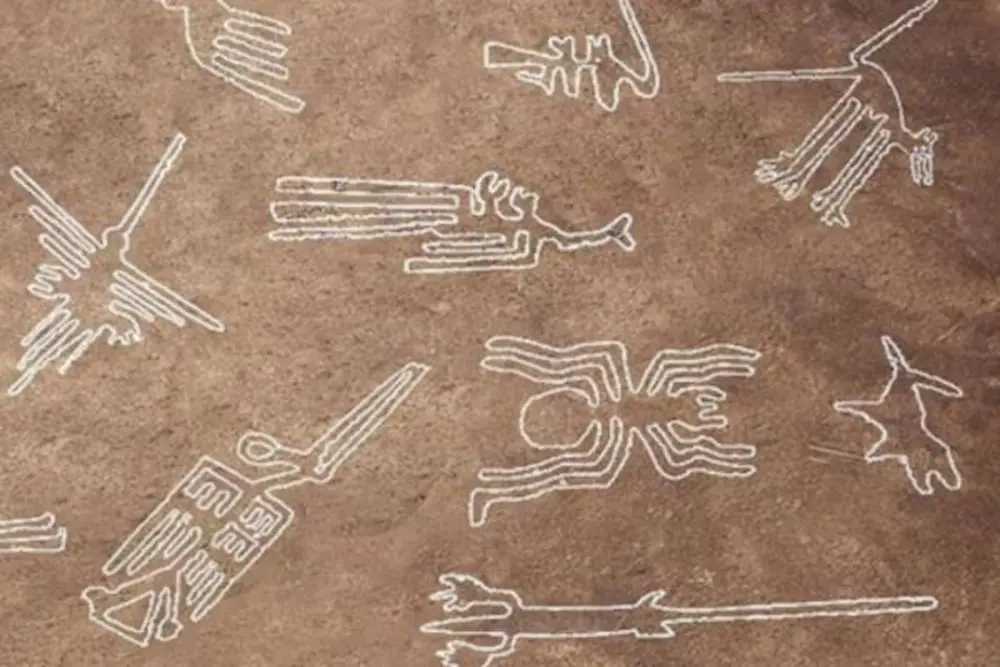
The Nazca Lines Meaning continues to inspire wonder among travelers, researchers, and history enthusiasts around the world. In the vast desert of southern Peru, these enormous figures stretch across the land as silent witnesses of an ancient civilization’s intelligence and spirituality. Their scale, precision, and symbolism suggest deep knowledge of nature and ritual practices. This introduction invites readers to explore the mysteries behind these geoglyphs, understand their cultural importance, and appreciate why they remain one of Peru’s most fascinating archaeological treasures even centuries after their creation.
You might also be interested in:10 Traditional Food in Peru
Nazca Lines Meaning: An Introduction to One of Peru’s Greatest Enigmas
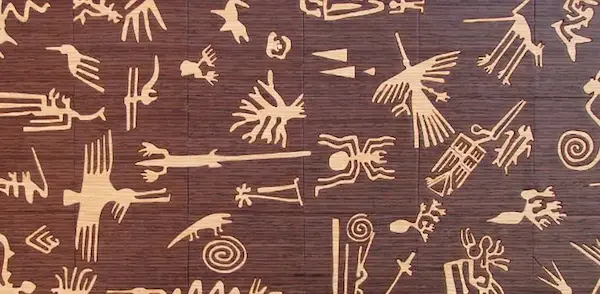
The Nazca Lines Meaning represents far more than artistic expression carved into the desert. These geoglyphs embody the beliefs, fears, hopes, and survival strategies of the Nazca civilization. Created in an environment where water was scarce, every symbol held deep significance tied to nature and the cosmos. Scholars believe the lines served as ceremonial pathways, spiritual messages, or communication with deities. Understanding their meaning allows modern audiences to glimpse how ancient societies interpreted their world and expressed reverence through monumental and lasting creations.
What Are Nazca Lines and Why Are They Important
The Nazca Lines are a collection of large-scale geoglyphs etched into the arid plains of Peru’s Nazca Desert. They include representations of animals, plants, geometric shapes, and human-like figures. Their importance lies not only in their size but also in their preservation and purpose. The Nazca Lines Meaning highlights the advanced planning and collective effort required to create them. These designs reflect social organization, spiritual devotion, and environmental awareness, making them a cornerstone of Peru’s archaeological identity and a UNESCO World Heritage Site.
Historical Background of the Nazca Lines
The Nazca Civilization and Its Cultural Context
The Nazca civilization flourished between 100 BCE and 800 CE along Peru’s southern coast. This society thrived in a challenging desert environment by developing advanced irrigation systems and strong religious traditions. The Nazca Lines Meaning is deeply connected to their worldview, which emphasized harmony with natural forces. Art, ceramics, and textiles reveal recurring symbols found in the geoglyphs, suggesting a unified cultural language. These lines were not isolated creations but part of a broader spiritual and social system.
When and How the Nazca Lines Were Created
The Nazca people created the geoglyphs by carefully removing the dark oxidized stones on the desert surface to reveal lighter soil underneath. This simple yet effective technique allowed the designs to endure for centuries. The Nazca Lines Meaning is reinforced by the precision of these constructions, which required planning, coordination, and ritual intent. Despite the absence of modern tools, the lines demonstrate remarkable engineering skill and a deep connection between art and belief.
You might also be interested in: How Valentine’s Day in Peru Is Celebrated
Nazca Lines Meaning: Main Theories and Interpretations
Religious and Ceremonial Purpose
Many researchers believe the lines served as ceremonial paths used during religious rituals. Walking these paths may have been a form of prayer or offering to deities associated with rain and fertility. The Nazca Lines Meaning in this context reflects a spiritual dialogue between humans and the natural world, emphasizing survival through divine favor.
Astronomical and Calendar Theories
Another interpretation links the lines to astronomy. Some geoglyphs align with celestial events such as solstices and star movements. This theory suggests the Nazca Lines Meaning includes timekeeping and agricultural planning, helping communities anticipate seasonal changes critical for farming.
Water and Agricultural Symbolism
Water scarcity defined Nazca life. Many figures may symbolize rain, rivers, or fertility, reinforcing the idea that the lines were rituals aimed at securing water. This interpretation ties the Nazca Lines Meaning directly to environmental adaptation and survival strategies.
The Most Famous Nazca Lines Figures and Their Meaning
The Hummingbird of the Nazca Lines
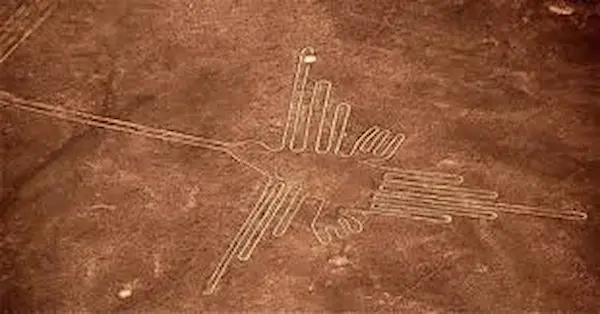
The hummingbird is one of the most elegant and recognizable figures in the desert. With its long beak and perfectly extended wings, it represents energy, agility, and renewal. In many ancient Andean cultures, the hummingbird was associated with rain and agricultural fertility, as it feeds on nectar and symbolizes life-giving movement.
Its delicate yet precise design suggests intentional symbolism rather than decoration. Many researchers believe it may have been connected to rituals asking for rainfall in a region where water determined survival. Within the broader Nazca Lines Meaning, the hummingbird can be interpreted as a spiritual messenger between humans and nature, expressing hope for abundance in a harsh desert environment.
The Monkey of the Nazca Lines
The monkey stands out because monkeys are not native to the coastal desert of Nazca. This has led scholars to connect the figure to the Amazon rainforest, indicating possible trade routes or cultural interaction between regions. Its long spiral tail is especially intriguing, as spirals often symbolize continuity, cycles, or even water flow.
The presence of the monkey may reflect a worldview that extended beyond the immediate environment, suggesting that the Nazca civilization recognized the interconnectedness of ecosystems. In terms of Nazca Lines Meaning, the monkey could represent life cycles, fertility, and the balance between distant natural worlds that were spiritually significant to the Nazca people.

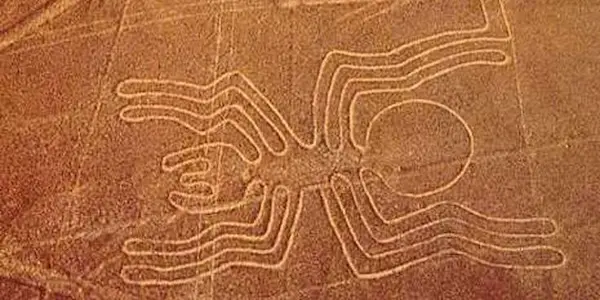
The Spider of the Nazca Lines
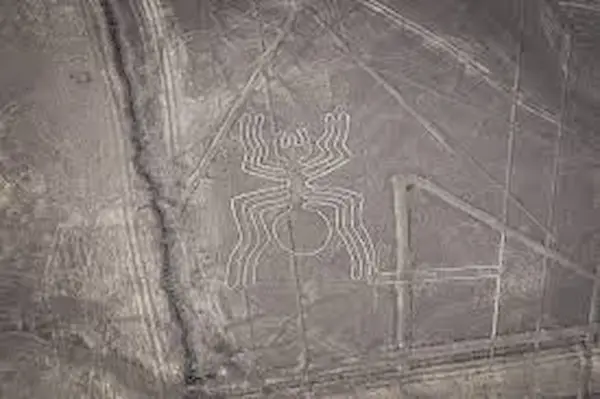
The spider is another highly detailed and symbolically rich geoglyph. In many ancient cultures, spiders are associated with water, weaving, and creation. Some researchers suggest that the Nazca spider represents a specific species linked to river valleys, reinforcing its connection to fertility and rainfall.
Because water was essential in the desert, the spider may have symbolized prayers for irrigation and agricultural prosperity. Its careful proportions show deep observational knowledge of nature. The Nazca Lines Meaning connected to the spider likely reflects the delicate balance between survival and environment, highlighting how closely the Nazca people depended on natural cycles.
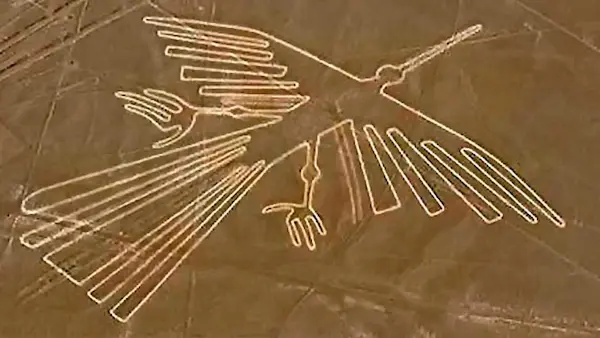
The Condor of the Nazca Lines
The condor, one of the largest flying birds in the world, has long been a sacred symbol in Andean cosmology. It represents power, vision, and the connection between the earthly and spiritual realms. With its massive wings spread across the desert surface, the condor embodies dominance over the skies.
In Andean belief systems, the condor often served as a messenger between humans and the gods. Its inclusion among the geoglyphs suggests a desire for divine protection and guidance. Within the Nazca Lines Meaning, the condor reinforces themes of transcendence, spirituality, and cosmic alignment.
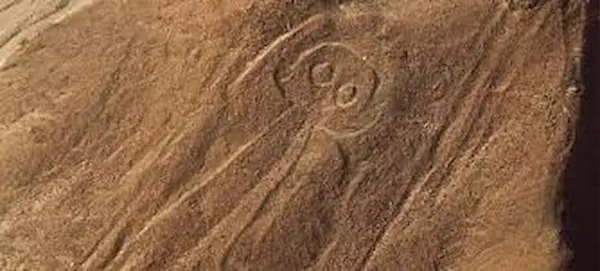
The Astronaut of the Nazca Lines
Commonly referred to as the “Astronaut,” this human-like figure has generated worldwide curiosity and speculation. While popular culture often associates it with extraterrestrial theories, most archaeologists interpret it as a stylized representation of a shaman or ritual observer.
The figure appears to be looking upward, which may symbolize communication with celestial forces. Its simplicity contrasts with the detailed animal figures, yet its placement suggests importance. Rather than science fiction, the Nazca Lines Meaning behind this figure likely relates to spiritual authority, ritual leadership, or guardianship over sacred space.
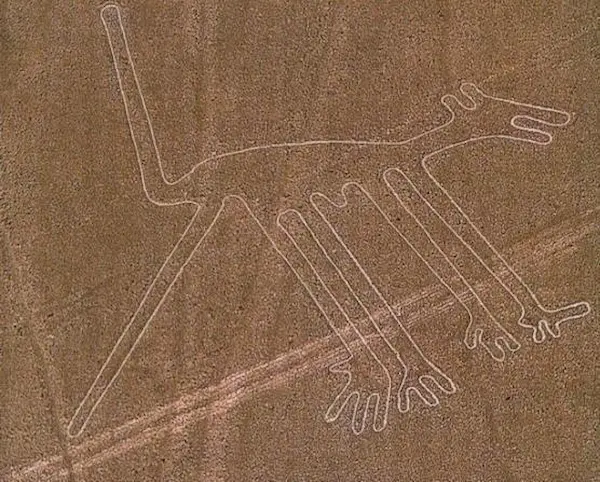
The Dog of the Nazca Lines
Commonly referred to as the “Astronaut,” this human-like figure has generated worldwide curiosity and speculation. While popular culture often associates it with extraterrestrial theories, most archaeologists interpret it as a stylized representation of a shaman or ritual observer.
The figure appears to be looking upward, which may symbolize communication with celestial forces. Its simplicity contrasts with the detailed animal figures, yet its placement suggests importance. Rather than science fiction, the Nazca Lines Meaning behind this figure likely relates to spiritual authority, ritual leadership, or guardianship over sacred space.
Geometric Figures of the Nazca Lines
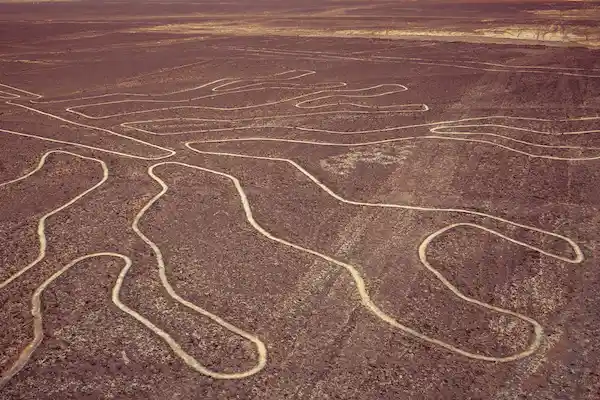
Beyond animals and humanoid forms, the Nazca Desert is covered with straight lines, trapezoids, triangles, and spirals stretching for kilometers. These geometric figures are just as significant as the recognizable shapes. Some theories suggest they functioned as ceremonial pathways, walked during rituals. Others believe they may have served as astronomical markers or territorial symbols.
The precision and scale of these lines indicate coordinated effort and planning. Unlike decorative art, these shapes were meant to be experienced from above or through movement across them. The Nazca Lines Meaning expressed through geometric designs may reflect ritual journeys, sacred mapping of the desert, or alignment with celestial patterns, reinforcing the profound relationship between landscape and spirituality.
How the Nazca Lines Have Survived Over Time
The preservation of the Nazca Lines is mainly due to the unique climate of the Nazca Desert. This region is extremely dry, with almost no rainfall, which prevents erosion and protects the geoglyphs from being washed away. The area also experiences very little wind, helping the surface stones remain in place for centuries.
The desert’s stable soil and lack of vegetation have further contributed to their conservation, as there are no roots or natural disturbances that could damage the figures.
In addition to natural conditions, modern conservation efforts have played an important role. Since being declared a UNESCO World Heritage Site, the Nazca Lines have received greater protection and monitoring. Understanding how they have survived strengthens our appreciation of the Nazca Lines Meaning as a fragile yet lasting cultural legacy that must continue to be preserved.
Nazca Lines Meaning: A Legacy of Mystery and Knowledge
The Nazca Lines Meaning remains a powerful reminder of humanity’s desire to communicate with forces beyond itself. These geoglyphs transcend time, inviting each generation to interpret their message anew. Their mystery encourages curiosity, respect for ancient wisdom, and admiration for cultural heritage. As one of Peru’s most iconic symbols, the Nazca Lines continue to educate, inspire, and connect us with the ingenuity of a civilization that transformed the desert into a canvas of eternal meaning.
