
For most travelers, the name on their train ticket Ollantaytambo is simply the final gateway before boarding the rail to Machu Picchu. However, to pass through this town without stopping is to miss one of the most historically significant and visually stunning locations in the Western Hemisphere. Known as the “Living Inca City,” this is the only place in Peru where the original urban planning has been continuously inhabited since the 15th century.
As a travel agency based in nearby Calca, we at Climb Sunday have a deep affection for these cobblestone streets and mountain-carved fortresses. For our guests from the UK and USA, this settlement offers a rare opportunity to walk through a “time capsule” that still breathes with modern life. This guide is designed to peel back the layers of the tourist crowds and reveal the secret side of the area, from its astronomical temples to its hidden weaving communities.
You might also be interested in: Beyond the Uros Islands: 3 Hidden Cultural Experiences in Lake Titicaca
The Urban Marvel of the Inca Grid
What makes this place truly unique is its layout. The town is divided into “kanchas” (blocks), which have remained virtually unchanged for over 500 years. As you walk through the narrow alleys of Ollantaytambo, you are walking on the same stones that Inca nobility once traversed.
The Engineering of Water
One of the most mesmerizing features of the town is its ancient water system. Stone channels run alongside the streets, carrying glacial meltwater from the surrounding peaks. The sound of running water is the constant soundtrack here. This was not just a functional plumbing system; for the Incas, water was a sacred element, and its precise management was a display of their harmony with the cosmos. For the modern visitor, these channels are a reminder of the sophisticated engineering that defines the region.
The Fortress and the Temple of the Sun
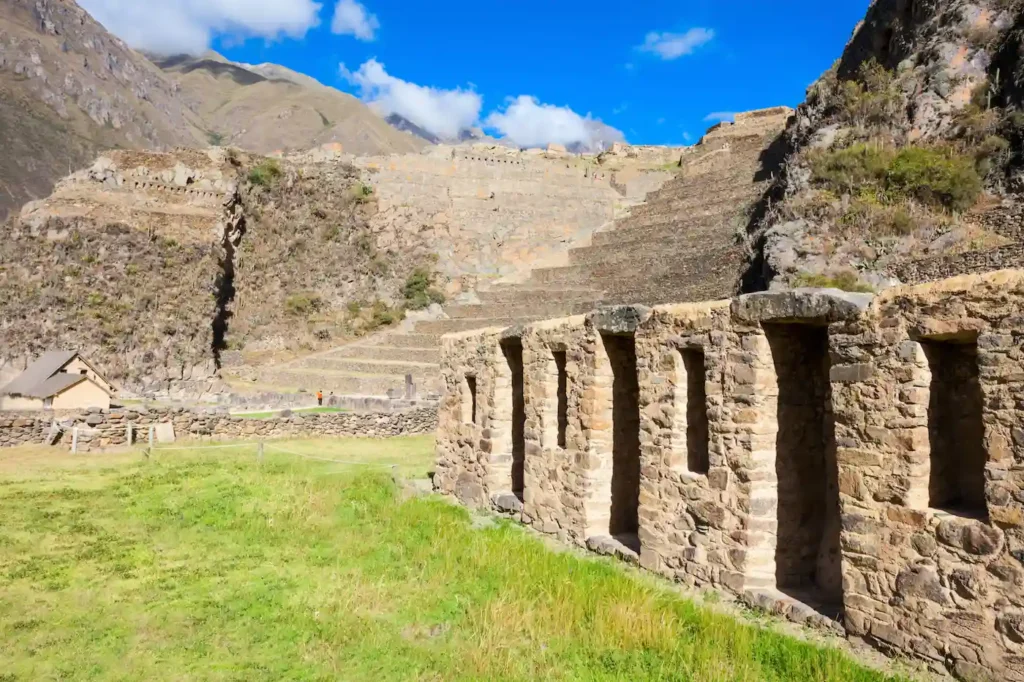
The main archaeological site is often referred to as a “fortress,” though its primary function was religious and administrative. During the Spanish Conquest, this was the location of a rare indigenous victory, where Manco Inca managed to repel the conquistadors by flooding the valley floor.
The Wall of the Six Monoliths
At the summit of the complex lies the unfinished Temple of the Sun. The highlight here is the Wall of the Six Monoliths, massive blocks of pink rhyolite, each weighing over 50 tons. What is staggering about Ollantaytambo is that these stones were not quarried locally; they were brought from the Cachicata quarry, miles away on the opposite side of the river. The logistics of moving these blocks across the valley and up the mountain remain one of the great mysteries of the Inca world, fascinating engineers and historians alike.
Pinkuylluna: The Secret Granaries
While thousands of people climb the main ruins every day, the mountain directly opposite, Pinkuylluna remains largely empty. This is where you will find the “secret” side of the valley.
The Best View in the Settlement
Pinkuylluna is home to ancient storehouses (qollcas). The Incas built these granaries high on the mountain to take advantage of the cool breezes, which acted as a natural refrigerator for crops. The hike up is steep but rewarding. From these heights, you get a bird’s-eye view of the entire grid of Ollantaytambo, which is famously shaped like the head of a llama. For the traveler who wants to escape the crowds, Pinkuylluna is the perfect sanctuary.
The Mystery of the “Baño de la Ñusta”
At the base of the ruins, you will find the Princess’s Bath (Baño de la Ñusta). This is a beautifully carved stone fountain where water flows with a precision that defies modern tools. Legend says that this was a place of ritual purification for Inca royalty.
The stone carving in this part of Ollantaytambo is of the “Imperial” style the highest quality of Inca masonry, where stones fit together so tightly that a razor blade cannot pass between them. This area serves as a tranquil park, perfect for understanding the agricultural sophistication that allowed Ollantaytambo to support a large population of priests, soldiers, and farmers.
Beyond the Ruins: The Weaving Communities of Willoq
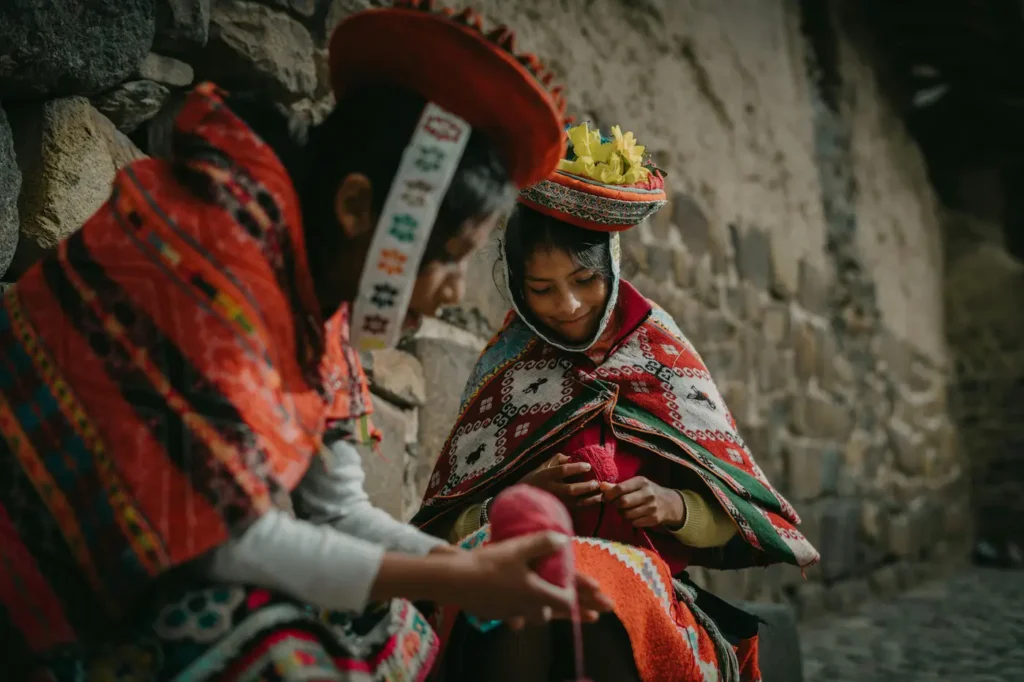
To understand the living culture of the region, one must travel up into the high mountains to the communities of Willoq and Patacancha. These villages are famous for their “Huayruro” textiles vibrant red and black weavings that have been produced the same way for centuries.
Authentic Cultural Exchange
At Climb Sunday, we facilitate visits where you can see the entire process of textile production, from shearing the alpaca to using natural dyes. For the UK/USA market, this is the ultimate “slow travel” experience. It’s an opportunity to meet the master weavers of the Ollantaytambo district and learn about the iconography hidden in every thread. These communities are the keepers of the legacy, proving that the valley is not just a collection of ruins, but a vibrant, living culture.
The Inti Punku (Sun Gate) Hike
For the adventurous hiker, the trek to Inti Punku is one of the best-kept secrets of the area. This is not the Sun Gate at Machu Picchu, but a magnificent stone portal that overlooks the valley, framed by the glacier of Mount Veronica.
A Journey Through Time
The trail follows the old road used to transport the massive stones to the town. Along the way, you pass the “Tired Stones” (Piedras Cansadas) huge blocks that were abandoned mid-transport. Reaching this specific Sun Gate provides a sense of isolation and grandeur that is hard to find on more popular trails. It is a full-day commitment, but for those seeking a physical challenge, it is a quintessential Ollantaytambo adventure.
Staying in the Sacred Valley: Why Calca is Your Perfect Base
While this town is a must-visit, staying directly in the center can be busy due to the constant flow of train passengers. This is why many of our savvy travelers choose to base themselves in Calca.
The Strategic Advantage
Calca is located in the heart of the Sacred Valley, almost equidistant between Cusco, Pisac, and Ollantaytambo. Staying with us in Calca allows you to experience the valley at a much more relaxed pace. You can enjoy the local markets and hot springs of Calca in the morning and take a short, scenic drive to Ollantaytambo in the afternoon once the morning tour buses have departed. This strategy allows you to see the “Secret Side” of the ruins in the golden hour light, long after the day-trippers have left for their trains.
Practical Logistics for the UK/USA Traveler
Navigating the town requires some planning, especially regarding transport and tickets.
- The Boleto Turístico: You will need the tourist ticket to enter the main complex.
- The Train Station: The station is a 15-minute walk from the main plaza of Ollantaytambo.
- Altitude: At 2,792 meters, this location is lower than Cusco, making it excellent for acclimatization.
The Culinary Scene: From Chicha to Craft Beer
The town has evolved into a culinary hub. You can find everything from traditional “Chicherias” (local corn beer taverns) to high-end restaurants serving organic Andean fusion.
A Taste of the Valley
The fertile land surrounding Ollantaytambo produces some of the world’s best giant white corn. We recommend trying Choclo con Queso from a street vendor for an authentic snack. For a more formal experience, many restaurants in Ollantaytambo now source their ingredients directly from the surrounding farms, offering a “farm-to-table” experience that satisfies the palate of any international traveler.
Photography Tips for the Sacred Valley
The lighting here is dynamic and can be tricky due to the steep mountain shadows.
- Morning: Best for the Pinkuylluna granaries, as the sun hits the mountain directly.
- Late Afternoon: Best for the main fortress of Ollantaytambo. The sun sets behind the mountains, casting a soft, golden glow over the stone walls.
- The “Llama” Face: Look at the mountain across from the ruins to see the face of Viracocha, the creator god, carved by nature.
Frequently Asked Questions
Is Ollantaytambo worth a full day?
Yes! Many people spend only 2 hours here before their train. To see the ruins, the town, and Pinkuylluna, you need at least a full day in Ollantaytambo.
How do I get from Calca to Ollantaytambo?
It is a beautiful 45-minute drive through the heart of the Sacred Valley. You can take a private car or a local “colectivo” for a more local experience.
Can I visit the ruins at night?
Currently, the site is only open during daylight hours, but the town itself is magical after dark when the stone streets are lit by warm lamps.
More Than Just a Gateway
Ollantaytambo is a testament to the endurance of the Inca spirit. It is a place where history isn’t found in a museum, but in the walls of the homes, the flow of the water, and the breath of the people who still call it home. By looking beyond the train station, you discover a world of astronomical precision, military heroism, and peaceful mountain beauty.
At Climb Sunday, we are proud to call this valley our home. We invite you to explore Ollantaytambo with the eyes of an insider. Whether you are climbing the steep terraces of the fortress or sharing a meal in a high-altitude weaving community, we ensure that your journey is safe, authentic, and unforgettable.
