
Long before quinoa became internationally famous, another crop was already supporting communities across the high Andes. Tarwi is a pale, round legume with a firm texture, a mild flavor after processing, and a long history in Peru, Bolivia, and Ecuador. Travelers may also see it called chocho, Andean lupin, or the tarwi bean.
At first glance, it may look like a simple market snack. In reality, the crop connects Andean agriculture, food traditions, and generations of family knowledge. It can appear in salads, ceviche-style dishes, creamy stews, spreads, and contemporary vegetarian recipes.
This guide explains its history, nutritional value, safe processing, traditional uses, and where travelers can experience it during a visit to Cusco.
You might also be interested in: Chiriuchu in Cusco: A Complete Guide to the Corpus Christi Dish
What Is Tarwi?
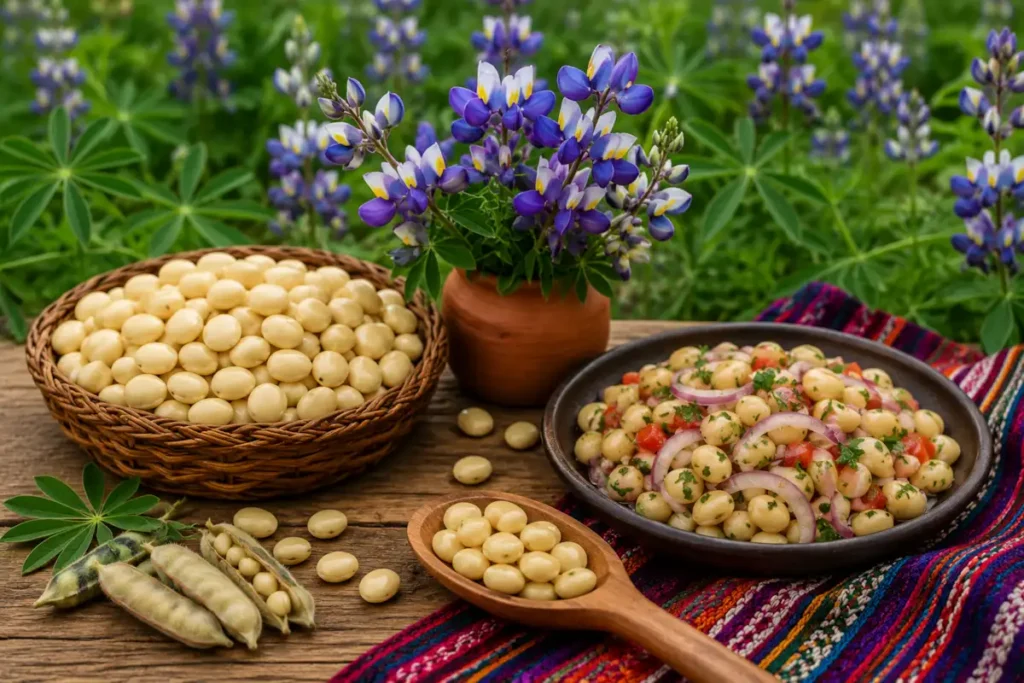
Tarwi is the seed of Lupinus mutabilis, a lupin species native to the Andes. It belongs to the legume family, alongside beans, lentils, chickpeas, peanuts, and soybeans. In Peru, the name varies by region. “Tarwi” and “tarhui” are common in parts of the central and southern Andes, while “chocho” is widely used in northern Peru and Ecuador.
The plant produces blue, purple, or white flowers before forming pods filled with seeds. It is adapted to highland conditions and can grow where cold temperatures, limited rainfall, or poor soils make other crops more difficult to cultivate.
A raw Tarwi bean is naturally very bitter. That bitterness comes from quinolizidine alkaloids, defensive compounds that help protect the plant but make untreated seeds unsuitable for direct consumption. Traditional cooks developed a lengthy washing and soaking process to reduce these compounds before using the seed as food.
Once properly debittered, the bean becomes tender yet firm, with a mild, slightly nutty taste that absorbs citrus, herbs, chili, onion, and other seasonings well.
The History of the Tarwi Bean in the Andes
Archaeological and historical evidence indicates that Andean societies cultivated lupins long before the Inca Empire. Seeds and artistic representations associated with lupin appear in pre-Inca contexts, while later records describe continued highland cultivation.
Its value was practical as well as culinary: dried seeds could be stored and transported. Farmers also incorporated the plant into rotations with potatoes, maize, and quinoa. Like other legumes, it works with soil bacteria to fix atmospheric nitrogen, helping maintain soil fertility.
The crop declined in visibility after European crops and changing agricultural systems became more dominant, but it never disappeared. Rural communities continued planting, processing, and eating it, preserving local seed varieties and knowledge.
Today, chefs value its texture, researchers study it as a plant-protein crop, and travelers increasingly seek ingredients that reveal Andean agricultural history. This attention matters most when it supports local producers instead of presenting the crop as a newly discovered trend.
Tarwi Nutrition: Why the Bean Attracts Attention
The nutritional composition of Tarwi varies by variety, growing conditions, maturity, and processing. Recent research describes the dry seed as rich in protein, with some studies reporting levels around 41 percent and broader reviews identifying ranges of approximately 41 to 53 percent on a dry-matter basis.
That does not mean a serving of hydrated beans is more than 40 percent protein by total weight. After soaking and cooking, water increases the weight, so the proportion per serving is lower. Many promotional articles overlook this distinction.
The seed also contains plant fats and fiber. Its protein provides essential amino acids and is particularly noted for lysine, which is often limited in cereal-based diets. Methionine may be comparatively low, so pairing the bean with maize, rice, quinoa, or another grain creates a more balanced meal.
It is reasonable to call Tarwi a nutrient-dense Andean legume. It is less accurate to promise that it cures anemia, controls diabetes, strengthens bones, or produces medical outcomes by itself. Food can contribute to a varied diet, but it should not be presented as treatment.
Is Tarwi the Same as Lupini Beans?
The terms are related but not always identical. “Lupini beans” can refer to edible seeds from several Lupinus species, including Mediterranean varieties such as Lupinus albus. The Andean species is Lupinus mutabilis.
Both Mediterranean lupini and the Andean tarwi bean require attention to bitterness and alkaloid content, although varieties and processing methods differ. A jar of lupini beans purchased in Europe or North America may therefore contain a related species rather than the exact crop found in Peru.
In English, “Andean lupin” is often the clearest translation. In Cusco, asking for “tarwi” is more useful, while “chocho” may also be understood.
Why Raw Tarwi Must Be Debittered
Never eat untreated dry seeds directly. Raw bitter Tarwi contains quinolizidine alkaloids that must be reduced through processing. The traditional method combines soaking, boiling, and repeated washing in clean water. The exact duration varies by seed type, batch size, water temperature, and local practice.
A common household process begins with an extended soak, followed by boiling and several days of washing or soaking with frequent water changes. The purpose is not merely to soften the beans; it is to remove the intense bitterness associated with the alkaloids.
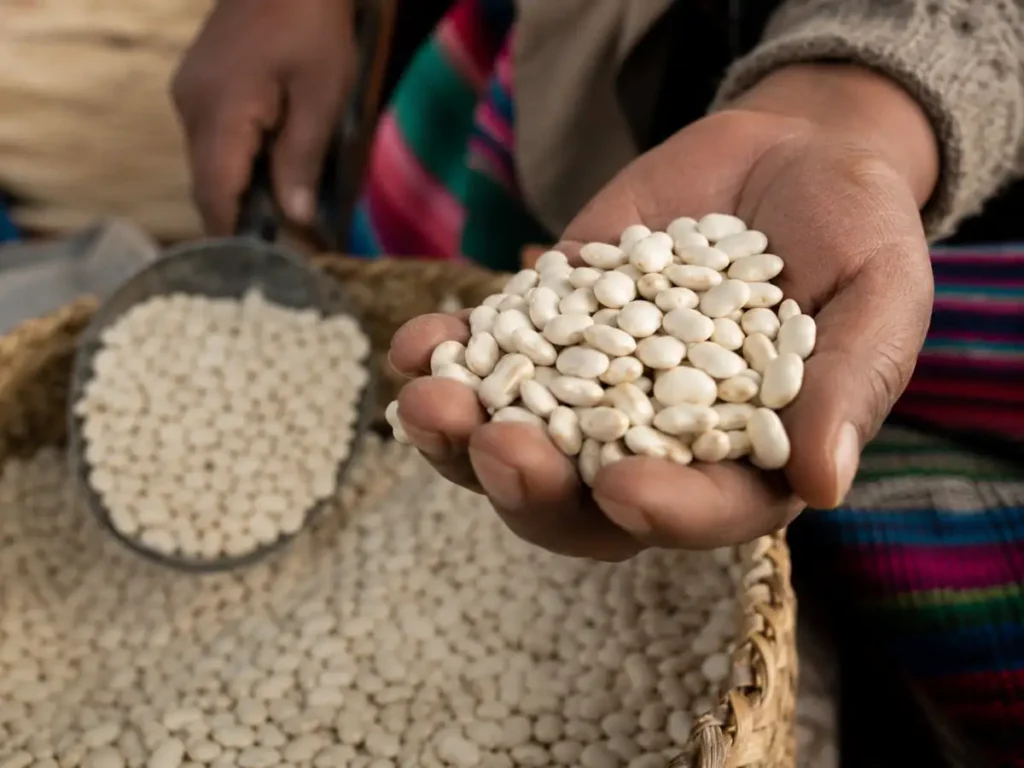
For travelers and home cooks outside the Andes, the safest and easiest option is to buy commercially prepared, fully debittered beans from a reputable supplier. In Peruvian markets, ready-to-eat seeds are often sold peeled, hydrated, and already processed.
Do not assume one quick boil makes raw seeds safe. If a batch remains strongly bitter, do not eat it. Anyone preparing the crop from scratch should follow a tested method from a reliable source rather than improvising.
How Tarwi Is Eaten in Peru
Once debittered, the bean’s mild flavor works in both traditional and modern preparations.
As a simple snack
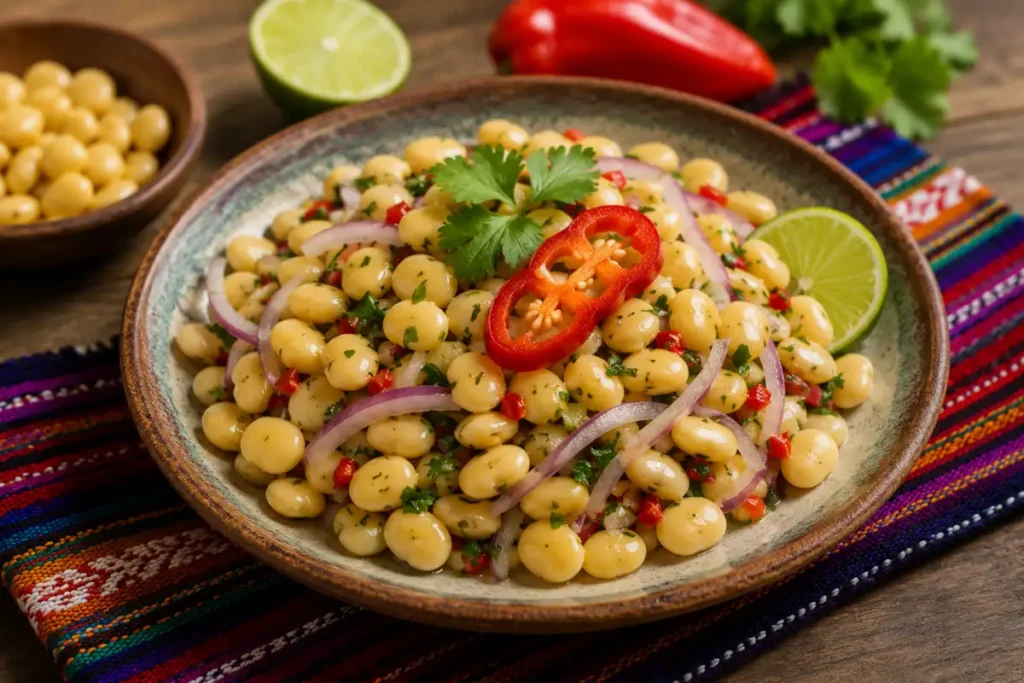
Ready-to-eat beans can be seasoned with lime or lemon juice, salt, pepper, cilantro, and chopped chili. This is one of the easiest ways to understand their natural texture.
The citrus balances the earthy flavor, while the chili adds a distinctly Peruvian character. It can be served as a small appetizer, market snack, or light accompaniment before a larger meal.
In salads and solterito-style dishes
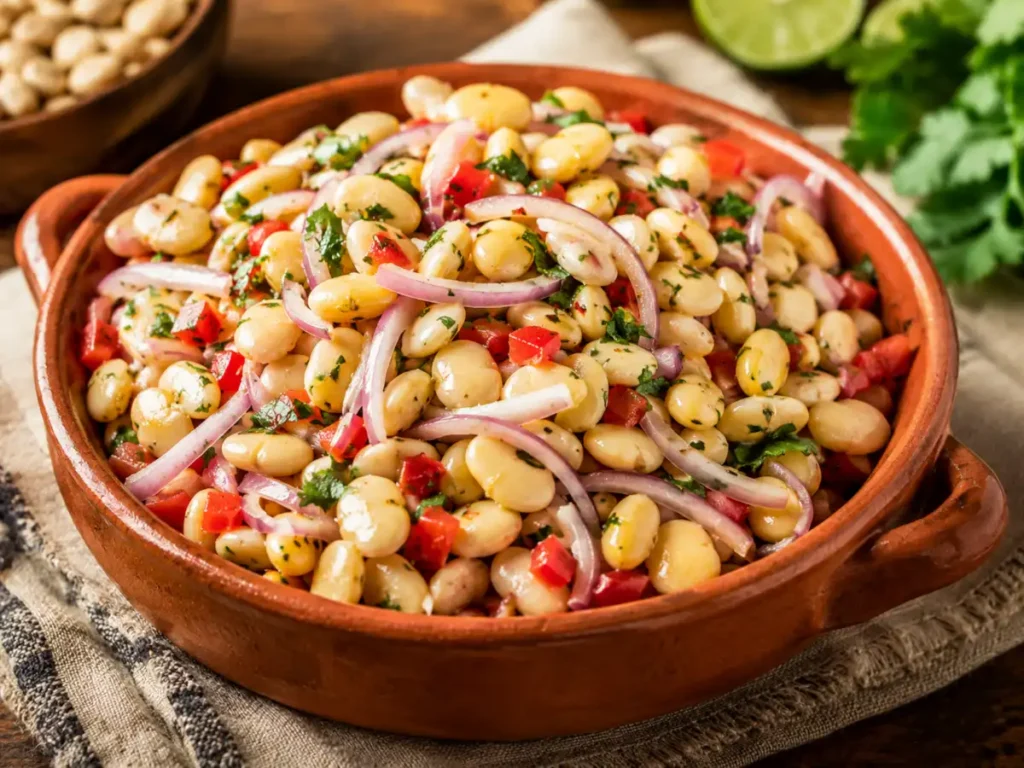
The beans pair well with tomato, red onion, corn, broad beans, fresh cheese, herbs, and rocoto. They add body and protein while maintaining a bright, fresh flavor.
A solterito-style preparation can be adapted according to the ingredients available. Some versions emphasize corn and cheese, while vegetarian variations may add avocado, quinoa, or roasted vegetables.
In tarwi ceviche
A ceviche-style preparation replaces fish with processed beans and combines them with lime juice, red onion, cilantro, tomato, and chili. Sweet potato and corn may be served alongside. This is an appealing option for vegetarian travelers.
Unlike traditional seafood ceviche, the citrus does not need to “cook” the ingredient. The beans are already processed and ready to eat, allowing the lime, chili, and herbs to function primarily as seasoning.
In creams, soups, and stews
Cooks can blend the beans into a smooth cream or add them to a base of onion, garlic, tomato, potato, and herbs. Their texture helps thicken a sauce or soup.
The result can be served with rice, potatoes, toasted corn, or fresh cheese. These preparations are particularly comforting during the colder months in the Peruvian highlands.
In contemporary plant-based food
Modern kitchens use the bean in hummus-style spreads, croquettes, patties, plant-based milks, sauces, and baked products. These are not necessarily ancient recipes, but they show how a traditional crop can adapt to current vegetarian and vegan cooking.
This versatility has also encouraged chefs to experiment with flour, protein concentrates, desserts, pasta, and innovative tasting menus inspired by native Andean ingredients.
What Does Tarwi Taste Like?
Properly processed beans should not have the harsh bitterness of the raw seed. Their flavor is mild, earthy, and slightly nutty, while the texture is firmer than a cooked white bean and softer than a roasted nut.
Because the flavor is subtle, the experience depends on the seasoning. Citrus makes it brighter, rocoto or ají adds heat, cheese contributes richness, and herbs provide freshness. In stews, it absorbs the flavor of the sofrito and becomes creamier.
Travelers who enjoy chickpeas, edamame, fava beans, or Mediterranean lupini may find the texture familiar. In the Andes, however, the ingredient is inseparable from high-altitude farming and traditional debittering.
Where to Try Tarwi in Cusco
Availability changes by season and menu, so no single place can guarantee the same dish daily.
San Pedro Market is a useful starting point. Vendors sell regional produce, grains, prepared foods, cheese, herbs, and other ingredients used in Cusco cooking. Even when a prepared dish is not available, seeing the bean in the market helps travelers understand how it fits into local food culture.
Traditional markets and small local eateries may offer it in salads, soups, or daily menus. Vegetarian and contemporary Andean restaurants are more likely to use it in ceviche-style plates, spreads, burgers, croquettes, or tasting menus.
Menus change, and the name may appear as “chocho.” Ask whether it is available that day, how it has been prepared, and whether the dish contains dairy, eggs, wheat, nuts, or other allergens.
Climb Sunday’s Cusco half-day walking tour includes San Pedro Market and ends with local recommendations for continuing your exploration. This makes it easy to connect the city’s streets and stories with a regional meal after the tour.
Enjoying Tarwi During a June Visit to Cusco
June is one of the most culturally intense months in Cusco. The city celebrates its Inca and colonial heritage through ceremonies, processions, folkloric presentations, public performances, and Inti Raymi. Streets and squares become especially active, and food becomes part of the wider experience.
Although Tarwi is not limited to one June festival, the month is an excellent time to explore Andean gastronomy. Begin with a guided walk through the historic center, visit San Pedro Market, learn about native crops, and then look for a salad, ceviche-style dish, cream, or stew prepared with the bean.
Climb Sunday’s June 2026 planning material highlights several ways to eat it: seasoned with citrus, salt, and pepper; mixed with corn, tomato, onion, cheese, and broad beans; prepared as ceviche; blended into creams and stews; or adapted into hummus, croquettes, burgers, and plant-based drinks.
A thoughtful day in Cusco could combine a Cusco City Tour or half-day walking tour with lunch at a traditional or contemporary Andean restaurant. Instead of treating food as an afterthought, include it as another way to understand the relationship between the city, nearby farming communities, and the Sacred Valley.
Travelers visiting for Corpus Christi, local folkloric performances, or Inti Raymi can therefore create an itinerary that goes beyond observing celebrations. Tasting regional ingredients allows them to understand how Andean heritage continues through farming, cooking, markets, and daily family life.
Tarwi and Sustainable Andean Agriculture
As a legume, the plant can contribute nitrogen to the soil through biological nitrogen fixation. Farmers have traditionally used it in rotations or alongside other Andean crops, helping diversify production.
Its tolerance of cool highland conditions and relatively poor soils gives it potential in regions facing agricultural pressure. However, calling any crop automatically sustainable would be too simplistic. Its environmental value depends on farming practices, processing, seed sourcing, and fair returns for producers.
Traditional crop diversity can also reduce dependence on a limited number of commercial varieties. Preserving locally adapted seeds helps maintain agricultural knowledge and gives farming communities more options when weather or market conditions change.
Travelers can support responsible production by choosing restaurants and shops that identify local ingredients, work with nearby farmers, and explain where their food comes from.
Food Safety and Allergy Considerations
The tarwi bean belongs to the lupin family. Lupin can cause allergic reactions, and people with peanut allergy may be at higher risk of reacting to it. Travelers with peanut or legume allergies should not assume the ingredient is safe because it is unfamiliar.
Ask restaurant staff directly whether a dish contains lupin, peanuts, soy, dairy, eggs, or other allergens. Translation cards in Spanish can be useful when traveling, particularly when an allergy is severe.
The bean itself contains no gluten, but a prepared dish may include wheat or cross-contact. A croquette, burger, bread, sauce, or thickened soup should never be assumed to be gluten-free without confirmation.
Choose vendors with clean food-handling practices, especially when buying hydrated beans in open markets. If purchasing packaged products, check the storage instructions and whether the product is labeled ready to eat.
Practical Tips for Travelers
- Learn both common names: Ask for “tarwi” and “chocho,” because regional naming varies. A market vendor may recognize one term more readily than the other.
- Choose processed beans: Ready-to-eat, debittered seeds are more practical than untreated dry seeds. They remove the uncertainty and lengthy preparation involved in processing the crop at home.
- Start with a small portion: A shared plate lets you try the texture and seasoning without ordering too much. It is also a convenient way to compare several regional dishes during one meal.
- Ask how it was prepared: This helps you understand the dish and confirm that the beans were properly processed. It also gives local cooks an opportunity to explain their recipe.
- Pair food with context: A market visit or guided city walk connects the ingredient to Cusco’s farms, trade, agriculture, and daily life.
- Support local producers: Whenever possible, choose businesses that purchase directly from Andean farmers or use traceable regional ingredients.
Frequently Asked Questions About Tarwi
What is Tarwi called in English?
It is commonly called Andean lupin, Andean lupine, or an Andean lupin bean. “Lupini bean” may refer to related species, so Andean lupin is more precise.
Is the tarwi bean safe to eat?
Yes, when it has been properly debittered and prepared. Untreated bitter seeds should not be eaten because they contain quinolizidine alkaloids.
Is Tarwi high in protein?
The dry seed is protein-rich. Studies report values around 41 percent and, depending on the sample and method, ranges extending above 50 percent on a dry-matter basis. Hydrated beans contain more water, so serving-level percentages are lower.
Is it suitable for vegetarians and vegans?
The bean itself is plant-based. Some salads, spreads, and ceviche-style dishes are vegan, but other recipes may include cheese, eggs, milk, butter, or meat stock.
Is it gluten-free?
The bean is naturally free from gluten. Prepared foods can contain wheat or cross-contact, so people with celiac disease should ask how the dish was made.
Can people with peanut allergy eat it?
Lupin can trigger allergic reactions, and people with peanut allergy may also react. Anyone with a peanut allergy should seek appropriate medical guidance and communicate clearly with food providers.
Where can I try Tarwi in Cusco?
Look in San Pedro Market, traditional eateries, vegetarian restaurants, and contemporary Andean kitchens. Availability changes, so ask locally before visiting specifically for one dish.
Final Thoughts
Tarwi deserves attention not because it needs an exaggerated “miracle food” label, but because it brings together nutrition, agricultural resilience, culinary creativity, and Andean history.
For travelers, tasting it in Cusco can transform an unfamiliar bean into a story about altitude, soil, local markets, family techniques, and the movement of food between communities. It can be as simple as a handful seasoned with lime or as creative as a modern plant-based entrée.
The most rewarding way to experience Tarwi is with context. Walk through Cusco with a local guide, visit the market, ask how the ingredient is processed, and choose a restaurant that respects regional produce. Climb Sunday can connect that food experience with a personalized Cusco itinerary, the Sacred Valley, and Machu Picchu.
When you travel through the Andes, do not only look at the landscape. Taste the crops that made life in that landscape possible.
