
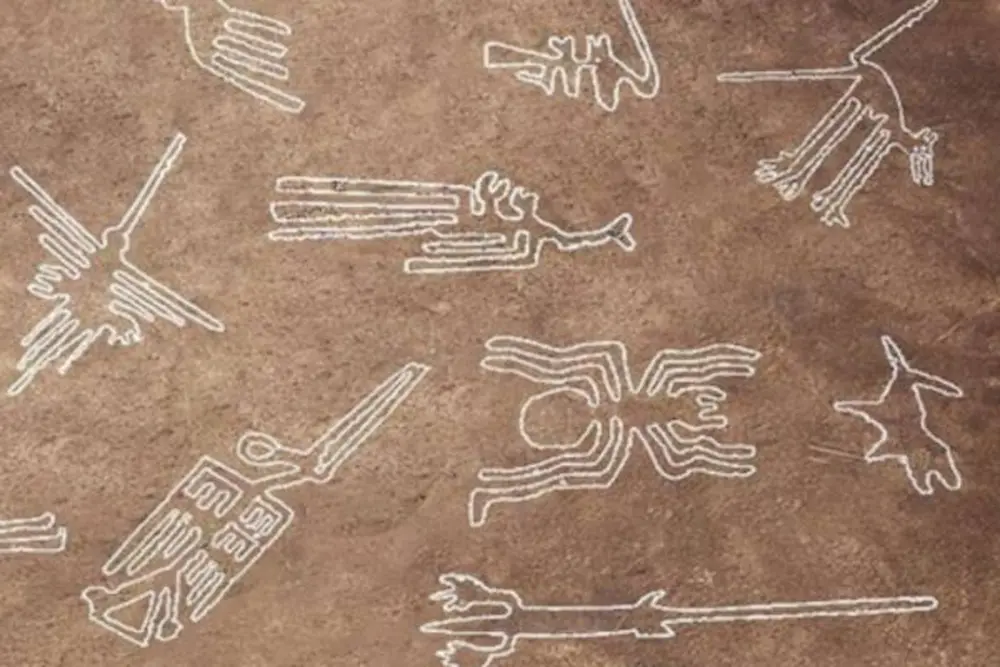
The Nazca Lines meaning remains one of Peru’s most intriguing archaeological questions. Across southern Peru, enormous geoglyphs form lines, geometric shapes and figures of animals, plants and human-like beings. The deeper question is why ancient communities created them.
This guide explains the Nazca Lines meaning through construction, cultural context, ritual possibilities and surviving symbols while separating plausible interpretations from speculation.
You might also be interested in: Peruvian Superfoods: A Traveler’s Guide to Peru’s Food Culture
What Are the Nazca Lines?
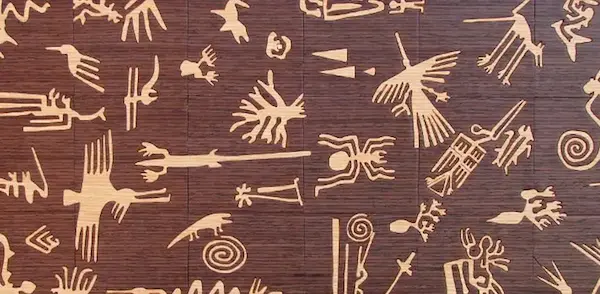
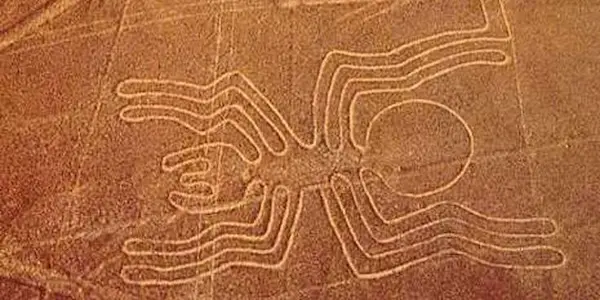
The Nazca Lines are geoglyphs spread across arid plains around Nazca and Palpa. They include straight paths, geometric forms and figures such as the hummingbird, monkey, spider, whale and several birds. Their overall scale becomes clearest from above.
Understanding the Nazca Lines meaning starts with one point: the geoglyphs were not a single project. Different forms were created over long periods, so their functions may also have changed. Ceremonial, social and environmental purposes can therefore coexist.
Who Created the Nazca Lines?
The Nazca Lines meaning cannot be separated from the people and environment that produced the geoglyphs.
Most famous geoglyphs are associated with the Nazca culture, which developed on Peru’s southern coast roughly two thousand years ago. Earlier regional traditions also created geoglyphs, showing that desert marking began before the best-known figures appeared.
This context is essential to the Nazca Lines meaning. The people who made the designs lived in an extremely dry environment where water, agriculture and sacred landscapes were fundamental concerns. The lines belonged to a cultural system, not simply to visual art.
How Were the Nazca Lines Made?
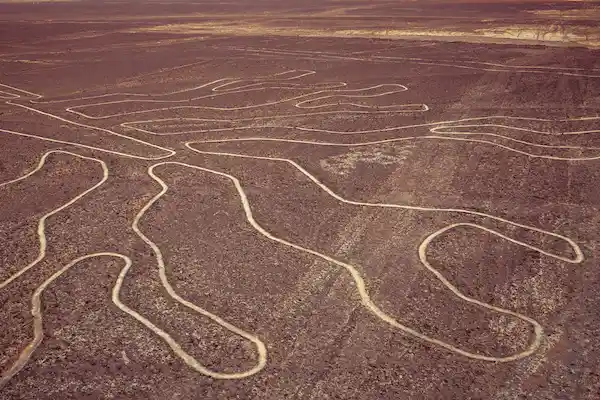
The answer to “how were the Nazca Lines made?” is practical. People moved darker surface stones aside to expose lighter soil underneath, creating a visible contrast across the desert.
Straight lines and geometric forms could be planned with stakes, cords and measurement. Animal figures required greater organization, yet no modern machinery was necessary. The achievement lies in planning, scale and consistency.
The Nazca Lines meaning is connected to this process because many lines were broad enough to walk. Their physical form supports the possibility that movement across the desert formed part of rituals.
Why Have the Nazca Lines Survived?
The desert is exceptionally dry, with very limited rainfall and relatively stable ground conditions. Once darker surface stones were moved, the lighter material beneath could remain visible for centuries because vegetation and strong erosion were limited.
Their preservation also matters when interpreting the Nazca Lines meaning. The desert surface is fragile, so unauthorized walking or driving can damage markings that survived for generations.
What Is the Nazca Lines Meaning?
There is no single proven translation that explains every line, shape and figure. The strongest interpretation of the Nazca Lines meaning connects the geoglyphs with ritual activities, sacred places, water, fertility, community movement and relationships with the surrounding landscape.
This explanation fits the variety of designs better than one hidden code. Straight paths, geometric spaces and animal figures may have served different purposes, from guiding processions to marking important places or expressing relationships with nature and sacred forces.
Why Were the Nazca Lines Created?
The question “why were the Nazca Lines created?” probably has no one-purpose answer. The Nazca Lines meaning becomes clearer when the desert is viewed as a cultural landscape rather than an empty surface.
Water was particularly important in this dry region. Underground sources, seasonal flows, mountains and agricultural survival were closely connected. Ceremonies asking for rainfall or fertility would therefore have had spiritual and practical significance.
Broad lines and pathways may also have brought groups together for processions. Creating and maintaining the geoglyphs could have reinforced social ties and transformed the landscape into a place for shared beliefs.
Main Nazca Lines Theories
Comparing the main theories is essential because the Nazca Lines meaning may reflect more than one function.
The main Nazca Lines theories do not need to exclude one another. Different geoglyphs may have served different functions across generations. Comparing them gives a more realistic understanding of the Nazca Lines meaning.
Water and Fertility Rituals
One strong interpretation connects the lines with water and agricultural fertility. In an environment where rain was scarce, paths toward mountains, water-related areas or ceremonial spaces may have supported rituals seeking rainfall or agricultural success.
This makes Nazca Lines water rituals highly relevant to the broader Nazca Lines meaning. Water does not explain every individual figure, but it provides a coherent environmental setting for ceremonial activity.
Ceremonial and Processional Paths
Some straight lines and trapezoids are wide enough for groups to walk along them. This supports the possibility that sections of the geoglyph network acted as ceremonial pathways rather than images designed only to be seen from above.
Under this interpretation, the Nazca Lines meaning involved participation. Walking, gathering and moving toward significant landscape features may have been as important as the final shapes visible from the air.
Astronomical Interpretations
Astronomical explanations have long attracted attention. Some lines may align with celestial events or horizon points, but a complete astronomical calendar does not convincingly explain the whole network. With so many lines in different directions, some apparent alignments may also occur by chance.
A careful interpretation of the Nazca Lines meaning therefore treats astronomy as a possible element for selected features, not a proven explanation for every geoglyph.
Landscape and Religious Symbolism
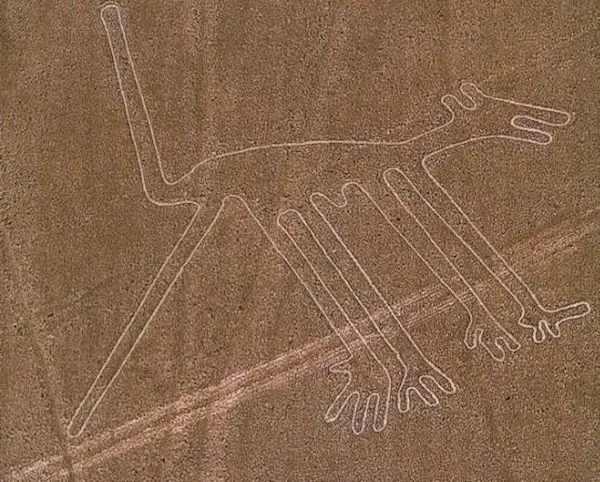
Animal and plant figures may reflect relationships between people, ecosystems and sacred forces. Birds, marine animals and monkeys connect the desert to environments far beyond the immediate plain, suggesting a symbolic world broader than the local landscape.
This perspective makes the Nazca Lines meaning less like a written sentence and more like a ceremonial language embedded in geography.
What About the Alien Theory?
Alien theories became popular because some designs are easiest to appreciate from the air. Yet the geoglyphs can be produced with surveying techniques, stakes, cords and organized labor, without aircraft or non-human technology.
Alien stories remain part of popular culture, but they do not provide a supported explanation of the Nazca Lines meaning.
What Do the Nazca Lines Symbols Mean?
The figures are central to the Nazca Lines meaning, but none comes with a surviving explanation from its creators.
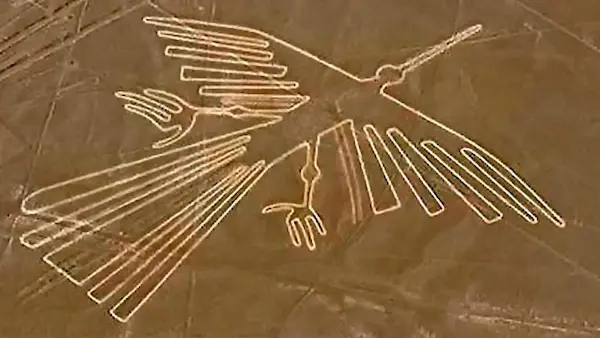
There is no surviving dictionary assigning a confirmed meaning to each figure. The hummingbird, spider, monkey, whale and large bird forms clearly mattered enough to be reproduced at monumental scale, but their exact symbolic roles remain uncertain.
The safest approach to the Nazca Lines meaning is not to assign one fixed message to every animal. Individual figures may have related to water, fertility, seasonal cycles, mythology or religious ideas, but those possibilities remain interpretations rather than confirmed translations.
The Hummingbird
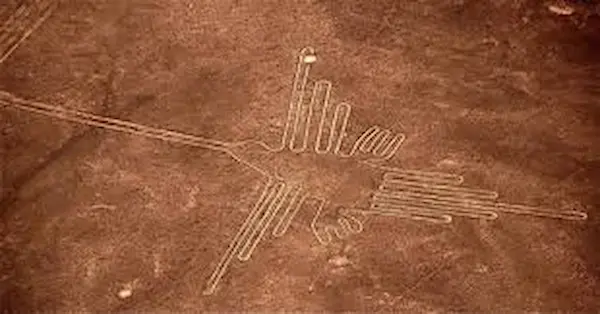
The hummingbird is one of the most recognizable designs. Its long beak and extended wings are easy to identify from above. It may have carried associations with nature or fertility, but no single interpretation has been proven.
The Monkey
The monkey is notable because monkeys do not naturally inhabit the coastal desert. Its presence may reflect cultural connections with wetter eastern regions or symbolic ideas extending across very different ecological zones.

The Spider
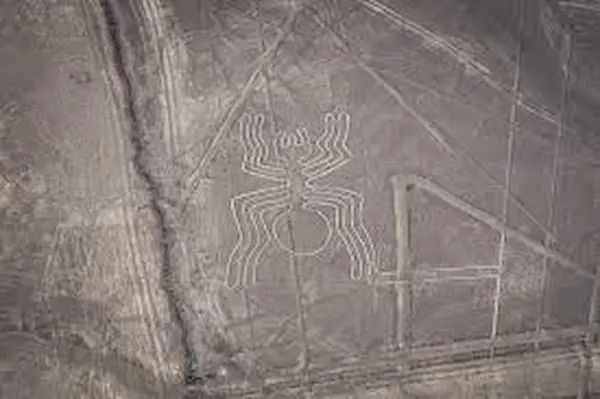
The spider is often linked in popular interpretations with rain or fertility. That idea fits the desert context, but it should be treated as a possibility rather than a confirmed explanation.
The So-Called Astronaut
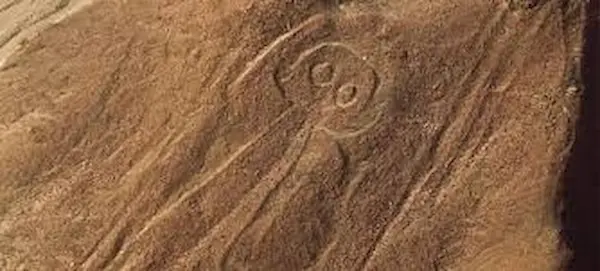
A human-like figure on a slope is popularly called the “Astronaut.” The nickname is modern and does not indicate extraterrestrial contact. It is better understood as an anthropomorphic geoglyph whose original role remains uncertain.
Why Are the Nazca Lines Still a Mystery?
The Nazca Lines mystery continues because the communities that created the geoglyphs left no written explanation of their purpose. Locations, construction techniques, associated objects and landscape relationships can be studied, but beliefs from roughly two thousand years ago cannot be reconstructed with complete certainty.
This uncertainty is central to the Nazca Lines meaning. Much is known about construction and cultural context. What remains open is how those elements combined within ceremonies, beliefs and community life.
Did AI Solve the Nazca Lines?
AI-assisted analysis of aerial imagery has helped identify additional geoglyph candidates by highlighting shapes and patterns across very large areas.
However, finding more geoglyphs does not solve the Nazca Lines meaning. Technology can help locate and classify designs, but it cannot automatically reconstruct ancient beliefs. New discoveries may refine interpretations without producing one final answer about purpose.
How to Visit the Nazca Lines
Seeing the desert directly can make the Nazca Lines meaning easier to grasp because scale and landscape become part of the experience.
Travelers researching how to visit Nazca Lines generally have two choices: a scenic flight or land-based viewpoints. A flight gives the clearest sense of scale because several famous figures can be seen during the same route.
Small aircraft usually bank to both sides so passengers can view the geoglyphs. Travelers prone to motion sickness should plan ahead and avoid a heavy meal immediately before flying.
Ground viewpoints avoid small-aircraft travel and cost less, but they show fewer lines and figures than an aerial experience.
Seeing the desert also helps explain the Nazca Lines meaning. The landscape reveals a network of paths and forms, making connections with water, movement and sacred geography easier to understand.
Practical Tips for Visiting Nazca
- Allow enough travel time. Nazca is a significant distance from Lima, so avoid combining long road travel and a flight with unrealistic schedules.
- Choose the right viewpoint. Scenic flights provide a broad perspective, while towers suit travelers who prefer to remain on the ground.
- Prepare for desert conditions. Carry sunscreen, sunglasses and water, and use clothing suitable for strong daytime sun.
- Protect the archaeological landscape. Stay on authorized routes and never approach geoglyphs by crossing protected desert surfaces.
Frequently Asked Questions About the Nazca Lines
Who built the Nazca Lines and why?
The best-known designs were created mainly by the Nazca culture, while earlier traditions also contributed to the broader geoglyph landscape. Their purposes likely combined ritual, ceremonial and environmental concerns rather than one single function.
How old are the Nazca Lines?
Many famous designs were produced roughly two thousand years ago, although geoglyph creation in southern Peru developed over a longer period.
Why haven’t the Nazca Lines disappeared?
Extremely dry conditions, limited vegetation and relatively low erosion helped preserve the lighter ground exposed when darker surface stones were removed.
Have the Nazca Lines been solved?
No single explanation accounts for every feature. The Nazca Lines meaning is best understood through ritual activity, water, community movement and sacred landscapes, while the exact function of individual designs remains debated.
Can you see the Nazca Lines from the ground?
Yes. Towers and viewpoints allow travelers to see selected lines and figures, although a scenic flight gives a much broader perspective of the geoglyph landscape.
Are the Nazca Lines Aztec?
No. They are in Peru and are associated mainly with pre-Inca cultures of the southern Peruvian coast, especially the Nazca culture. They are unrelated to the Aztec civilization of Mexico.
Understanding the Nazca Lines Beyond the Mystery
The most useful approach to the Nazca Lines meaning is not a secret code awaiting one dramatic solution. The geoglyphs fit an ancient landscape shaped by water scarcity, ceremony, community movement and religious ideas.
Theories will continue to evolve. Understanding both what can be explained and what remains uncertain lets travelers appreciate Nazca without reducing it to aliens or one universal theory.
For travelers exploring southern Peru, learning the Nazca Lines meaning turns a flight over famous figures into a deeper encounter with pre-Inca history, desert landscapes and one of the country’s most enduring archaeological questions.
