
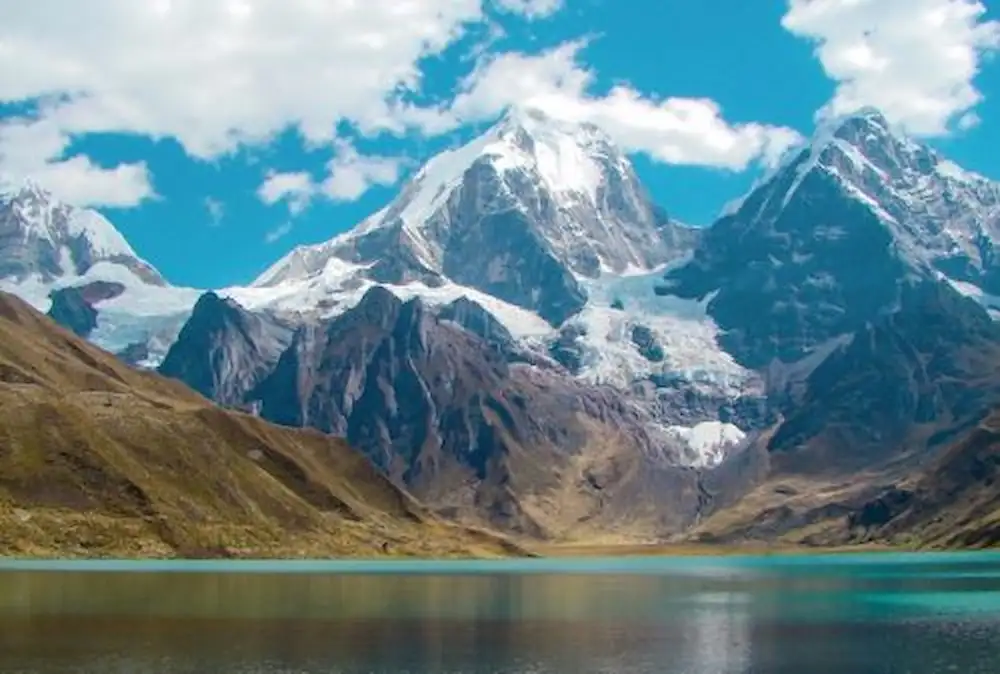
The Peru Mountain Range is one of the most impressive natural regions in South America. Stretching across the country from north to south, it shapes landscapes, cultures, and traditions. From snowcapped peaks to highland valleys and remote villages, this mountain system offers both adventure and history. Understanding the Peru Mountain Range helps travelers and readers appreciate Peru beyond its famous landmarks. In this complete guide, you will discover its geography, its main ranges, its cultural value, and practical advice for exploring it in a safe and meaningful way.
You might also be interested in: 10 Traditional Food in Peru
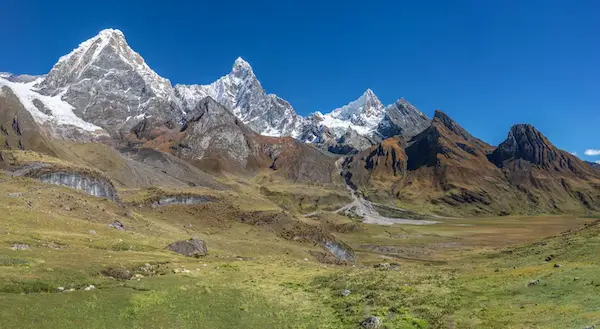
Peru Mountain Range: An Introduction to the Andes of South America
The Peru Mountain Range forms part of the immense Andes Mountains, the longest continental mountain chain in the world. Running along the western edge of South America, the Andes pass through several countries, but in Peru they reach some of their most dramatic and diverse expressions. The mountains define the identity of the nation, dividing it into coast, highlands, and jungle.
In Peru, the Andes are not a single wall of rock but a complex system of valleys, plateaus, glaciers, and peaks. These mountains influence weather patterns, river systems, agriculture, and settlement. Entire civilizations developed in the shadow of these heights, adapting to extreme altitudes and rugged terrain. The Peru Mountain Range is therefore not only a geographical feature but also a living environment where millions of people continue to thrive.
The scale of the landscape is remarkable. Snow-covered summits rise above 6,000 meters, while deep canyons cut through the terrain. Small towns cling to hillsides, and ancient terraces still shape agricultural practices. This introduction helps us understand that the Peru Mountain Range is both a natural wonder and a human story written across centuries.
Beyond its imposing scenery, the Andes in Peru are also a center of biodiversity and cultural richness. Unique ecosystems flourish at different elevations, from high-altitude grasslands to cloud forests descending toward the Amazon basin. Traditional communities preserve languages, textiles, music, and rituals that reflect a profound connection with the mountains. Festivals, markets, and daily life continue to be shaped by the rhythms of the highlands, demonstrating how geography and culture remain deeply intertwined. Exploring these mountains means discovering not only breathtaking landscapes but also the enduring spirit of the people who call them home.
Where Is the Peru Mountain Range Located and Why Is It Important
The Peru Mountain Range stretches from the border with Ecuador in the north to the frontier with Bolivia in the south. It runs parallel to the Pacific coast but sits further inland, creating a natural barrier between the desert coastline and the Amazon rainforest. This strategic position makes it central to Peru’s geography and territorial organization.
Its importance goes beyond location. The mountains regulate water supply for both the coast and the jungle. Glaciers and high-altitude lakes feed major rivers that sustain agriculture, cities, and ecosystems. Without this vast Andean system, many regions would struggle to survive due to limited access to freshwater. Seasonal rains captured in the highlands gradually flow down to valleys and coastal plains, supporting millions of people and ensuring food production throughout the country.
The range also acts as a climatic regulator. By blocking humid air masses and influencing temperature variations, it shapes diverse weather patterns across short distances. This explains why Peru can have arid deserts, fertile valleys, and tropical forests within the same national territory. Such contrasts are largely the result of the elevation and orientation of the Andes.
In addition, the mountains serve as a corridor of biodiversity. Different altitude levels create unique ecological zones, allowing a wide variety of plants and animals to exist within relatively small areas. Economically, mining, tourism, and agriculture all depend on the resources and landscapes shaped by these highlands. Trekking routes, scenic valleys, and snow-capped peaks attract travelers from around the world.
Culturally, the range is equally significant. Many of Peru’s most iconic archaeological sites are found in mountainous areas. Indigenous and rural communities continue to preserve traditions, languages, textiles, and festivals that date back centuries. The Peru Mountain Range remains a symbol of resilience, identity, and continuity, representing both the physical backbone of the country and the cultural heart that sustains its heritage.
You might also be interested in: Nazca Lines Meaning and Its Mysteries
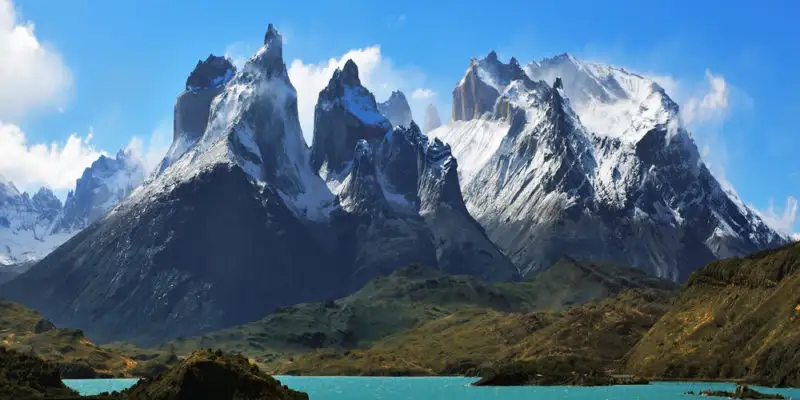
Geographical Overview of the Peru Mountain Range
The geography of the Peru Mountain Range is complex and fascinating. Rather than a single continuous chain, it is composed of multiple parallel ranges separated by deep valleys and extensive high plateaus known locally as altiplanos. These natural divisions create distinct microclimates that vary significantly depending on altitude, latitude, and the orientation of the slopes. As a result, landscapes can change dramatically within relatively short distances.
Altitudes range from around 2,000 meters in certain inter-Andean valleys to more than 6,700 meters at the highest peaks. Such elevation differences produce extreme environmental contrasts. Temperatures often fluctuate sharply between day and night, especially in highland regions where solar radiation is intense under clear skies, yet nighttime conditions can drop below freezing. This daily thermal variation has influenced traditional architecture, clothing, and agricultural practices throughout the Andes.
The mountains are also home to important glacier systems, although many have retreated in recent decades due to climate change. These glaciers function as natural water reservoirs, storing precipitation in frozen form and gradually releasing it into rivers during warmer seasons. Numerous waterways originate in this Andean system, flowing westward toward the Pacific Ocean or eastward into the vast Amazon Basin. This hydrological network sustains cities, farmlands, and ecosystems across the country.
Geologically, the Andes were formed by tectonic forces generated when the Nazca Plate subducted beneath the South American Plate. This powerful interaction uplifted the terrain over millions of years and continues to influence the region today. Earthquakes and occasional volcanic activity are reminders that the landscape remains dynamic and evolving. Steep slopes, rugged ridges, and dramatic cliffs characterize much of the terrain, making it both visually spectacular and physically demanding.
Understanding this geographical overview helps readers appreciate how powerful natural forces shaped the Peru Mountain Range into one of the most diverse and impressive mountain environments on Earth.
Major Mountain Ranges Within Peru
The Peru Mountain Range is not a single uninterrupted formation but a vast system made up of several distinct subranges. Each of these mountain groups contributes to the ecological, cultural, and geographic richness of the country. From snow-covered summits and glacial lakes to remote valleys and traditional villages, every section offers a different perspective of the Andes. Understanding these major subranges helps illustrate the immense scale and diversity that define the Peru Mountain Range across the national territory.
Cordillera Blanca
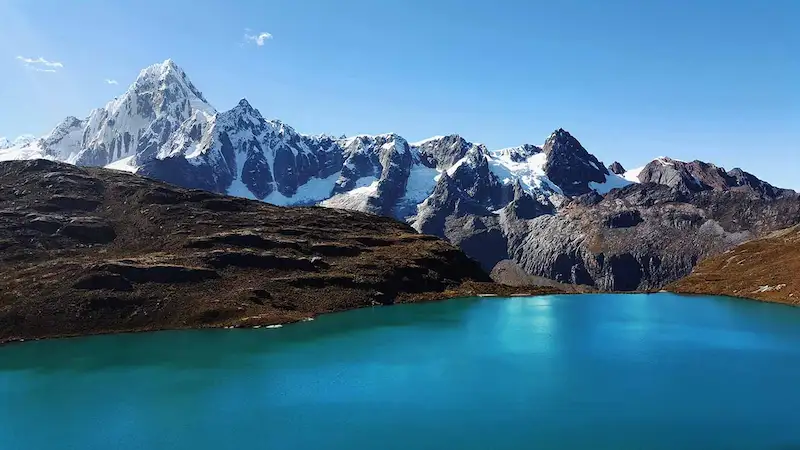
The Cordillera Blanca is perhaps the most famous subrange within the Peru Mountain Range. Located in the Ancash region, it contains Huascarán, the highest tropical mountain in the world, rising above 6,700 meters. Its skyline is dominated by brilliant snowcapped peaks that contrast dramatically with deep valleys and bright turquoise glacial lakes.
This range is internationally recognized as a paradise for mountaineers and high-altitude trekkers. Routes such as the Santa Cruz Trek attract adventurers seeking both challenge and breathtaking scenery. The surrounding Huascarán National Park protects fragile ecosystems, including high-altitude wetlands and native wildlife such as the Andean condor and spectacled bear. Beyond tourism, local communities depend on glacier-fed rivers for agriculture and daily life. The Cordillera Blanca represents the most iconic alpine expression of the Peru Mountain Range, where ice, rock, and sky create unforgettable landscapes.
Cordillera Huayhuash
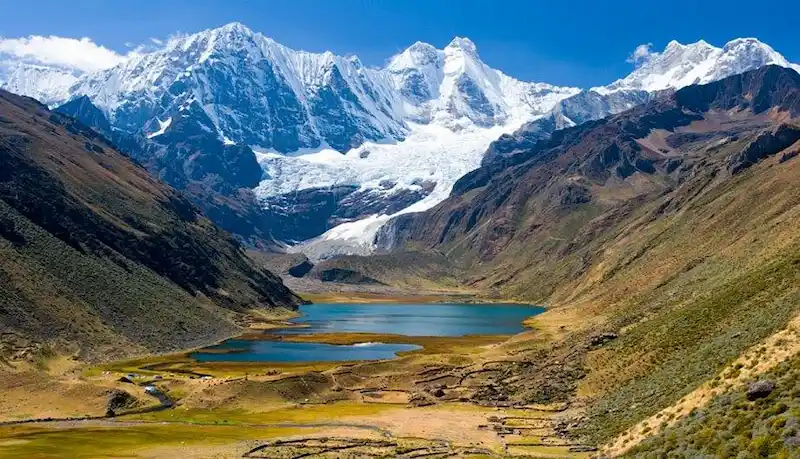
The Cordillera Huayhuash is smaller in extension but widely regarded as one of the most spectacular trekking destinations in the Andes. Within the Peru Mountain Range, it is known for its dramatic, jagged peaks and remote trails that offer a more demanding and immersive experience. Its isolation has helped preserve pristine natural scenery and traditional rural life.
Many travelers consider the Huayhuash Circuit one of the best multi-day hikes in the world due to its combination of high passes, glacial lakes, and panoramic viewpoints. Towering summits such as Yerupajá rise sharply above the surrounding terrain, creating a striking visual impact. The remoteness of the area requires careful preparation, which adds to its sense of adventure. In the broader context of the Peru Mountain Range, Huayhuash stands out for its raw beauty, physical challenge, and untouched atmosphere.
Cordillera Vilcanota
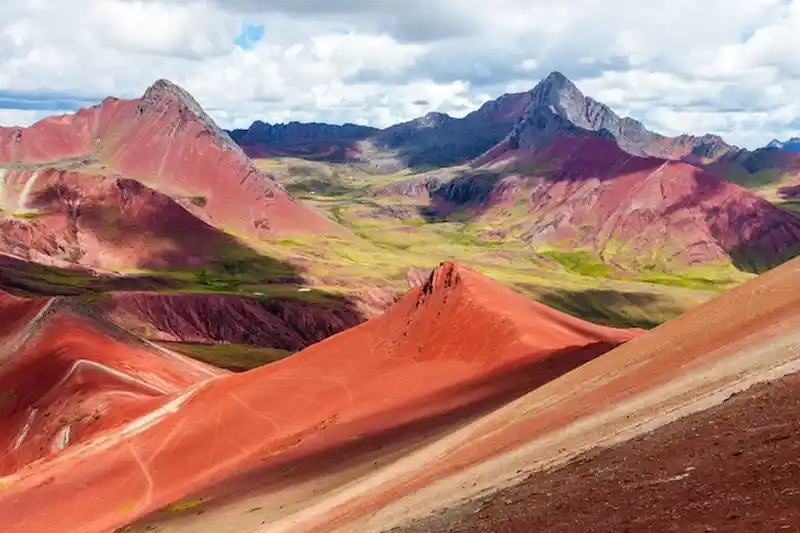
Located in southern Peru near Cusco, the Cordillera Vilcanota forms an essential part of the Peru Mountain Range in the Andean south. It includes Ausangate Mountain, one of the most sacred peaks in Andean cosmology. For centuries, local communities have regarded these mountains as protective spirits, deeply integrating them into spiritual beliefs and seasonal rituals.
The region has gained international attention due to the colorful slopes of Vinicunca, often referred to as Rainbow Mountain. However, beyond this popular attraction lies a vast highland environment shaped by alpaca herding, traditional weaving, and ancient pastoral routes. Snow-covered peaks, expansive grasslands, and glacier-fed lagoons define the scenery. The Vilcanota range demonstrates how the Peru Mountain Range combines extraordinary natural beauty with living cultural traditions that continue to thrive in modern times.
Cordillera Central
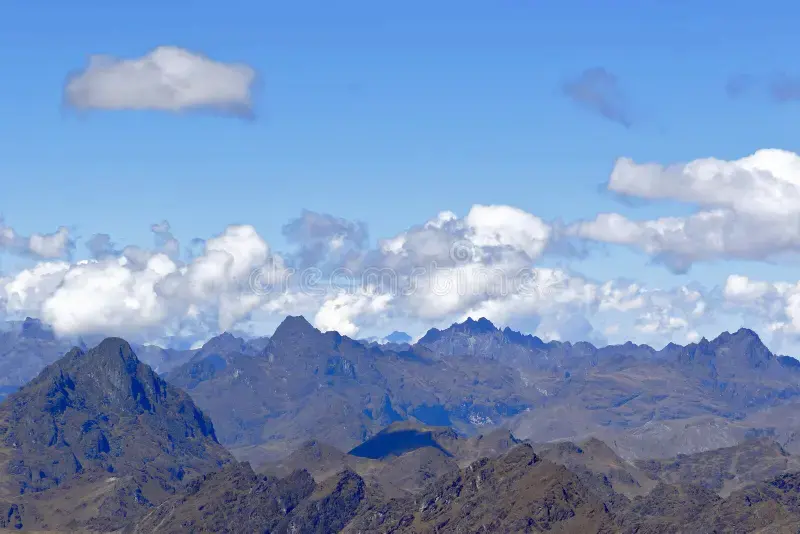
The Cordillera Central runs through the heart of the country and forms a crucial structural section of the Peru Mountain Range. Although it receives fewer international visitors compared to other subranges, it plays a significant role in connecting various Andean regions both geographically and economically.
Its rugged mountains are interspersed with agricultural terraces, mining zones, and rural settlements that reflect centuries of adaptation to high-altitude living. Rivers originating here supply important valleys, supporting farming communities and regional development. Historically, these mountains have served as transit corridors linking the coast, highlands, and jungle. Even without the fame of other Andean destinations, the Cordillera Central remains fundamental to the Peru Mountain Range, contributing to its environmental complexity, economic activity, and national cohesion.
Cultural and Historical Significance of the Peru Mountain Range
For thousands of years, the Peru Mountain Range has shaped the development of civilizations, belief systems, and social organization in the Andean world. Long before the rise of the Inca Empire, pre-Inca cultures such as the Chavín, Wari, and others adapted ingeniously to high-altitude environments. They built agricultural terraces to prevent soil erosion, developed sophisticated irrigation canals to manage scarce water resources, and constructed stone architecture designed to withstand seismic activity.
When the Inca Empire expanded across the Andes, the mountains became the backbone of political and economic integration. A vast road network connected distant regions, allowing communication, trade, and military movement across rugged terrain. The famous Inca Trail is just one visible example of this engineering achievement, but thousands of kilometers of pathways once linked settlements throughout the highlands. Within the Peru Mountain Range, cities, temples, and agricultural centers were carefully positioned to harmonize with the surrounding geography.
Mountains were also considered sacred beings. Many peaks were worshipped as Apus, protective spirits believed to guard communities and influence natural forces. Rituals, offerings, and seasonal ceremonies were performed to maintain balance between humans and nature. This spiritual worldview reinforced respect for the environment and shaped agricultural calendars.
Today, that cultural legacy continues to influence daily life. In many Andean towns, you can still observe:
- Traditional festivals that combine Catholic and ancestral beliefs.
- Colorful textiles woven with symbolic patterns representing mountains and nature.
- Agricultural cycles aligned with lunar phases and seasonal changes.
The Peru Mountain Range is therefore not merely a scenic landscape; it is a living cultural heartland where history, spirituality, and identity remain deeply interconnected.
Adventure Tourism in the Peru Mountain Range
In recent decades, the Peru Mountain Range has become one of South America’s premier destinations for adventure tourism. Its dramatic terrain offers a wide range of outdoor activities suited to different levels of experience and physical preparation. From high-altitude expeditions to scenic valley hikes, the opportunities are diverse and constantly expanding.
Among the most popular activities are:
- Multi-day trekking routes across mountain passes and glacial valleys.
- Technical mountaineering on snowcapped peaks.
- Mountain biking along highland trails.
- Cultural immersion experiences in rural Andean communities.
Many travelers are drawn by the combination of physical challenge and extraordinary scenery. Trails range from moderate routes accessible to beginners to demanding climbs that require specialized equipment and training. Professional guides and organized tours enhance safety, especially in high-altitude conditions where weather can shift quickly.
Beyond physical adventure, tourism in the Peru Mountain Range also provides meaningful cultural encounters. Visitors can learn about traditional farming techniques, alpaca herding, and artisanal weaving. Responsible tourism initiatives increasingly emphasize environmental protection and community-based development, ensuring that natural resources and local traditions are preserved for future generations. The region’s diversity—from snowy summits to emerald valleys and vibrant lagoons—ensures that every journey offers a distinct and memorable experience.
You might also be interested in: Holy Week in Peru: A Guide to Traditions and Festivities
Peru Mountain Range: Travel Tips and Practical Information
Exploring the Peru Mountain Range requires thoughtful preparation and awareness of high-altitude conditions. One of the most important considerations is acclimatization. Altitude sickness can affect travelers who ascend too quickly, so spending several days at a moderate elevation before engaging in strenuous activities allows the body to adapt gradually.
Practical recommendations include:
- Drinking plenty of water to stay hydrated.
- Eating balanced meals rich in carbohydrates for sustained energy.
- Avoiding intense physical effort during the first days at high elevation.
Weather conditions can change rapidly, even within a single day. Layered clothing is essential to adapt to temperature fluctuations between sunny afternoons and cold evenings. Sun protection, including hats and sunscreen, is crucial due to strong ultraviolet radiation at high altitudes. Proper footwear with good traction helps prevent injuries on uneven terrain.
Hiring certified local guides not only improves safety but also enriches the experience through historical and cultural insights. Travelers are encouraged to respect environmental regulations, avoid littering, and honor local customs. By planning ahead and approaching the journey responsibly, exploring the Peru Mountain Range can become a transformative experience that combines adventure, learning, and cultural appreciation.
Final Reflections: The Spirit of the Andes
The Peru Mountain Range is more than mountains and valleys. It is a living landscape shaped by nature and history. Its peaks tell stories of ancient civilizations, resilience, and adventure. Visiting or learning about this region helps us understand Peru in a deeper way. The beauty, culture, and strength of the Andes leave a lasting impression on everyone who experiences them. Protecting and respecting this extraordinary environment ensures that future generations can continue discovering its magic.
