
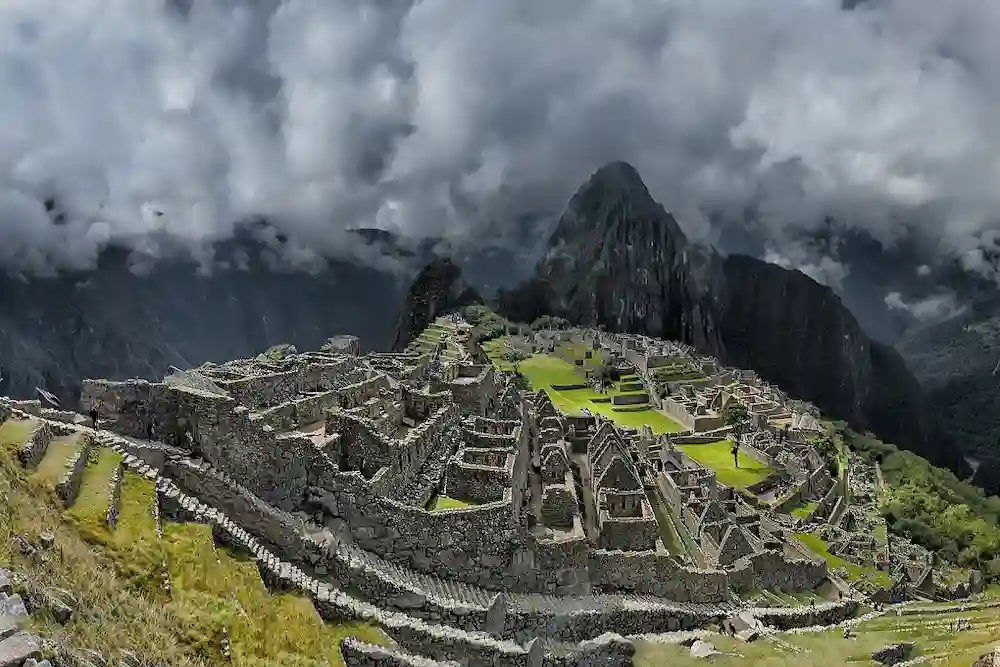
Machu Picchu Architecture is one of the most fascinating examples of ancient engineering in the world. When people visit this legendary Inca city, they often admire the views first, but it is the design, structure, and precision of its construction that truly leave experts speechless. Understanding Machu Picchu Architecture allows us to appreciate not only its beauty, but also the intelligence, planning, and cultural depth behind it. In this guide, we will explore its secrets in a clear, friendly, and detailed way so you can truly understand its greatness.
You might also be interested in: Peru Mountain Range: A Complete Guide

Machu Picchu Architecture: An Introduction to Inca Engineering Mastery
Machu Picchu Architecture represents the peak of Inca engineering knowledge. Built in the 15th century during the reign of the Inca emperor Pachacuti, this citadel demonstrates advanced construction techniques that continue to impress architects and historians today. The Incas did not use iron tools, steel, or mortar in the modern sense, yet they achieved a level of structural perfection that rivals contemporary engineering.
One of the most impressive aspects of this architectural achievement is its integration with nature. Instead of forcing the mountain to adapt to their plans, Inca builders designed structures that followed the natural contours of the terrain. Buildings were carefully positioned to respect slopes, rock formations, and water flow. This harmonious relationship between construction and environment reflects a philosophy that valued balance rather than domination.
Another defining element is precision. Stones were carved so perfectly that they fit together without gaps. Even after centuries of earthquakes, many walls remain intact. This is not accidental. The Incas deeply understood their seismic environment and built flexible yet stable structures. Their engineering was practical, spiritual, and intelligent at the same time.
This architectural legacy is not simply about buildings; it is about a worldview expressed through stone.
Where Machu Picchu Architecture Is Located and Why It Matters Today
Machu Picchu Architecture is located high in the Andes Mountains of Peru, specifically in the Cusco region. The site sits approximately 2,430 meters above sea level, surrounded by dramatic peaks and deep valleys carved by the Urubamba River. This remote location was not random; it was strategically chosen for protection, symbolism, and agricultural potential.
The importance of this architectural legacy today goes far beyond tourism. It represents one of the most sophisticated examples of pre-Columbian urban planning in the Americas. Scholars continue to study its layout, water systems, and astronomical alignments to better understand Inca science, engineering, and philosophy.
In modern times, the citadel is recognized as a UNESCO World Heritage Site and one of the New Seven Wonders of the World. This global recognition highlights its universal value as a symbol of human creativity, innovation, and resilience.
Moreover, the site plays a key role in Peru’s cultural identity. It reminds the world that advanced civilizations flourished in the Andes long before European contact. Its preservation is not only about protecting ancient stone structures, but also about honoring the knowledge systems and cultural heritage that shaped an entire civilization.
You might also be interested in: Nazca Lines Meaning and Its Mysteries
Geographical and Structural Context of Machu Picchu Architecture
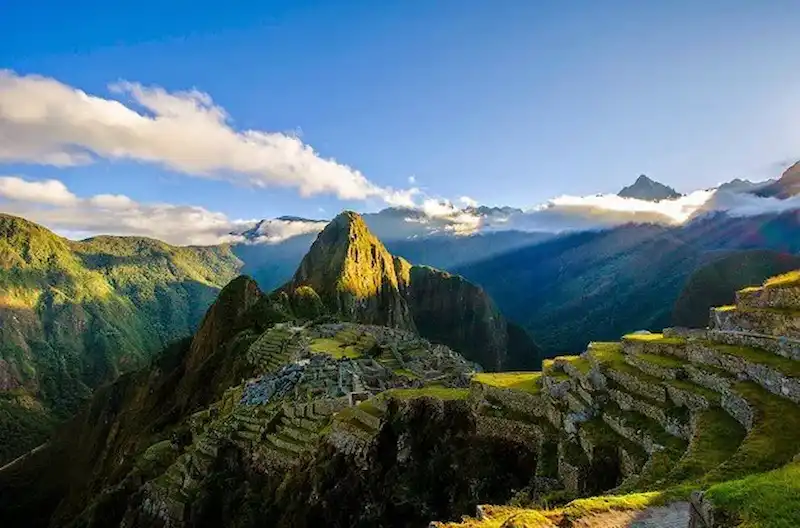
The geographical context of Machu Picchu architecture is essential to understanding its extraordinary design. The city was constructed on a narrow ridge between Huayna Picchu and Machu Picchu Mountain, surrounded by steep slopes and dense cloud forest. Building in such a dramatic and elevated environment required deep knowledge of the terrain and careful adaptation to the natural landscape.
To ensure stability, the Incas engineered an extensive system of agricultural terraces that prevented erosion and landslides. Beneath these terraces, they developed a sophisticated drainage system made of layered stone and gravel, allowing heavy rainfall to filter safely through the ground. This hidden foundation demonstrates their advanced understanding of hydrology and structural resilience in a mountainous setting.
Structurally, the site was organized into clearly defined functional zones, including agricultural sectors, residential areas, ceremonial spaces, and storage facilities. This deliberate urban planning reflects a highly organized society rather than a spontaneous settlement. Additionally, the surrounding mountains held spiritual significance as sacred Apus in Andean belief, blending engineering precision with cosmology and symbolism.
Key Architectural Features of Machu Picchu Architecture
The brilliance of Machu Picchu Architecture becomes especially evident when examining its specific construction features. Each element reflects precision, adaptation, and innovation.
Precision Stone Cutting Techniques
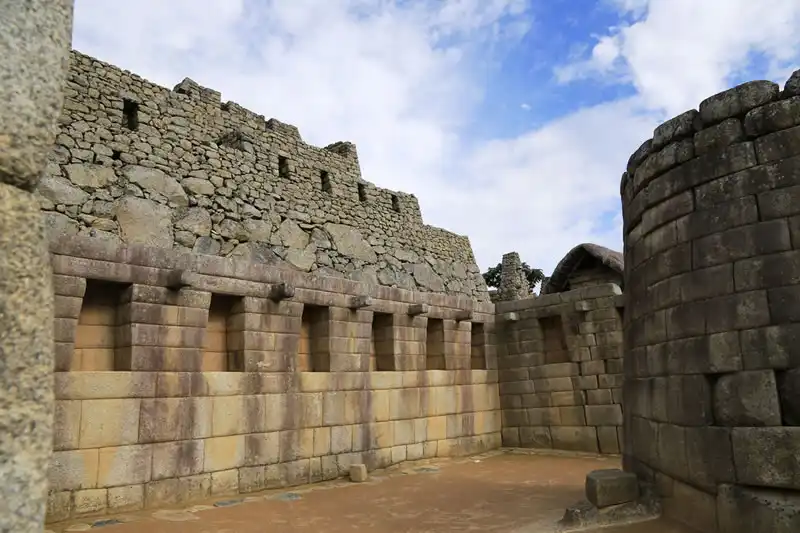
One of the most remarkable characteristics of Machu Picchu Architecture is the extraordinary precision in stone cutting. Using hammerstones and other simple tools, Inca builders shaped massive granite blocks with astonishing accuracy. Despite the absence of metal tools or modern machinery, they achieved joints so tight that even a thin blade cannot pass between many stones.
The polygonal stonework visible in temples and ceremonial structures demonstrates advanced craftsmanship. Rather than relying on uniform rectangular blocks, the Incas carved stones with multiple angles so they interlocked naturally. This method distributed weight evenly and enhanced structural resistance. Each stone was uniquely shaped to fit into a specific position, suggesting careful planning and skilled manual labor.
Beyond structural function, the smooth surfaces and seamless joints reveal a refined aesthetic intention. Construction was not purely practical; it was also visually balanced. The alignment of stones, the symmetry of walls, and the subtle curvature in certain sections indicate that beauty and durability were equally valued.
Dry-Stone Construction and Seismic Resistance
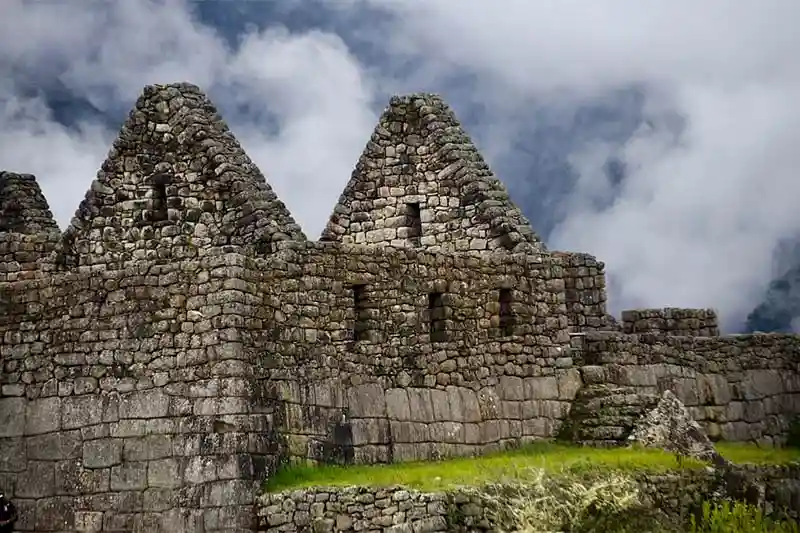
Another defining feature of Machu Picchu Architecture is its dry-stone construction technique. No mortar was placed between the stones; stability depended entirely on precision and weight distribution. This approach created walls that were strong yet flexible.
During earthquakes, the stones can shift slightly and then settle back into place without collapsing. This natural flexibility explains why many structures remain intact despite centuries of seismic activity in the Andes. The Incas understood their environment and engineered buildings capable of adapting to geological movement.
Additional design elements reinforced stability. Walls were often built with a slight inward incline, improving balance and resistance. Doorways and windows frequently feature trapezoidal shapes, wider at the base and narrower at the top, which helps distribute stress more effectively. These subtle but intelligent design decisions reveal a sophisticated understanding of structural behavior long before formal engineering science emerged.
Terracing Systems and Agricultural Engineering
Agricultural terraces form another essential component of Machu Picchu Architecture. Carved directly into steep mountain slopes, these terraces expanded usable farmland while protecting the terrain from erosion. They transformed challenging geography into productive space.
Each terrace was constructed with multiple layers: large stones at the base for stability, followed by gravel or sand for drainage, and fertile soil on top for cultivation. This layered system prevented water accumulation during heavy rains and maintained soil integrity. The terraces were carefully angled to manage runoff efficiently while maximizing sunlight exposure for crops.
Beyond agriculture, the terraces contributed to overall slope stabilization, reducing landslide risks. Their integration into the city’s layout demonstrates that food production, environmental management, and urban planning were interconnected. Sustainability was not an afterthought; it was embedded in the very design of the settlement.
Water Management and Hydraulic Design
Water management stands as one of the most impressive achievements of Machu Picchu Architecture. The site includes an intricate hydraulic system composed of underground drainage channels, surface canals, and ceremonial fountains.
A natural spring located above the city was captured and redirected through precisely carved stone channels. Water flows through a sequence of fountains, each carefully aligned and engineered to regulate pressure and distribution. This ensured a continuous and controlled supply of clean water for residents.
Equally important is the drainage system beneath the city. Subsurface stone layers and hidden channels allowed rainwater to pass through without damaging foundations. This engineering foresight protected structures from erosion and flooding.
The hydraulic design also held symbolic meaning. Water, considered sacred in Inca cosmology, was integrated into ceremonial areas, reinforcing its spiritual significance. Functionality and symbolism were intertwined, reflecting an architectural philosophy that combined technical mastery with cultural depth.
You might also be interested in: 10 Traditional Food in Peru
Religious and Astronomical Symbolism in Machu Picchu Architecture
Religion and astronomy are deeply embedded in Machu Picchu Architecture. The Incas viewed the cosmos as an interconnected system in which the sun, moon, stars, mountains, and human life were spiritually linked. As a result, architecture was designed not only for habitation but also for ceremonial and astronomical observation.
Several structures align with important solar events such as solstices and equinoxes. The Temple of the Sun, for example, was carefully constructed to capture sunlight during specific times of the year. Its curved wall and precisely positioned windows allow rays of light to enter at exact angles, illuminating sacred interior spaces during significant dates in the agricultural calendar.
The Intihuatana stone is another symbolic element, widely believed to have functioned as a ritual and astronomical marker. Its orientation reflects advanced observational knowledge of the sun’s seasonal movement. Rather than being decorative, it likely served as a physical representation of cosmic order and timekeeping.
Key symbolic aspects include:
- Alignment with solar cycles to regulate agricultural seasons.
- Sacred spaces positioned on elevated terrain to emphasize spiritual hierarchy.
- Integration of natural rock formations into ceremonial architecture.
These elements demonstrate that architecture at the site was not merely practical. It expressed cosmology, spirituality, environmental awareness, and scientific understanding simultaneously, merging faith and observation into a unified built environment.
Urban Planning Principles Behind Machu Picchu Architecture
The urban planning principles behind Machu Picchu Architecture reveal a high degree of organization and intentional design. The city is divided into upper (agricultural and ceremonial) and lower (residential and administrative) sectors, connected by an intricate network of stairways, terraces, and stone pathways. This division reflects social, functional, and symbolic distinctions within the settlement.
Residential areas are clearly separated from ceremonial zones, indicating structured social order. Storage buildings were strategically positioned to preserve agricultural products in cool, ventilated spaces. Public plazas provided areas for gatherings and rituals, reinforcing communal identity. Every space appears to have been assigned a specific purpose within a carefully calculated plan.
The orientation of buildings maximizes sunlight exposure while minimizing the impact of strong mountain winds. Drainage systems were integrated beneath plazas and terraces to protect structures from heavy rainfall. The layout adapts seamlessly to the steep topography, demonstrating that planning worked in harmony with the natural environment rather than against it.
This urban organization reflects multiple priorities working together:
- Social hierarchy expressed through spatial arrangement.
- Agricultural sustainability embedded in terrace systems.
- Religious significance emphasized through elevated temples and sacred zones.
The result is a coherent and balanced urban system where political authority, spiritual belief, and environmental adaptation are integrated into a single architectural vision.
You might also be interested in: Holy Week in Peru: A Guide to Traditions and Festivities
Machu Picchu Architecture: Preservation, Legacy, and Modern Influence
The preservation of Machu Picchu Architecture is a matter of global importance. Environmental pressures, increasing tourism, and the effects of climate change present ongoing challenges to the site’s structural stability. Heavy rainfall, landslides, and foot traffic require careful management to prevent long-term damage.
Conservation efforts focus on maintaining authenticity while reinforcing vulnerable areas. Specialists prioritize traditional materials and techniques whenever possible to respect the original construction methods. Monitoring systems track erosion, structural movement, and environmental impact to ensure responsible preservation.
Beyond conservation, the legacy of Machu Picchu Architecture continues to influence modern design thinking. Architects and engineers study its seismic resilience, efficient drainage systems, and sustainable land use strategies. Its ability to harmonize construction with landscape offers valuable lessons for contemporary sustainable architecture.
Today, the site stands not only as a historical monument but also as a source of inspiration. Its balance between nature, technology, and spirituality demonstrates that advanced design can coexist with environmental respect. The enduring legacy of this architectural achievement continues to shape discussions about sustainability, resilience, and cultural heritage worldwide.
A Timeless Dialogue in Stone
Machu Picchu Architecture is more than ancient construction; it is a conversation between humanity and nature. Every stone reflects intelligence, patience, and respect for the environment. Its survival through centuries reminds us that true greatness lies in balance and understanding. When we walk among its walls, we do not just see history; we witness wisdom carved into the mountains. Preserving it means preserving a powerful message about harmony, resilience, and human creativity.
