
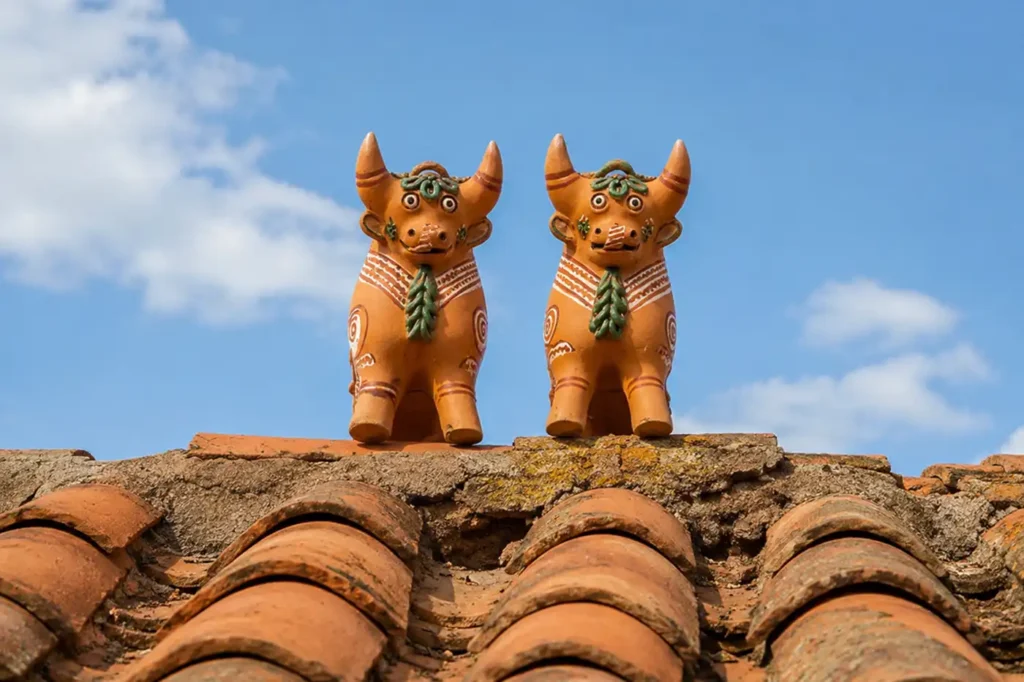
If you have ever traveled through the Peruvian highlands winding through the cobblestone streets of Cusco or crossing the vast, wind-swept plains of Punoyou may have noticed a curious and recurring sight: pairs of small, intricately decorated ceramic bulls perched defiantly on the terracotta roofs of local homes. These are the Pucará Bulls (Toritos de Pucará), arguably the most recognizable and beloved symbol of Andean identity in southern Peru.
To the casual observer or the hurried tourist, they might appear to be mere folk art or charming architectural ornaments. However, for those who live in the shadow of the Apus (mountain deities), these figures are far from decorative. They are the silent sentinels of the household, serving as powerful talismans that bridge the gap between the earthly realm and the spiritual world.
The presence of the Pucará Bulls on a rooftop is a profound declaration of faith, protection, and heritage. They represent a fascinating cultural synthesis a “Mestizo” art form born from the collision of ancient indigenous cosmovision and Spanish colonial influence. While the bull itself was introduced to South America by the Conquistadors, the Andean people infused it with their own ancestral meanings of strength and reciprocity. Today, these ceramic guardians are believed to bring prosperity, ensure the fertility of the land and the family, and ward off malevolent spirits.
At Climb Sunday, we believe that understanding these “Guardians of the Rooftops” is essential for any traveler seeking to go beyond the surface of the Sacred Valley. By decoding the symbols painted on their clay hides, we uncover the complex history of the Altiplano and the enduring spirituality that continues to define life in the high Andes today.
You might also be interested in: The Secret Side of Ollantaytambo: An Insider’s Guide for Sacred Valley Travelers
The Origins: From Ritual Sacrifice to Ceramic Art
The history of the Pucará Bulls is a story of transformation. Before the arrival of the Spanish, the indigenous people of the Altiplano performed rituals using llamas and alpacas to ensure the fertility of the land and the protection of the community.
The Spanish Arrival and the “Torito”
When the Spanish brought cattle to the Americas, the bull became a new symbol of strength and power. The community of Pucará, located in the department of Puno, became a hub for pottery. Local artisans began to craft these bulls, incorporating them into traditional ceremonies.
Legend tells of a drought in Pucará where a local farmer, desperate for rain, climbed a sacred hill with a ceramic bull as an offering. Upon reaching the top, the bull’s horn accidentally struck a rock, causing water to gush forth. Since then, the bull has been inextricably linked to water, life, and the protection of the home.
Symbolic Anatomy: What Every Detail Represents
A traditional Pucará Bull is not just an animal figure; it is a map of Andean duality. Every curve and color has a specific meaning.
- The Tongue Out: Represents the bull’s constant effort and hard work, a reflection of the agrarian life in the Andes.
- The Ornaments on the Back: Often depicted as a saddle or a blanket, these represent the burden of responsibility and the tools used in agriculture.
- The Large Eyes: Symbolize the bull’s alertness and its role as a protector that watches over the family day and night.
- The Handle on the Back: Originally, these Pucará bulls were used as ceremonial vessels for “chicha” (corn beer) during cattle branding rituals. The handle allowed priests to pour the liquid as an offering to the Pachamama (Mother Earth).
The Ritual of the Roof: Placement and Purpose
In Andean culture, you will rarely see a Pucará Bull standing alone. They are almost always found in pairs.
Duality and Balance
The pair of Pucará bulls represents the Andean concept of Yanantin the complementary duality of opposites. This includes male and female, sun and moon, or earth and sky. By placing a pair of bulls on the roof, the homeowners are seeking balance and harmony for their family.
The Protective Cross
Usually, a small ladder and a cross are placed between the two bulls. The ladder symbolizes the connection between the earthly world (Kay Pacha) and the celestial world (Hanan Pacha), while the cross represents the protection of the Christian faith. Together, they form a powerful spiritual shield intended to bring:
- Prosperity: Ensuring the family always has food and resources.
- Protection: Guarding against evil spirits and bad luck.
- Fertility: Promoting the growth of crops and the health of the family lineage.
The Colors of the Bulls
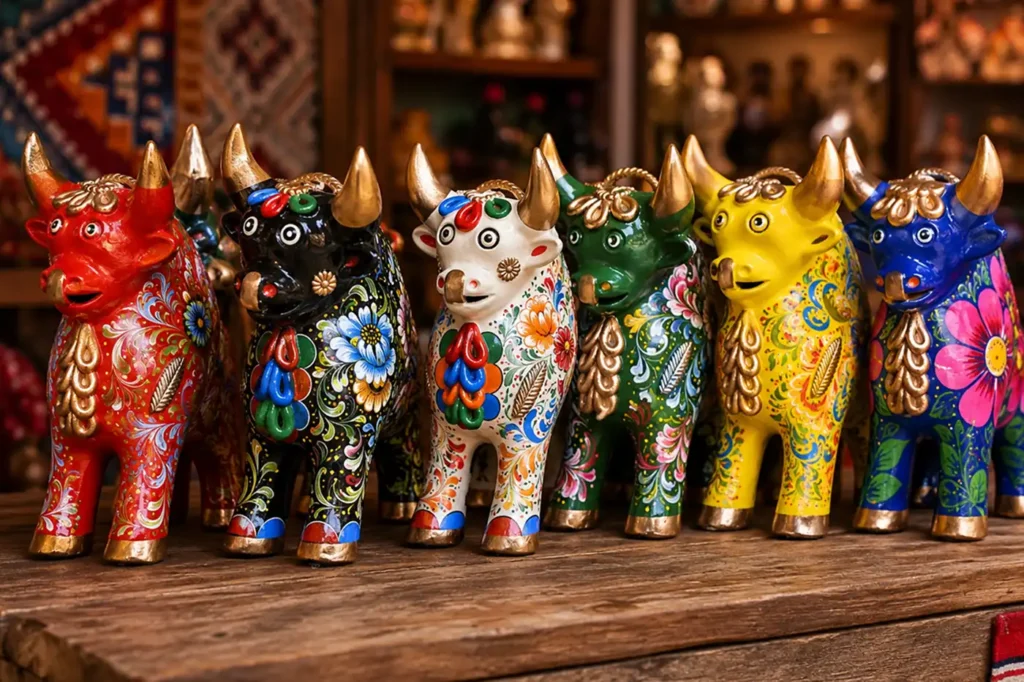
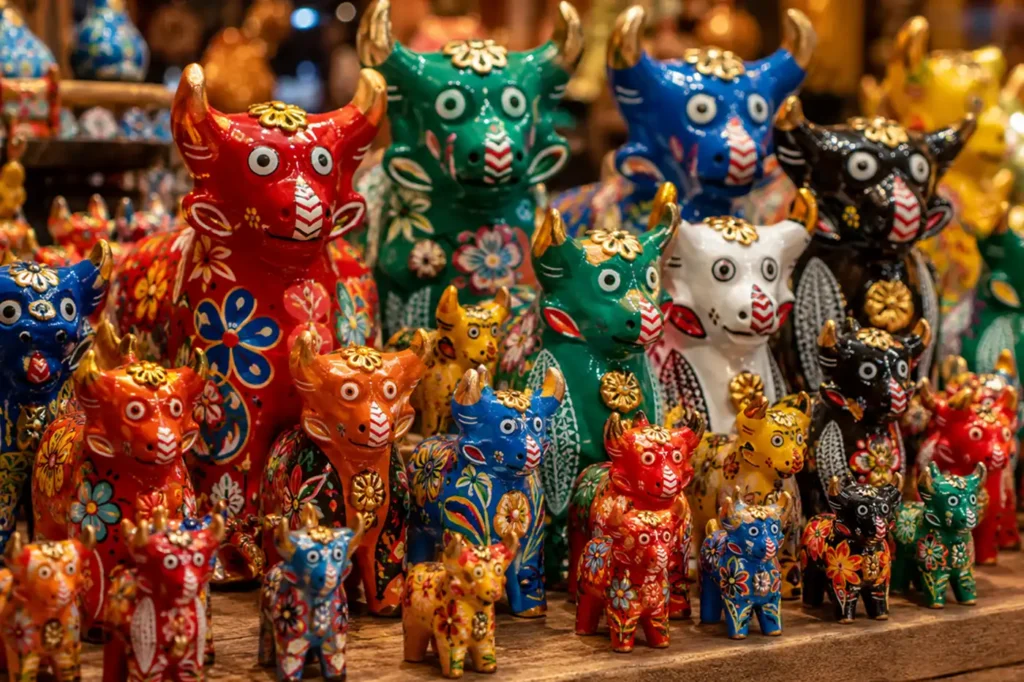
In contemporary Andean art, the Pucará Bulls have evolved from their traditional ochre roots to embrace a full spectrum of colors. This is not merely an aesthetic choice; it is a complex system of spiritual signaling. When you choose a color, you are essentially setting an “intention” for your home.
- Red: Deeply connected to the heart and emotional protection. It is chosen to foster love and passion within a marriage and acts as a shield against the “envy” of others that might destabilize the home.
- Yellow: Representing the sun and the golden harvest, this color is a magnet for energy and luck. It is the preferred choice for business owners and those seeking financial abundance and professional success.
- Green: A tribute to Pachamama (Mother Earth). It symbolizes the fertility of the fields and the physical health of the family. It is often gifted to those starting a new garden or recovery from illness.
- White: The color of peace and spiritual clarity. It is primarily used to bring purity to the household and to provide a protective “cloak” over children and the elderly.
- Black: Far from being negative, black bulls are powerful “absorbers.” They are used to soak up negative energies, curses, or the “evil eye” before they can reach the inhabitants of the house.
- Blue: Represents the sky and water. It is used to promote harmony, fluid communication between family members, and a sense of calm during turbulent times.
Pucará: The Town Behind the Myth
To truly understand these figures, one must travel to the source: the town of Pucará in the department of Puno. Located at roughly 3,900 meters (12,795 feet), this high-altitude settlement is more than just a stop on the road to Lake Titicaca it is a sanctuary of clay and fire.
The Lithic Roots
At the Pucará Lithic Museum, visitors can see that the tradition of carving “guardians” predates the Inca Empire. The ancient Pucará culture (approx. 200 BC – 600 AD) was famous for its stone stelae and sculptures. This ancestral skill transitioned from stone to clay over the centuries, eventually merging with the cattle-rearing traditions introduced by the Spanish.
Living Workshops
Walking through the town, the smell of wood-fired kilns fills the air. Many workshops are family-run, where techniques have been passed down for five or six generations. Here, “artisan” is an understatement; these creators are Maestros Alfareros who view the shaping of the bull’s snout, horns, and bulging eyes as a sacred ritual. Every thumbprint left in the clay is considered a mark of the artist’s own spirit being shared with the protector.
Why Buy a Pucará Bull Today?
In an era of mass-produced plastic, the Pucará Bulls offer a connection to something primal and authentic. For the international traveler, they serve as a functional piece of history.
- A Universal Symbol: While rooted in the Andes, the desire for a “protector of the hearth” is a universal human sentiment.
- Architectural Art: Placing them on your roof (as is traditional) or on a mantelpiece creates a striking focal point that invites storytelling.
- Cultural Resilience: Owning an authentic Pucará bull is a way to celebrate the resilience of the Peruvian people, who successfully blended two clashing worlds the Andean and the European into a singular, beautiful identity.
Ethical Souvenir Shopping
As the popularity of the Pucará Bulls has grown, so has the production of low-quality imitations. To ensure your purchase supports the actual community of Pucará, keep these tips in mind:
- Material Matters: Authentic Pucará bulls are made of high-quality local clay, not resin or plaster. They should feel substantial and “earthy” to the touch.
- Hand-Painted Details: Look for the small irregularities. A machine-printed bull will have perfect, repetitive patterns. A hand-painted one will have slight variations in the brushstrokes, particularly in the floral motifs on the flanks.
- The Artisan’s Mark: Many master potters sign the base of their work. Seeking out these signed pieces ensures your money goes directly to the creator.
- Avoid “Airport Pricing”: Whenever possible, buy from local markets in Puno or Cusco, or through reputable agencies like Climb Sunday that work directly with community collectives.
A Living Legacy
The Pucará Bulls are a testament to the fluid nature of culture. They are the ultimate example of Andean Syncretism taking a Spanish animal and transforming it into an Andean deity of the peaks. They prove that traditions do not have to remain static to survive; they can adapt, change colors, and cross borders while keeping their spiritual heart intact.
Today, whether they are sitting atop a modern concrete house in Lima or a traditional thatched-roof hut in the Altiplano, they remain the silent, fierce guardians of the Peruvian soul.
