
Cusco is famous for monumental stonework, mountain landscapes, and routes to Machu Picchu, but some of its most revealing stories are found on the table. Chiriuchu is one of them. This abundant cold platter appears most visibly during Corpus Christi, when processions, neighborhood traditions, music, and food transform the historic center into one of the city’s most important annual celebrations.
For travelers, Chiriuchu is more than a list of unusual ingredients. It introduces pre-Hispanic exchange, Andean reciprocity, colonial religious traditions, and family knowledge passed between generations. Its roasted, boiled, dried, briny, spicy, and crunchy elements can surprise visitors expecting a conventional hot meal.
This guide explains its meaning, ingredients, connection to Corpus Christi, where to try it, and how to approach the experience respectfully and safely.
You might also be interested in: Salkantay Hot Springs: Cocalmayo Guide for Your Trek to Machu Picchu
What Is Chiriuchu?
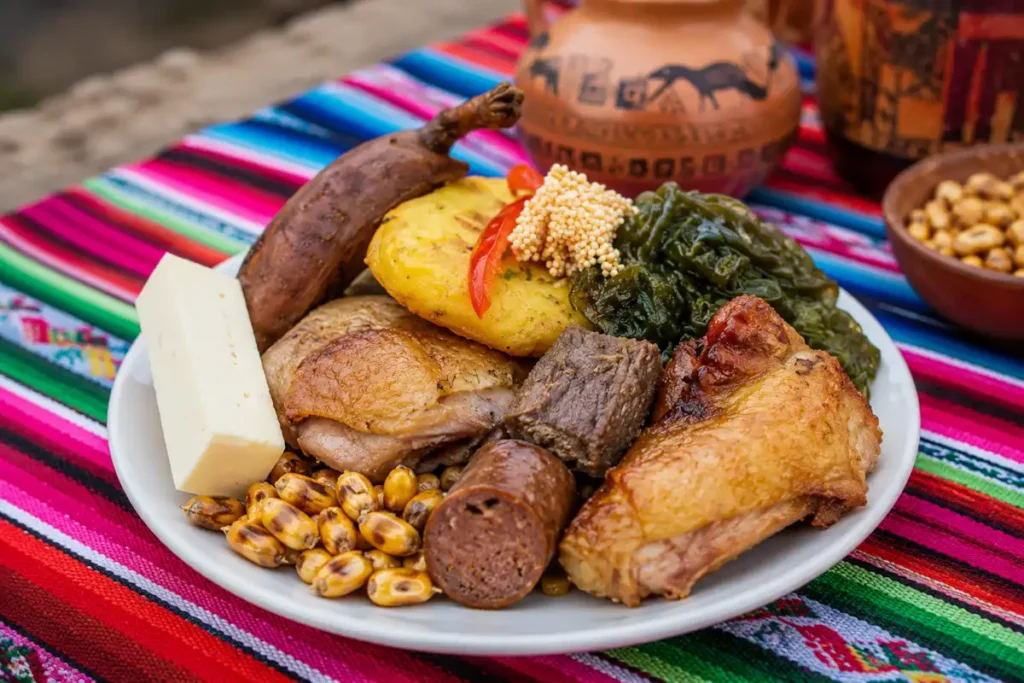
Chiriuchu is a traditional Cusco dish composed of several separately prepared foods arranged together on one plate. Its name is commonly explained through Quechua: “chiri” means cold, while “uchu” refers to chili pepper, spice, or a seasoned dish. The usual English translations“cold chili” or “cold spicy dish” describe only part of the experience.
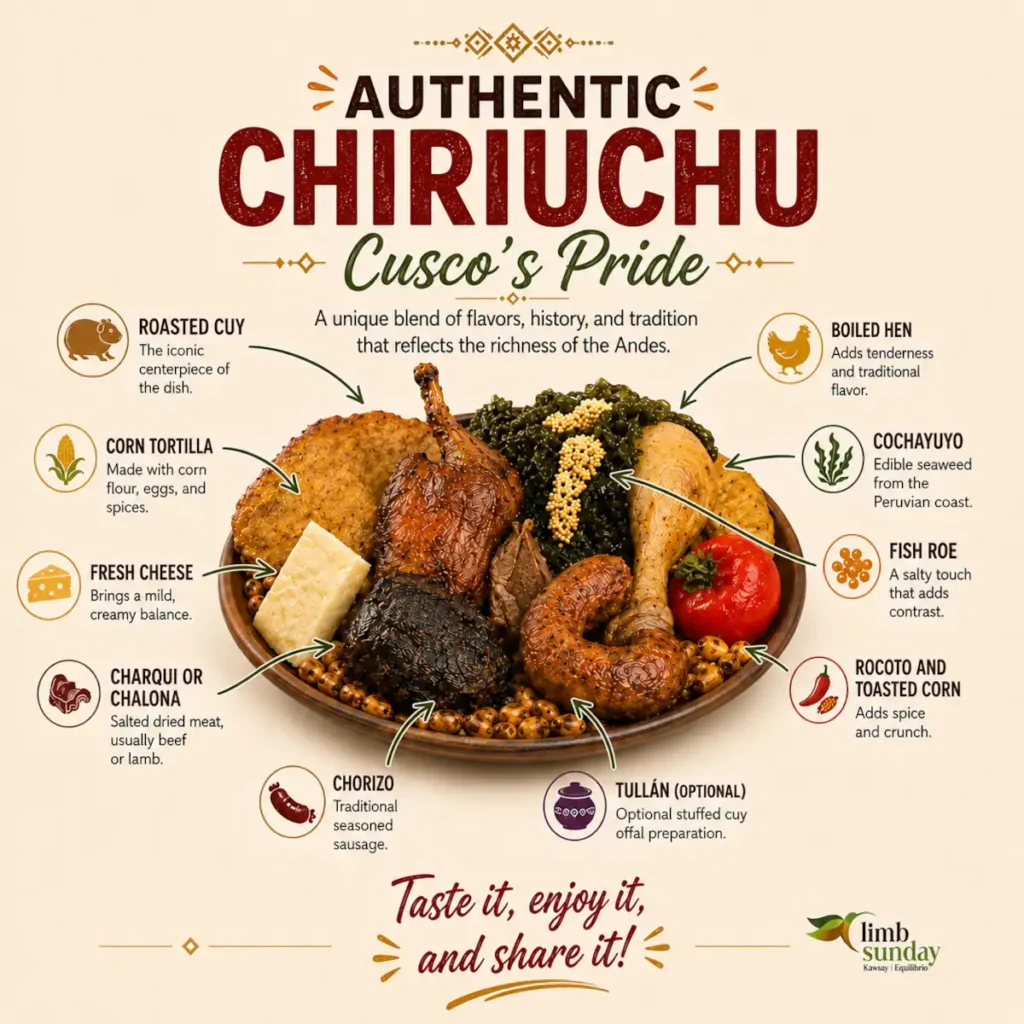
A typical portion can include roasted guinea pig, boiled hen, charqui or chalona, chorizo, fresh cheese, toasted corn, a corn fritter, cochayuyo seaweed, fish roe, and slices of rocoto. Some versions also include morcilla or tullán. Recipes are not completely uniform: families, chiriucheras, picanterías, and festival vendors may use different proportions, seasonings, or local variations.
What defines the plate is not a sauce that blends everything together. Each component remains visible. The eater moves between smoky meat, salty dried beef, soft poultry, fresh cheese, crisp corn, marine flavors, a tender fritter, and the heat of rocoto. It feels almost like a culinary map assembled on one plate.
Why Chiriuchu Is Served During Corpus Christi in Cusco
The strongest cultural setting for Chiriuchu is Corpus Christi, a movable Catholic feast celebrated in Cusco between May and June, depending on the liturgical calendar. During the festival, sacred images from different parishes enter the historic center and participate in ceremonies around the Cathedral and Plaza de Armas. Food, music, religious devotion, and neighborhood identity become part of the same public event.
The connection between Chiriuchu and Corpus Christi reflects Andean-Catholic cultural continuity. Colonial authorities introduced the celebration, but local communities incorporated their own ways of gathering, exchanging food, honoring sacred figures, and occupying ceremonial spaces.
Several interpretations circulate about its origin. One links it to ayni, the Andean principle of reciprocal work and exchange, in which families shared products after collective labor. Another connects it to ceremonial gatherings in Inca Cusco, where ingredients from different ecological zones arrived through transport and exchange networks. A third emphasizes the colonial period, when European ingredients and Catholic observances became integrated with older Andean practices.
These explanations are best understood as overlapping layers rather than one proven origin story. The dish reflects centuries of adaptation, and its meaning comes from the way people continue to prepare, sell, share, and eat it during one of Cusco’s most visible celebrations.
The History Behind Cusco’s Cold Festival Dish
Cusco was the political and ceremonial center of Tawantinsuyu, connected by roads, labor systems, and movement across different environments. Coastal products, highland meats, maize, and seaweed could circulate far beyond their places of origin. Chiriuchu is often interpreted as a reminder of those connections.
After the Spanish conquest, Cusco’s ceremonial calendar changed. Catholic feasts were established in spaces that already held deep political and spiritual importance. Corpus Christi became one of the strongest examples of this process. The procession of saints and virgins created a new religious structure, but Andean participation reshaped how the festival was lived.
The recipe also evolved. Guinea pig, maize, dried meat, rocoto, and native products were joined by ingredients or techniques associated with the colonial period, including hen, cheese, and sausage. Chiriuchu should therefore not be presented as a recipe preserved unchanged since Inca times. It is a living product of continuity and transformation.
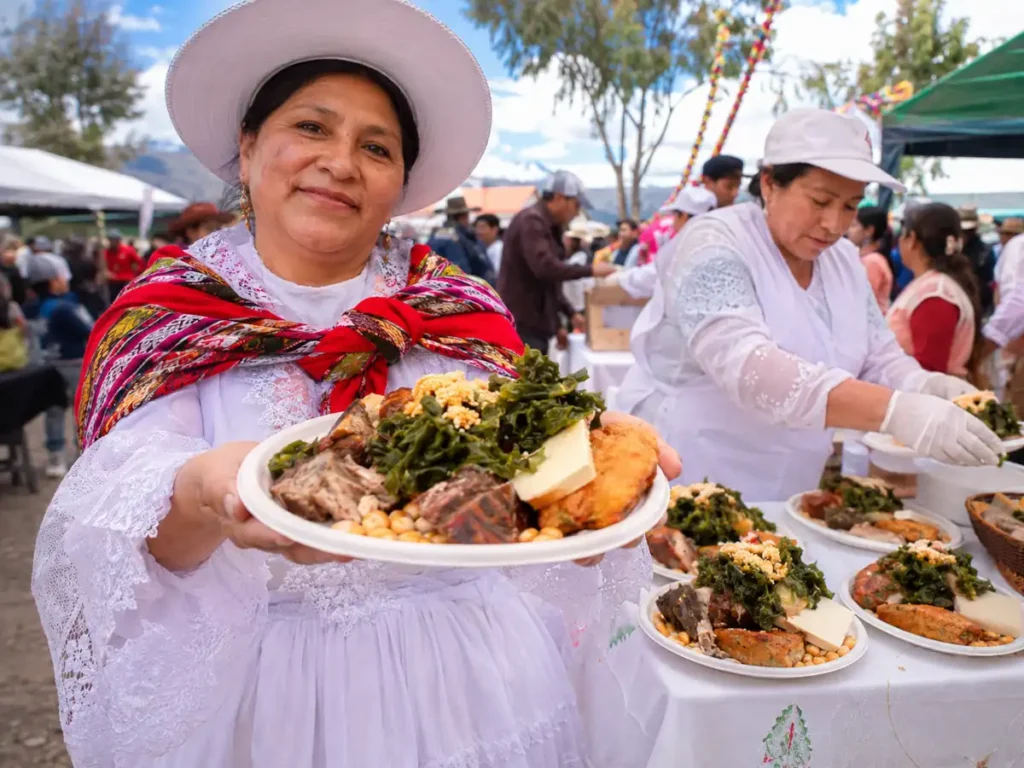
Today, preparation remains closely associated with Cusco households and women who sell it during the annual gastronomic fair. Their work requires sourcing ingredients, cooking each component separately, and protecting family or community recipes. EMUFEC, Cusco’s municipal festival organizer, presents it as the emblematic dish of Corpus Christi and organizes a gastronomic fair dedicated to the tradition.
Chiriuchu Ingredients and What Each One Adds
The attraction of Chiriuchu comes from contrast. Every ingredient contributes a particular texture, origin, and preparation method.
- Roasted guinea pig: Cuy provides one of the strongest visual and flavor elements. It is generally seasoned and roasted until the skin becomes browned and crisp. In Andean food culture, guinea pig has long been associated with hospitality and important family occasions.
- Boiled hen: Hen offers a softer, milder counterpoint to the roasted cuy and dried meat. It is cooked with herbs and aromatics, cooled, and cut into portions before serving.
- Charqui or chalona: Charqui is salted and dried meat, commonly beef or camelid depending on the recipe. Its concentrated flavor reflects an ancient preservation method suited to highland conditions and long storage.
- Chorizo, morcilla, or tullán: Sausage introduces seasoning and richness. Some preparations use chorizo, others include blood sausage, and certain traditional versions add tullán, made from stuffed guinea-pig intestines. Not every plate contains all three.
- Cochayuyo and fish roe: Cochayuyo is edible seaweed, while fish roe contributes another coastal element. Their briny taste contrasts sharply with the meats and cheese. For some first-time visitors, these are the most unexpected components.
- Corn fritter and toasted corn: The torreja is a savory fritter generally prepared with maize flour, egg, squash, herbs, and seasonings. Recipes vary, and some cooks add wheat flour. Toasted corn provides a crisp texture between bites.
- Fresh cheese and rocoto: Fresh Andean cheese adds a mild, creamy note. Rocoto supplies heat and freshness, but it is normally served in slices, allowing diners to control how spicy the meal becomes.
Together, the ingredients move between land and sea, soft and crisp, fresh and preserved, native and colonial. Chiriuchu is therefore a cultural composition, not simply a mixed meat dish. Its official festival description includes hen, roasted cuy, charqui or chalona, corn fritters, toasted maize, cheese, sausage, cochayuyo, fish roe, and rocoto.
What Does Chiriuchu Taste Like?
There is no single dominant flavor. The first impression is usually savory and smoky, followed by saltiness from charqui, richness from sausage, and milder notes from hen and cheese. Seaweed and fish roe bring a marine quality that can be intense for diners unfamiliar with them. Toasted corn adds crunch, while the torreja softens the plate with a slightly sweet maize flavor.
Rocoto changes the balance quickly. It can be much hotter than a bell pepper, so first-time visitors should begin with a small piece. Because the components are served cold or at room temperature, their textures and seasonings remain distinct.
Some people eat each item separately; others combine several elements in one bite. There is no need to follow a rigid sequence. Begin with small portions, compare textures, and decide which combinations you enjoy.
The result is a meal that can feel smoky, salty, briny, creamy, spicy, and crunchy within a few bites. That variation is precisely what makes Chiriuchu unlike most other traditional Cusco dishes.
How Chiriuchu Is Prepared
Preparing Chiriuchu is a multi-stage process, not a quick recipe. Much of the work begins the day before serving. The cuy is seasoned and roasted, the hen and dried meat are cooked separately, and the seaweed and fish roe are cleaned and prepared carefully. Sausages are boiled or cooked according to the family recipe.
The torreja is usually made closer to serving time so it keeps its structure. A batter of maize flour, egg, squash, onion or herbs, and seasoning is shaped and fried. The final plate is assembled only after the cooked components have cooled. PeruRail similarly notes that preparation begins in advance and that the meats and accompaniments are prepared separately before the plate is assembled.
This separate preparation is essential. The dish is not a stew, and the ingredients are not cooked together in one pot. Good Chiriuchu depends on the quality of each component, balanced seasoning, safe handling, and thoughtful arrangement.
Outside Peru, guinea pig, fish roe, cochayuyo, or specific charqui can be difficult to find. A simplified recipe can introduce the flavor structure, but the complete experience remains connected to Cusco’s cooks.
Where to Eat Chiriuchu in Cusco
The most atmospheric place to try Chiriuchu is the gastronomic fair associated with Corpus Christi, traditionally held in or around Plaza San Francisco. During the central celebration and its octave, vendors serve portions to local families and visitors. The experience combines food with the movement, sound, and social energy of the festival.
Dates change every year because Corpus Christi follows the religious calendar. In 2026, the central feast fell on June 4 and the octave on June 11. Travelers planning future visits should consult the current program published by Cusco’s municipal festival organizer before booking.
Outside the festival, availability is less predictable. Some traditional restaurants, picanterías, and market vendors may offer the dish seasonally or by advance order, but do not assume that every restaurant serving Cusco cuisine has it daily. Ask your hotel, local guide, or tour operator to confirm where it is currently available.
Prioritize organized stalls or established kitchens with steady turnover and clear food-handling practices. Arriving early can provide a wider choice and a calmer view of the preparation.
Practical Tips for Trying Chiriuchu Safely
Chiriuchu is served cold or at ambient temperature and contains several animal products, so choosing a responsible vendor matters. Look for a clean workspace, covered ingredients, consistent utensil use, and orderly preparation. A busy, well-run stand is usually preferable to food that has remained exposed for long periods.
The dish contains or may contain guinea pig, poultry, beef, pork, dairy, egg, fish roe, seaweed, and blood sausage. It is not suitable for vegetarians or vegans. Travelers with seafood, dairy, or egg allergies should ask detailed questions before ordering.
Do not assume it is gluten-free. Traditional torrejas are maize-based, but some recipes include wheat flour, and cross-contact is possible. Published recipes show that the fritter can combine maize flour with prepared wheat flour, depending on the cook.
People with celiac disease or severe allergies therefore need direct confirmation from the person preparing the food.
The portion can be generous and rich. Sharing one plate is sensible for first-time diners. Carry cash in Peruvian soles during public fairs, ask the price before ordering, and keep water nearby if you are sensitive to rocoto.
Building a Cultural Day Around Chiriuchu
Trying Chiriuchu becomes more meaningful when connected to the places and traditions that shaped it. Begin in the historic center, where Inca foundations, colonial churches, balconies, and public squares reveal the layered history of Cusco. A guided city walk can explain why Corpus Christi occupies such an important place in local life.
Visit the Plaza de Armas and Cathedral area to understand the ceremonial setting, then continue toward Plaza San Francisco, San Pedro Market, or a traditional picantería. Rather than treating lunch as a separate attraction, use it as part of a wider conversation about agriculture, trade, faith, social organization, and cultural memory.
A local guide can also help visitors distinguish between documented history, oral tradition, and modern tourism narratives. This is valuable with a dish surrounded by appealing but sometimes oversimplified stories.
Climb Sunday designs cultural experiences with local guides and personalized itineraries, allowing travelers to combine Cusco’s food traditions with archaeological sites, neighborhood walks, the Sacred Valley, and Machu Picchu. Its Cusco City Tour visits locations including Coricancha, Sacsayhuaman, and the Plaza de Armas, while its walking tour focuses on the living culture and stories of the historic city.
A well-planned route gives Chiriuchu context and supports more respectful cultural tourism.
Frequently Asked Questions About Chiriuchu
What does Chiriuchu mean?
The name is commonly derived from Quechua: “chiri” means cold, and “uchu” refers to chili, spice, or a seasoned dish. It is often translated as “cold chili” or “cold spicy dish.”
Is Chiriuchu eaten hot or cold?
It is traditionally served cold or at room temperature. The meats and other components are prepared separately, cooled, and arranged on the plate.
When is the best time to try it?
The best-known season is Corpus Christi in Cusco, usually between May and June. The exact date changes annually. Some restaurants may offer it at other times, but availability should be confirmed.
Is Chiriuchu spicy?
The base ingredients are mostly savory. Most of the heat comes from sliced rocoto, which can be eaten separately or in small amounts.
Is the dish gluten-free?
Not necessarily. Although maize is central to the torreja, some recipes use wheat flour, and cross-contact may occur. Ask the cook directly if gluten is a medical concern.
Can vegetarians eat it?
Traditional Chiriuchu is not vegetarian. It contains several meats and may also include fish roe, blood sausage, dairy, and egg.
Where can I find the festival in Cusco?
The gastronomic fair is traditionally associated with Plaza San Francisco during Corpus Christi and the octave. Locations and dates can change, so verify the official annual program.
Final Thoughts
Chiriuchu is one of the clearest examples of how food can hold the history of a city. It brings together products, techniques, religious celebrations, family labor, and ideas of exchange that have developed across centuries.
Its value is not based on being universally familiar or immediately easy to love. The cold meats, seaweed, fish roe, maize, cheese, and rocoto ask visitors to slow down and pay attention. Every component has its own flavor, and every version reflects the person or community that prepared it.
For travelers visiting Cusco around Corpus Christi, tasting Chiriuchu near the public celebrations offers a rare opportunity to experience the city through living tradition. At other times of year, seeking it out with a local guide can still add depth to a Cusco itinerary.
Come with curiosity, choose a responsible vendor, ask questions, and treat the meal as more than a checklist item. Chiriuchu is not simply food served during a festival. It is Cusco’s history arranged on a plate.
