
We know that, if we want to take a trip to any place in the world, the main means of transportation are airplanes, and Peru is no exception. This country has so many incredible destinations, and most of them are reached through airports in Peru. Whether you are traveling to Machu Picchu, Lima, or the jungle, airports in Peru will allow you to link your trip and live a unique experience.
Peru has a very diverse geography. You can go from the deserts of the coast to the highest mountains of the highlands, or enjoy the heat and biodiversity of the jungle. So, traveling by air is the easiest and fastest way to reach your destination. In this guide, we will take you through the main airports in Peru and give you some tips to make your flight more enjoyable.
Get ready to discover everything you need to know about getting around the airports in Peru and make your trip even more amazing!
Main international airports in Peru
You might also be interested in: The mita system and mita obligations

New Jorge Chávez International Airport (Lima)
The New Jorge Chávez International Airport (officially Aeropuerto Internacional Jorge Chávez – Gateway to Peru) is the largest and busiest of all the airports in Peru. Located just 11 km from Lima’s downtown, it is the main international gateway to the country. As the primary hub for international travelers, it plays a crucial role in connecting Peru to the rest of the world. With direct flights from major global cities, it’s the starting point for many journeys into the heart of Peru.
What to know:
- Airport terminals: Jorge Chávez has a single terminal, which simplifies navigation and makes travel a lot easier.
- Facilities: The airport boasts a variety of services, including duty-free shops, ATMs, and restaurants, offering both international and local food options.
- Transportation: From the airport, visitors can take taxis, private transfers, or the Airport Express Lima bus service to various parts of the city, such as Miraflores, Barranco, and San Isidro.
- Proximity to tourist attractions: As the closest airport to Lima, it provides access to many of the city’s iconic landmarks like Plaza de Armas and the Museo Larco.
Location: https://g.co/kgs/JpQyK2o
You might also be interested in: July in Peru: a month full of celebration and culture
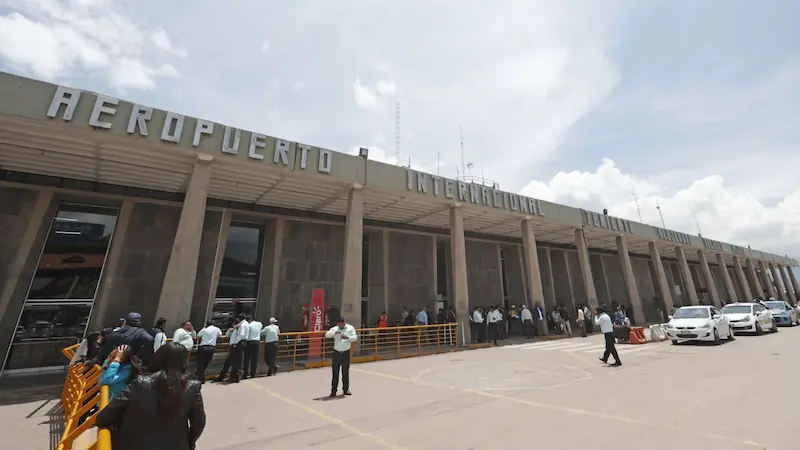
Alejandro Velasco Astete International Airport (Cusco)
The Alejandro Velasco Astete International Airport is the second most important international airport in Peru, located just 6 km from Cusco’s city center. This airport is the primary entry point for travelers heading to Machu Picchu and the Sacred Valley, making it a vital stop for tourists visiting the region.
What to know:
- Altitude: Cusco is located at 3,400 meters (11,150 feet) above sea level, which means visitors should adjust to the altitude. It’s recommended to take it easy for a few hours after arriving.
- Flight connections: The airport connects Cusco to Lima and other cities in Peru, with direct international flights available to certain South American destinations.
- Facilities: There are tourist information desks, ATMs, and restaurants where travelers can enjoy some local snacks.
- Proximity to tourist attractions: This airport is the main gateway to Machu Picchu, the Sacred Valley, and other stunning destinations like Ollantaytambo. Most travelers from here take a train to Aguas Calientes, the base for visiting Machu Picchu.
Location: https://g.co/kgs/r3MhPsv
You might also be interested in: The 10 most fascinating native Peruvian animals

Francisco Secada Vignetta International Airport (Iquitos)
Francisco Secada Vignetta International Airport serves Iquitos, the gateway to the Peruvian Amazon. This airport connects Iquitos with Lima and some neighboring countries, offering a direct path into the Amazon Rainforest.
What to know:
- Location: The airport is just 10 km from Iquitos city center, and getting to the city from there is easy via taxi or shuttle services.
- International connections: Although Iquitos is mainly served by domestic flights from Lima, it also has international connections, especially to neighboring countries like Ecuador and Colombia.
- Facilities: There are essential services such as restaurants, shops, and ATMs. The airport is not as big as Jorge Chávez but offers all the basics for a smooth arrival.
- Proximity to tourist attractions: Iquitos is the gateway to the Amazon, and from here, travelers can embark on Amazon river cruises or visit the Pacaya Samiria National Reserve.
Location: https://g.co/kgs/vq2MuWN
You might also be interested in: Maido: World’s best restaurant 2025 is Peruvian
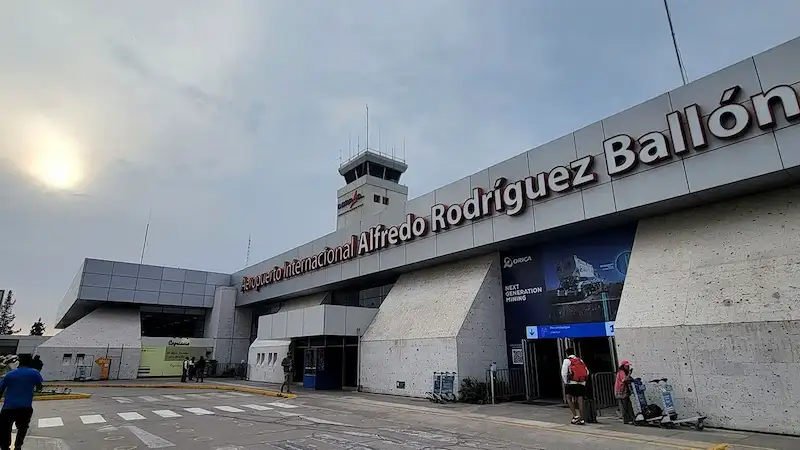
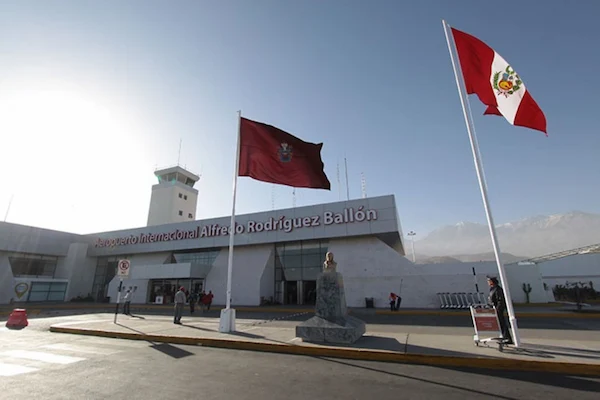
Rodríguez Ballón International Airport (Arequipa)
Rodríguez Ballón International Airport, located in Arequipa, serves as the main hub for the southern region of Peru. Known as the “White City,” Arequipa is famous for its stunning colonial architecture, Mount Misti, and Colca Canyon.
What to know:
- Facilities: This airport is smaller than others, but it offers restaurants, shops, and tourist information to help travelers get oriented.
- Flight connections: The airport connects Arequipa to Lima and Cusco. Flights to these cities are frequent and popular among travelers visiting the southern Peru region.
- Proximity to tourist attractions: If you plan to visit Colca Canyon or Mount Misti, this airport is the best choice. Arequipa is also home to the beautiful Santa Catalina Monastery and rich local culture.
- Transportation: Taxis are available at the airport, which is only 12 km from the city center.
Location: https://g.co/kgs/n5y62kf
Domestic airports in Peru
Peru is a vast country with diverse landscapes, ranging from the towering Andes mountains to the dense Amazon rainforest. While international airports serve as the entry points, domestic airports in Peru play a crucial role in connecting various regions, cities, and major tourist destinations across the country. These airports make travel within Peru more accessible and efficient, allowing tourists to explore the country’s rich culture, history, and natural wonders.
Types of domestic airports in Peru
Domestic airports in Peru can be broadly categorized into two types: regional airports and larger, more prominent domestic hubs.
- Regional airports: These airports serve smaller cities and more remote areas of Peru, offering connections to the larger hubs like Lima or Cusco. Examples of these regional airports include Rodríguez Ballón International Airport (Arequipa) and Pucallpa Airport, which serve specific tourist regions like Arequipa and the Amazon. These airports may have fewer flights per day, but are essential for accessing more remote destinations.
- Larger domestic hubs: Airports like Alejandro Velasco Astete International Airport (Cusco) and Jorge Chávez International Airport (Lima) also handle domestic flights, but they cater to larger volumes of passengers. These airports have more extensive services, including numerous daily flights connecting cities like Cusco, Arequipa, Iquitos, and Trujillo, with Lima serving as the central hub for most domestic routes.
These domestic airports provide key access points for regional tourism and often serve as gateways to popular tourist sites like Machu Picchu, Colca Canyon, and the Amazon rainforest.
Domestic flights and their importance in exploring Peru
One of the most convenient and efficient ways to explore Peru’s diverse landscapes is by taking advantage of domestic flights. The country’s geography can present challenges for travelers who want to experience both the coastal regions, the Andes mountains, and the Amazon, as distances can be long and terrain difficult to navigate. Thankfully, Peru’s domestic flight network makes it easy to hop from one region to another without long travel times.
Domestic flights are particularly important for accessing remote and hard-to-reach areas. For example:
- Amazonian flights: To explore Iquitos or the Amazon rainforest, flights from Lima are quick and relatively affordable, allowing travelers to dive straight into jungle adventures.
- Mountain regions: For those headed to Cusco to explore Machu Picchu, taking a flight from Lima saves travelers time, allowing them to enjoy more days in this cultural and historical hub. Similarly, flights from Cusco to Arequipa make it easier to visit the famous Colca Canyon without needing a long bus journey.
- Coastal and northern areas: Peru’s northern regions, like Trujillo and Piura, also offer flight options that provide easy access to beaches, archaeological sites, and cultural hubs like the Chan Chan ruins and Máncora.
By cutting down travel time, domestic flights allow tourists to visit more destinations in a shorter period. This is especially useful for those on tight schedules or eager to experience the breadth of Peru’s culture and natural beauty. Whether you’re hopping between cities or venturing into remote locations, the domestic flight network is indispensable in ensuring you get the most out of your time in Peru.
You might also be interested in: Andean New Year: celebrate the winter solstice in the heart of the Andes

Services and facilities at airports in Peru
When traveling through Peru’s airports, you’ll find a range of services and facilities designed to enhance your experience, making your time spent at the airport comfortable and convenient. From airport lounges to various transportation options, Peru’s airports are well-equipped to cater to both international and domestic travelers.
Airport lounges, transportation, and facilities
Airport Lounges: For those looking for a more comfortable waiting experience, most of Peru’s major airports offer VIP lounges. These lounges provide a quiet space to relax before your flight, with comfortable seating, Wi-Fi, snacks, and beverages. For instance, Jorge Chávez International Airport in Lima has lounges like VIP Club and Sumaq Lounge, offering premium services for business class passengers or those willing to pay for access. These lounges offer an ideal retreat for travelers looking to escape the hustle and bustle of busy terminals.
- Transportation: Peru’s airports are well-connected with various modes of transportation, making it easy for travelers to move between the airport and their destinations:
- Taxis: Taxis are readily available at most airports in Peru, including Lima, Cusco, and Arequipa. It’s always recommended to use official taxi services arranged by the airport to ensure safe travel. In Lima, the airport has a taxi service booth to help visitors book a ride directly.
- Private transfers: Many travelers prefer the convenience of private transfers, especially if traveling with a group or in a rush. You can pre-book a transfer with your hotel or through an airport concierge service.
- Car rentals: If you prefer to explore on your own, car rentals are available at airports such as Jorge Chávez International Airport (Lima), Alejandro Velasco Astete International Airport (Cusco), and Rodríguez Ballón International Airport (Arequipa). Various car rental companies offer both luxury and economy options to cater to different budgets and needs.
- Shuttle services: At Lima’s Jorge Chávez International Airport, you’ll find shuttle buses that provide transportation to nearby districts such as Miraflores, San Isidro, and Barranco. This is a cost-effective option for those traveling on a budget.
- Facilities: Peru’s airports are equipped with essential facilities designed to make your travel experience smoother:
- Free Wi-Fi: Many airports, such as Jorge Chávez International Airport in Lima, offer free Wi-Fi for passengers. While the connection may be basic, it’s sufficient for checking emails or staying connected.
- Information desks: At major airports, you’ll find information desks staffed by friendly personnel ready to help with directions, flight information, and other travel-related inquiries.
- Restrooms: Clean and well-maintained restrooms are available throughout the airports. Many international airports also have family restrooms for added convenience.
Duty-free shops and local products
One of the highlights of traveling through Peru’s airports is the wide range of duty-free shops that offer both international luxury goods and local Peruvian products. Here’s what you can expect:
- Duty-Free Shopping: At airports like Jorge Chávez International Airport in Lima, you’ll find a variety of duty-free shops selling international perfumes, cosmetics, alcohol, tobacco, electronics, and high-end fashion. For travelers looking to purchase last-minute gifts or souvenirs before leaving Peru, these stores are the perfect place.
- Local products: Aside from global brands, Peru’s airports feature many local products unique to the country, which make for great souvenirs. These may include:
- Peruvian textiles: From alpaca wool scarves and blankets to handwoven fabrics, you can find traditional Peruvian textiles in the gift shops.
- Andean crafts: Unique Andean handicrafts such as pottery, wood carvings, and silver jewelry are available for those looking for something that reflects the rich culture of the Andes.
- Peruvian chocolates and coffee: Don’t miss the chance to grab some premium Peruvian coffee or chocolate bars that are famous worldwide for their quality and unique flavors. You can often find these at the airport’s local specialty shops.
- Pisco and local spirits: No trip to Peru is complete without a bottle of Pisco, the country’s national spirit. Most airports offer duty-free shops where travelers can purchase high-quality Pisco at reasonable prices.
How many airports in Peru?
Peru has a total of 234 airports, including 5 international airports, 83 national airports, and 5 military airports. While there are some variations in the number of airports listed by different sources, the most commonly cited figure is 234. Out of these, 21 airports have scheduled passenger flights, with the majority serving domestic routes. The 5 international airports in Peru are located in major cities such as Lima, Cusco, Iquitos, Arequipa, and Trujillo. These airports are crucial for connecting Peru with international destinations and facilitating travel to popular tourist spots like Machu Picchu, the Amazon rainforest, and other regions across the country.
How to navigate airports in Peru
Traveling through Peru’s airports can be an exciting experience, especially if you’re heading to explore the country’s rich cultural heritage and natural wonders. However, like any major travel hub, knowing what to expect can help you navigate the process smoothly and make your journey as hassle-free as possible.
Arrival procedures and security checks
When you arrive at airports in Peru, there are certain procedures you should expect to go through. While they may vary slightly depending on the airport, the general process is fairly straightforward. Here’s what you can expect:
- Immigration and customs: As a foreign traveler, your first stop will be immigration. You will need to present your passport and, in some cases, a tourist visa (if required for your nationality). Immigration officers will ask for your arrival details, and they might request proof of your return ticket or accommodations during your stay in Peru.
- Important: Always keep a copy of your immigration card (TAM) that is stamped when you enter Peru. You will need to hand it in when leaving the country.
- Baggage claim: Once you’ve passed through immigration, head to the baggage claim area to collect your luggage. Lima’s Jorge Chávez International Airport and other major airports have clear signage to help guide you. If your bags don’t appear, head to the lost baggage counter, which will assist in locating your items.
- Security checks: Security at Peru’s airports is similar to other international airports, with standard X-ray machines and metal detectors. Make sure to pack any liquids or sharp objects in accordance with the airport’s security regulations. Always be prepared to remove electronic devices, such as laptops and tablets, from your bag for scanning.
Tips for a smooth experience at airports in Peru
Traveling through Peru’s airports can be a breeze if you follow a few simple tips:
- Arrive early: It’s always wise to arrive at least two to three hours before your flight if you’re flying internationally, and one to two hours before your flight. This will give you plenty of time to go through check-in, security, and immigration without feeling rushed.
- Stay informed: Keep an eye on flight information screens for updates on your flight’s status. In Peru, some flights, especially domestic ones, may have occasional delays. If your flight is delayed, there are information counters at most airports where you can inquire about the status.
- Stay hydrated: It’s easy to forget to drink water when traveling, especially if you’re coming from a higher altitude or spending time in a busy terminal. Peru’s airports, especially in Lima and Cusco, have several water fountains or shops where you can purchase beverages, so stay hydrated.
- Cash and currency: Although most airports in Peru have ATMs that accept international cards, it’s a good idea to carry some local currency (soles) with you for small purchases like food, souvenirs, or taxis. Currency exchange booths are also available at airports for convenience.
- Use official transport: To avoid issues with unauthorized taxis or scams, always use official taxi services at the airport. Lima’s Jorge Chávez International Airport has a taxi service booth that provides safe, fixed-rate rides to the city.
Best airports for accessing popular tourist destinations in Peru
Navigating airports in Peru is essential for reaching the country’s popular tourist destinations. Whether you’re exploring the sacred Machu Picchu, the Amazon, or the colonial charm of Arequipa, here’s where you’ll want to go to make your trip easier.
The airport closest to Machu Picchu
Alejandro Velasco Astete International Airport in Cusco is the main gateway for travelers heading to Machu Picchu. Located just 6 km from Cusco’s city center, this airport serves as a key hub for visitors exploring the Sacred Valley and the Machu Picchu Tours.
What to know:
- Altitude: Cusco is at an altitude of over 3,400 meters (11,150 feet), so make sure to acclimate to the altitude before heading out on your adventures. It’s common for travelers to experience mild altitude sickness, so it’s important to take it easy when you first arrive.
- Flights to Cusco: Domestic flights to Cusco are frequent, with multiple daily flights from Lima and other major cities. The flight from Lima to Cusco only takes about 1 hour and 20 minutes, making it an easy connection for those coming from the capital.
- Access to Machu Picchu: From Cusco, the easiest way to reach Machu Picchu is by taking a train from Ollantaytambo or Poroy. You can also book a luxury train from Cusco to Machu Picchu for a more upscale experience.
The gateway to the Amazon: Iquitos
Francisco Secada Vignetta International Airport in Iquitos is your gateway to the Peruvian Amazon. Iquitos is the largest city in the Amazon rainforest and is the main starting point for river cruises and jungle expeditions in the region.
What to know:
- Access to Amazon: Iquitos is only accessible by air or water. There are daily flights from Lima to Iquitos, with a flight time of about 1 hour and 45 minutes. This makes it an easy and convenient entry point for those looking to explore the world-renowned Amazon rainforest.
- Amazonian adventures: From Iquitos, you can take boat tours into the Amazon, visiting indigenous communities, wildlife reserves like the Pacaya Samiria National Reserve, and experiencing the unique flora and fauna of the jungle.
- Facilities at Iquitos airport: The airport is relatively small but well-equipped with ATMs, currency exchange, and transportation options to get you to Iquitos city center.
Reach all destinations with the airports in Peru
As you have been able to read, all airports in Peru are a gateway to a wonderful country that I am sure you will love, as it has an impressive diversity in every way. Through these airports, you will be able to explore this country in a fast, comfortable, and easy way. From the always bustling capital of Lima to the majestic Andes, you will arrive efficiently and in line with your itinerary.
Remember that it is also important to be prepared for travel, knowing all the details of your flight, to enjoy every moment in a more exciting way. Because in Peru, the journey begins as soon as you land.
