
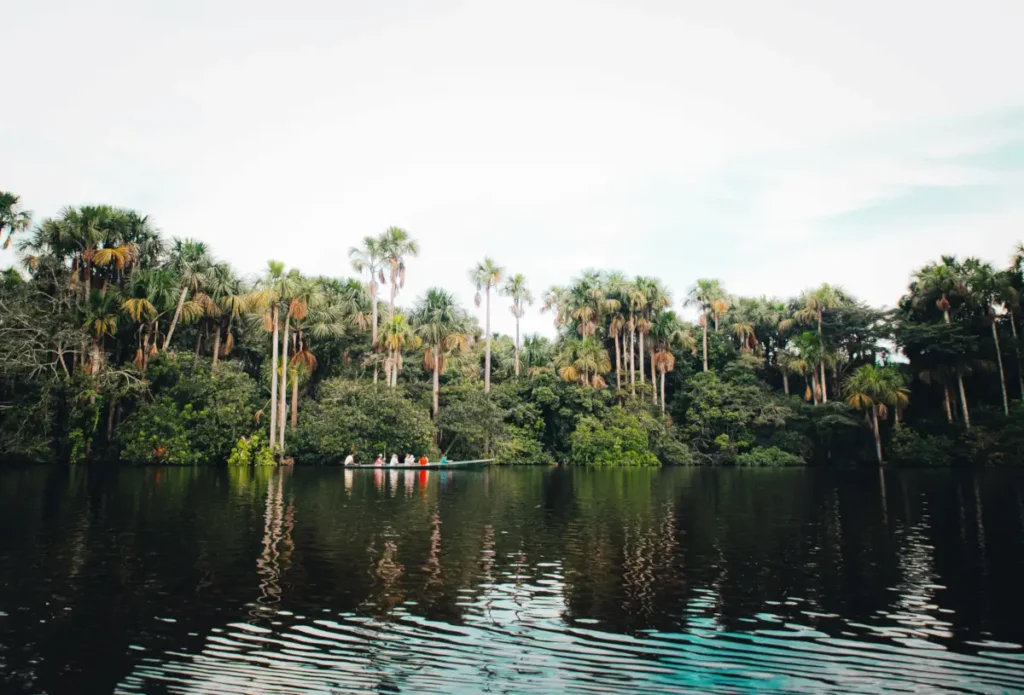
Lake Sandoval Peru is one of the most rewarding wildlife experiences near Puerto Maldonado. The oxbow lake sits within a protected Amazonian landscape where calm water, flooded forest and dense vegetation create habitat for birds, monkeys, reptiles and giant river otters.
This Lake Sandoval Peru guide explains how the visit works, what wildlife you may see, how much time to allow, what conditions to expect and how to include the lake within a wider Tambopata itinerary without treating wildlife sightings as guaranteed.
You might also be interested in: Salkantay Trek vs Inca Trail: Which Route Fits Your Trip?
What Is Lake Sandoval?
Lake Sandoval Peru is an oxbow lake in the Amazon basin of Madre de Dios. Oxbow lakes form when a river channel changes course and leaves a curved body of water separated from the main flow.
The result is a quieter aquatic environment than the main river. For travelers, that means wildlife can often be observed from a canoe or small boat while moving slowly through the lake rather than traveling at speed along a broad river.
The value of Lake Sandoval Peru is not one single species. It is the combination of water, forest and wetland habitats concentrated within a relatively accessible excursion from Puerto Maldonado.
Where Is Lake Sandoval?
Lake Sandoval Peru is located in Madre de Dios in southeastern Peru, within the wider Tambopata protected landscape near Puerto Maldonado. The city acts as the main arrival point for most travelers visiting this part of the Amazon.
A typical visit involves river transportation followed by a walk through the forest before reaching the lake area. The exact logistics depend on the lodge and tour program, so travelers should confirm departure times, walking distance and what transportation is included.
How Do You Visit Lake Sandoval?
For first-time visitors, Lake Sandoval Peru works best as a guided nature experience rather than a transport-only excursion.
Visiting Lake Sandoval Peru is usually part of a guided Amazon excursion rather than an independent sightseeing stop. The experience combines river travel, forest walking and quiet navigation on the lake.
A simple route looks like this: Puerto Maldonado or jungle lodge ➔ river transport ➔ forest trail ➔ lake access ➔ canoe wildlife observation ➔ return.
This multi-stage access is part of the experience. Travelers move from a large river corridor into a quieter forest environment, then onto the lake itself.
What Is the Canoe Experience Like?
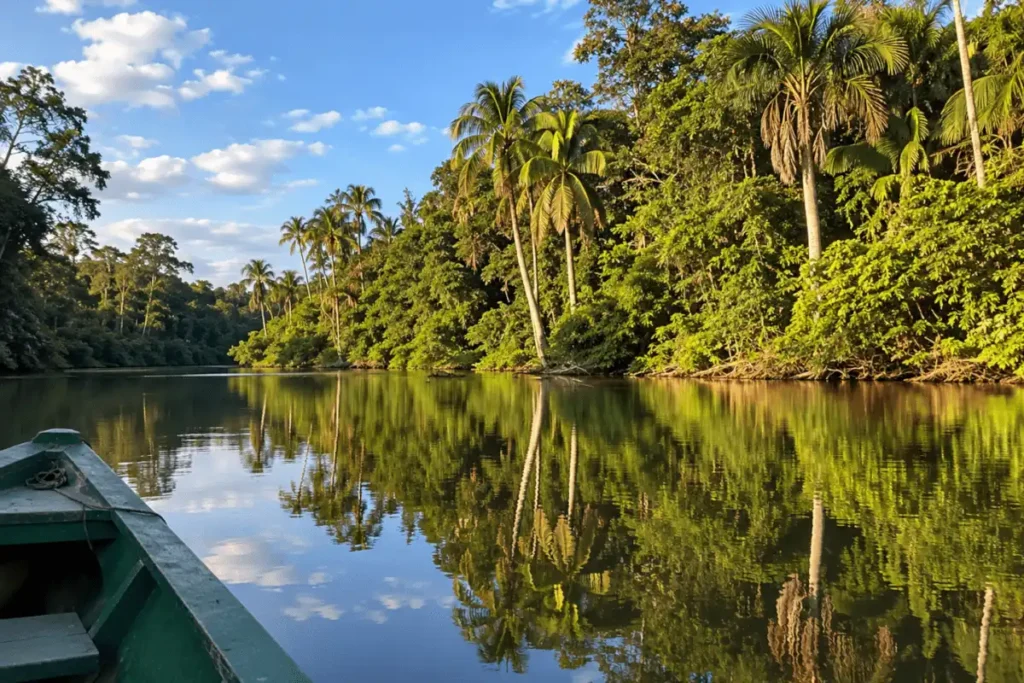
The canoe portion is often the highlight of Lake Sandoval Peru. Slow movement helps visitors listen for calls, scan the shoreline and observe the canopy without the constant engine noise associated with faster river transport.
Guides typically use their knowledge of feeding areas, tree cover and wildlife behavior to decide where to look. Early morning or quieter periods can be especially rewarding, although conditions vary from day to day.
Pro Tip: Bring binoculars if wildlife matters to you. Many animals are easier to appreciate at a respectful distance than through a phone camera.
Wildlife at Lake Sandoval
The search interest around Lake Sandoval Peru is strongly connected with wildlife, particularly giant river otters. That interest is understandable, but a responsible visit should focus on the ecosystem rather than one guaranteed species.
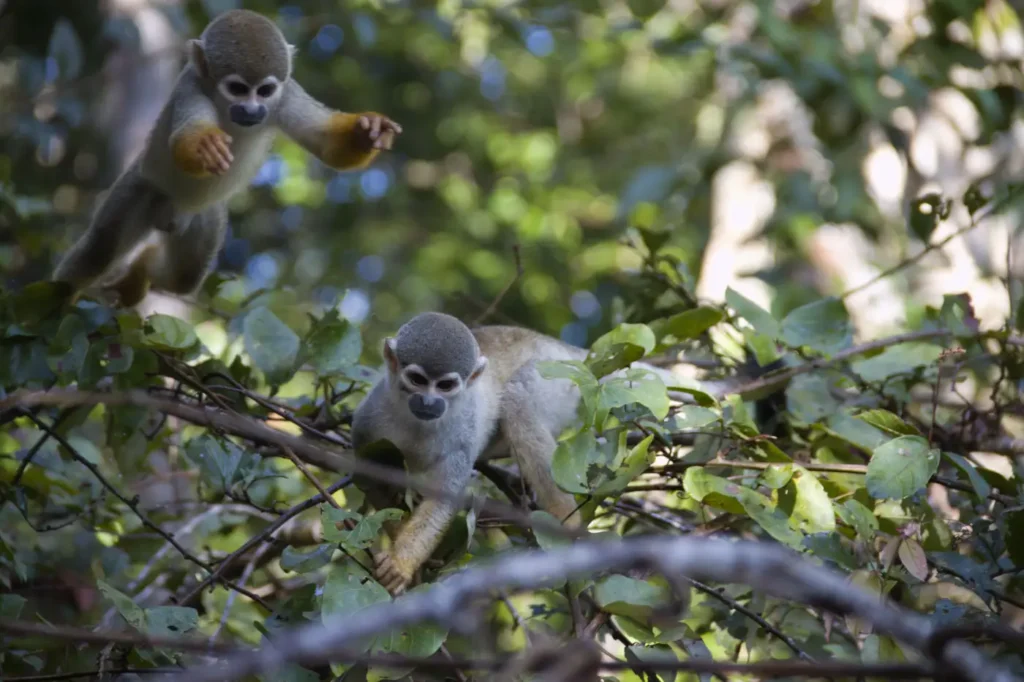
Depending on season, time of day and luck, travelers may encounter monkeys, caimans, turtles, hoatzins, herons, kingfishers, macaws and many other birds. The lake and surrounding forest support a broad range of life.
Giant River Otters
Giant river otters are among the most sought-after animals at Lake Sandoval Peru. They are social aquatic mammals that may be seen swimming, fishing or moving as a family group.
A sighting is never guaranteed. If otters appear, guides should maintain enough distance to avoid changing their behavior. A good encounter is one where the animals continue feeding, traveling or resting naturally.
Caimans and Reptiles
Caimans may be present around the water, while reptiles can also be observed along forest edges and trails. Night activities elsewhere in Tambopata can provide a different perspective because many reptiles and amphibians become more active after dark.
Birdlife
Birdwatching is one of the strongest reasons to visit Lake Sandoval Peru. Open water, forest canopy and shoreline vegetation create several habitats within a compact area.
Even travelers who are not dedicated birders often remember the sounds as much as the sightings. Calls from the canopy, sudden flights over the lake and colorful species along the shore make the experience feel different from a standard sightseeing tour.
Why Giant River Otters Get So Much Attention
Searches for Lake Sandoval Peru frequently include giant river otters because the lake is associated with suitable habitat for this species. Their size, family behavior and vocal communication make them particularly memorable when encountered.
However, building the entire visit around one animal can create unrealistic expectations. Wildlife depends on movement, weather, water levels and natural behavior. The better approach is to choose a high-quality habitat and let each sighting be part of a broader Amazon experience.
Lake Sandoval Weather and Best Time to Visit
Planning Lake Sandoval Peru around weather means preparing for variation rather than expecting a completely dry day.
There is no single month when Lake Sandoval Peru guarantees better wildlife. The Amazon is active year-round, while rainfall and water levels change access, trail conditions and the character of the landscape.
Relatively drier periods can make walking trails easier, while wetter periods can bring higher water levels and different forest conditions. Rain can occur at any time, so a lightweight poncho and quick-drying clothing are useful regardless of season.
Instead of searching for perfect weather, choose dates that fit your overall Peru itinerary and prepare for heat, humidity and sudden rain.
How Much Time Do You Need?
A Lake Sandoval Peru excursion can fit within a day, but travelers coming specifically for the Amazon should avoid treating the region as a single attraction. Several days give you different habitats and observation periods.
A multi-day Tambopata program can combine the lake with forest walks, night excursions, canopy activities, clay licks and other wetlands. This creates a more complete picture of Amazon biodiversity.
Travelers can explore Climb Sunday’s Tambopata 4 Days / 3 Nights tour when planning a longer rainforest stay.
Lake Sandoval as Part of a Tambopata Trip
The strongest way to experience Lake Sandoval Peru is as one component of Tambopata rather than the entire trip. The lake represents one ecosystem, while riverbanks, forest trails, canopy zones and clay licks reveal others.
This distinction also prevents overlap with a general Tambopata guide. A Tambopata itinerary answers where to stay and what experiences to combine; the lake guide answers what happens at this specific wetland and what travelers should expect there.
For broader planning, Climb Sunday’s Tambopata Amazon guide covers the destination as a complete rainforest experience.
What to Bring to Lake Sandoval
Packing well for Lake Sandoval Peru is mostly about staying comfortable in heat, humidity, rain and insects without carrying unnecessary weight.
- Lightweight long sleeves: Breathable fabric provides useful protection from insects and strong sun while remaining comfortable in humid conditions.
- Rain protection: A compact poncho or lightweight waterproof jacket is easier to carry than a heavy coat and can be used quickly during sudden showers.
- Closed walking shoes: Trails can become muddy or uneven, so secure footwear is more useful than sandals for the forest approach.
- Insect repellent: Apply it according to the product instructions and keep it accessible rather than packed at the bottom of your bag.
- Binoculars: They significantly improve bird and canopy viewing while allowing wildlife to remain undisturbed.
- Water protection for electronics: A small dry bag or waterproof pouch helps protect phones, cameras and documents during rain or boat travel.
Photography Tips
Photography at Lake Sandoval Peru can be challenging because wildlife moves quickly and lighting changes between open water and dense forest.
Use a zoom lens or optical zoom whenever possible instead of trying to move closer. Keep your camera ready before the canoe reaches promising areas, and avoid loud movements that disrupt other travelers or wildlife.
For phones, video can sometimes capture animal behavior more effectively than trying to obtain a perfect still image from a moving canoe.
Responsible Wildlife Viewing
Responsible behavior is essential at Lake Sandoval Peru. The goal is to observe animals without influencing their movement, feeding or resting patterns.
- Do not feed wildlife. Feeding changes natural behavior and can make animals associate people with food.
- Keep a respectful distance. If an animal changes direction or appears alert because of the group, give it more space.
- Follow your guide. Local guides understand access rules, wildlife behavior and safe observation points better than visitors exploring unfamiliar forest.
- Keep noise low. Quiet groups usually have a better chance of observing natural behavior and hearing wildlife before seeing it.
Is Lake Sandoval Worth Visiting?
For many nature-focused travelers, Lake Sandoval Peru becomes one of the clearest examples of how water shapes Amazon wildlife viewing.
For travelers already visiting Puerto Maldonado or Tambopata, Lake Sandoval Peru is a valuable addition because it offers a slower, water-based wildlife experience that contrasts with forest hiking.
It is particularly suitable for travelers interested in birds, photography, wetlands and Amazon ecology. It may be less appealing to visitors who expect a guaranteed checklist of large mammals.
The experience is strongest when expectations are realistic: the lake provides access to excellent habitat, not staged encounters.
Frequently Asked Questions
These practical questions about Lake Sandoval Peru can help you decide how the excursion fits into a wider Madre de Dios itinerary.
Is Lake Sandoval near Puerto Maldonado?
Yes. Lake Sandoval Peru is reached from the Puerto Maldonado area through a combination of river transport and a forest approach. Exact times vary by departure point and itinerary.
Can you see giant river otters?
They may be seen, but sightings are not guaranteed. Their presence depends on natural movement and conditions on the day of your visit.
Do you need a guide?
Guided visits are the practical way to experience the area because access, navigation and wildlife interpretation are part of the excursion.
Can you visit Lake Sandoval in one day?
Yes, but travelers interested in the Amazon should consider a multi-day itinerary so the lake can be combined with other rainforest habitats and activities.
Is Lake Sandoval suitable for children?
It can be suitable for families comfortable with humidity, walking and boat travel. Parents should consider the child’s tolerance for heat, insects and quiet wildlife observation.
What is the best time of day?
Early and quieter periods can be rewarding, but wildlife activity changes constantly. Your guide can adapt timing to local conditions.
Plan Lake Sandoval as a Wildlife Experience, Not a Checklist
The best way to approach Lake Sandoval Peru is to focus on the ecosystem. Giant river otters may be the headline species, but birds, reptiles, monkeys, forest sounds and the canoe journey are equally important parts of the experience.
When Lake Sandoval Peru is combined with several days in Tambopata, travelers gain a more complete understanding of the Amazon and avoid putting unrealistic pressure on a single excursion to deliver every possible sighting.
