
Choosing between Salkantay Trek vs Inca Trail is not simply a question of which route is more famous. Both lead toward Machu Picchu, but they deliver very different journeys in terms of scenery, altitude, archaeological context, permits, comfort and physical effort.
This Salkantay Trek vs Inca Trail comparison is designed for travelers who are already considering a trek and need to understand which experience better matches their fitness, available days and travel priorities.
You might also be interested in: Cusco to Machu Picchu: Train, Bus or Trek Travel Guide
Salkantay Trek vs Inca Trail: Quick Comparison
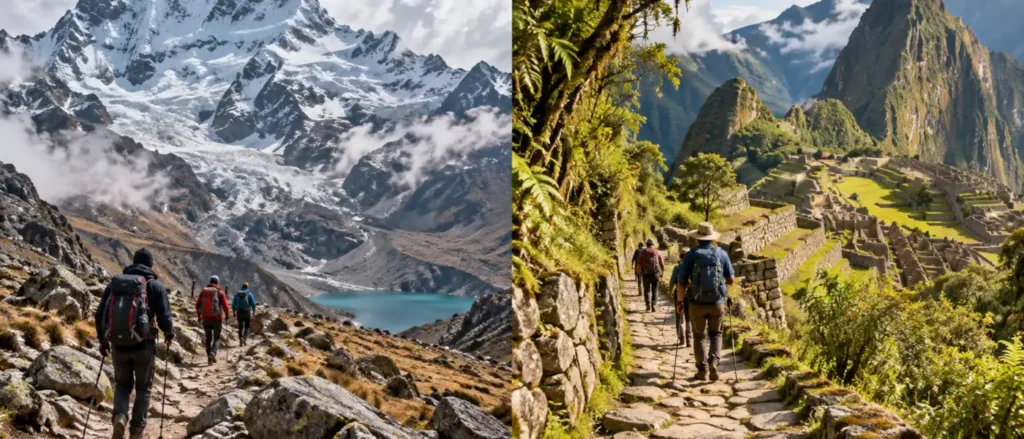
The fastest way to understand Salkantay Trek vs Inca Trail is to compare the character of each route. The Inca Trail is closely tied to archaeology and the historic Inca road system, while Salkantay is primarily a high-mountain journey with dramatic changes in landscape.
- Inca Trail: Best for travelers who place archaeological sites, original Inca pathways and the classic arrival toward Machu Picchu at the center of the experience. Availability is more restricted because access is permit-controlled.
- Salkantay Trek: Best for hikers who prioritize mountain scenery, changing ecosystems and a stronger sense of wilderness. The route reaches higher elevations and typically feels more physically demanding.
Neither option is universally better. The right answer to Salkantay Trek vs Inca Trail depends on what you want to remember most when the trek is over.
What Is the Inca Trail Experience Like?
The Inca Trail follows sections of the historic road network built through the Andes. Hikers move through mountain passes, cloud forest and archaeological sites before reaching the Machu Picchu area. That combination of walking and archaeology is its main advantage.
For travelers comparing Salkantay Trek vs Inca Trail, the Inca Trail usually feels more structured. Permits, authorized operators and established camps make it a highly organized trek, which can be reassuring for first-time multi-day hikers.
The route also gives history a constant presence. Instead of saving archaeology for the final day, travelers encounter terraces, stonework and archaeological sites along the trail itself.
What Is the Salkantay Trek Experience Like?
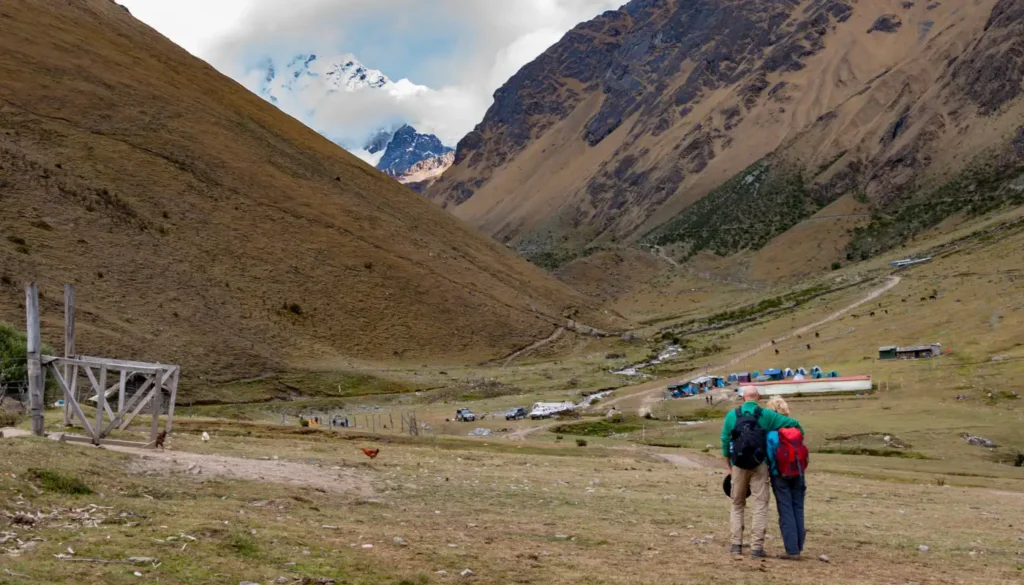
Salkantay is defined by landscape. The journey typically moves from cold high-altitude environments near snow-covered peaks into greener valleys before continuing toward the Machu Picchu area. The ecological transition is one of its strongest attractions.
In a Salkantay Trek vs Inca Trail decision, Salkantay usually appeals more to travelers who want dramatic mountain scenery and do not need archaeological ruins at every stage of the walk.
The route can also feel more flexible because there are several itinerary lengths and service styles. However, flexibility should not be confused with ease: altitude, long walking days and changing weather can make Salkantay demanding.
Which Trek Is Harder?
Difficulty is one of the most common questions in any Salkantay Trek vs Inca Trail comparison. Both require preparation, but Salkantay generally reaches a higher elevation and can involve longer or more exposed walking sections.
Salkantay Trek Difficulty
The hardest part for many travelers is the high pass. Thin air can make a pace that feels comfortable at lower elevations suddenly become challenging. Cold mornings, steep sections and consecutive hiking days add to the effort.
Inca Trail Difficulty
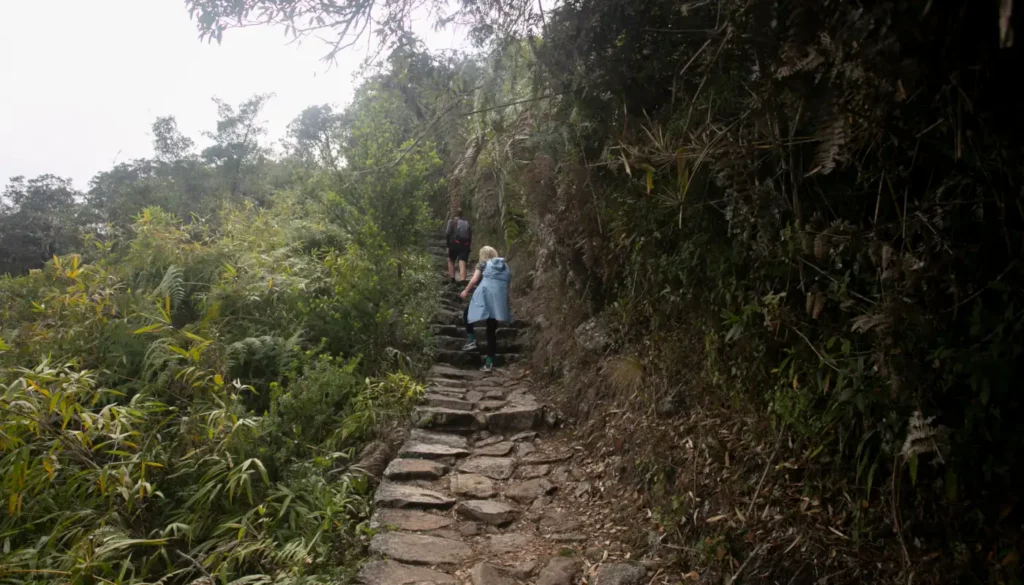
The Inca Trail is also demanding. Its stone steps, repeated ascents and descents and high mountain passes place significant stress on legs and knees. Travelers should not interpret a lower maximum altitude as meaning that the route is easy.
When evaluating Salkantay Trek vs Inca Trail difficulty, think about your own strengths. Strong uphill hikers may tolerate Salkantay well, while travelers with knee concerns may find the Inca Trail’s long stair sections especially tiring.
Altitude: What Changes Between the Routes?
Altitude is one of the clearest differences in Salkantay Trek vs Inca Trail. Salkantay reaches a higher point, so acclimatization in Cusco or the Sacred Valley before departure is especially important.
Both treks should be approached after giving your body time to adjust. Arriving in Cusco and starting a strenuous multi-day route immediately can make the first days unnecessarily difficult, even for fit travelers.
A practical plan is to spend time at elevation before trekking, walk at an easy pace, stay hydrated and avoid treating the first day in Cusco as a fitness test.
Scenery: Mountains or Archaeology?
The scenery question often decides Salkantay Trek vs Inca Trail faster than any technical detail. Salkantay is known for imposing mountain views, high passes and major ecological transitions. The Inca Trail mixes mountain scenery with archaeological architecture and stone pathways.
If your ideal photos are dominated by glaciers, valleys and remote camps, Salkantay has the advantage. If you want ruins, stone stairs and a route that continuously reinforces Inca history, the Inca Trail is the stronger match.
This is why a good Salkantay Trek vs Inca Trail comparison should never reduce the decision to difficulty alone. The visual and cultural experiences are fundamentally different.
Permits and Booking Flexibility
Booking requirements create another major difference in Salkantay Trek vs Inca Trail. The classic Inca Trail operates with limited permits, so popular dates may require significant advance planning.
Salkantay usually offers more flexibility, although Machu Picchu entry availability still matters because the journey ends with a visit to the sanctuary. Travelers should therefore confirm the complete itinerary, not only the hiking departure.
If your travel dates are fixed and close, Salkantay may provide more options. If walking the historic Inca Trail is a priority, plan earlier and treat the permit as the first booking decision.
Salkantay Trek vs Inca Trail Cost
The Salkantay Trek vs Inca Trail cost varies according to route length, group size, accommodation, equipment, meals and service level. Price comparisons are only useful when the inclusions are comparable.
Ask whether the program includes Machu Picchu admission, transport, camping equipment, meals, guide service, return transportation and any hotel night in Aguas Calientes. A cheaper headline price can become more expensive once missing elements are added.
For Salkantay Trek vs Inca Trail, value matters more than choosing the lowest number. Safety support, qualified guides, reliable logistics and a realistic group size affect the experience every day.
How Many Days Do You Need?
Time is another practical factor in Salkantay Trek vs Inca Trail. Classic versions are multi-day experiences, but shorter alternatives exist, particularly on the Inca Trail.
Travelers with limited time can consider a 2-day Inca Trail to Machu Picchu, which preserves a trekking component without requiring the same number of days as a longer expedition.
Salkantay is better suited to travelers willing to dedicate several days to the mountains. Rushing the route removes much of what makes it attractive.
Which Trek Has the Better Arrival at Machu Picchu?
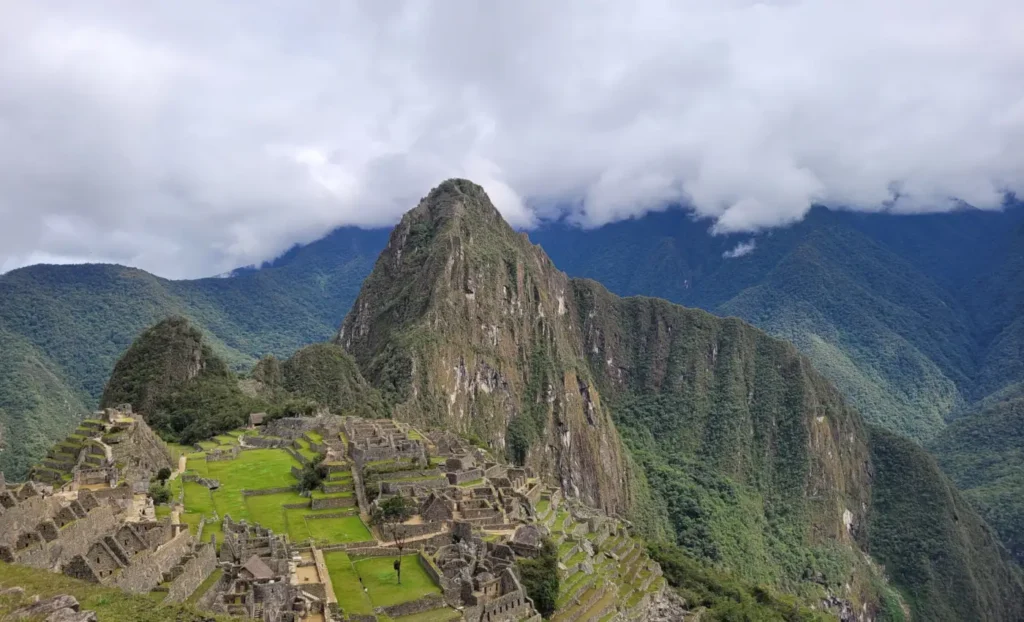
The final approach is an important emotional difference in Salkantay Trek vs Inca Trail. The Inca Trail is valued for its historic approach into the Machu Picchu area, while many Salkantay itineraries reach Aguas Calientes before the formal archaeological visit.
This means travelers who dream specifically about walking an ancient path toward Machu Picchu may prefer the Inca Trail. Those who care more about the mountain journey before Machu Picchu may still find Salkantay more rewarding overall.
Who Should Choose the Inca Trail?
In the Salkantay Trek vs Inca Trail decision, choose the Inca Trail if archaeology and cultural context matter as much as hiking.
- You want archaeological sites during the trek. The route integrates ruins and Inca engineering into the walking experience rather than leaving history only for the final day.
- You value a classic route. The Inca Trail has a strong identity and an established trekking system that appeals to travelers who prefer structured logistics.
- You can book early. Permit limitations make advance planning especially important, so this option suits travelers with fixed dates who organize ahead.
Who Should Choose Salkantay?
Choose Salkantay in the Salkantay Trek vs Inca Trail comparison if landscapes, altitude and mountain immersion are your main priorities.
- You want dramatic high-Andean scenery. Salkantay places snow-covered mountains and broad valleys at the center of the journey.
- You prefer greater date flexibility. The hiking route generally offers more booking flexibility than the permit-limited classic Inca Trail.
- You are comfortable with demanding altitude. Good fitness helps, but acclimatization and pacing remain essential.
What to Pack for Either Trek
Whichever option wins your Salkantay Trek vs Inca Trail decision, pack for changing Andean conditions rather than one temperature.
- Layered clothing: Temperatures can change quickly between early morning, exposed passes and lower valleys, so several light layers work better than one heavy item.
- Reliable hiking footwear: Use shoes or boots that you have already worn. New footwear is one of the easiest ways to turn a manageable trek into an uncomfortable one.
- Rain protection: A lightweight waterproof layer protects you and your daypack when mountain weather changes.
- Sun protection: High elevation increases sun exposure, making a hat, sunglasses and sunscreen essential even on cool days.
Common Mistakes When Choosing
The biggest mistake in Salkantay Trek vs Inca Trail is choosing based only on what another traveler calls “better.” Fitness, dates, interests and expectations matter more than popularity.
Another mistake is ignoring acclimatization. Strong fitness at sea level does not guarantee comfort at high elevation. Finally, travelers sometimes compare prices without checking inclusions, which creates a misleading picture of actual cost.
Frequently Asked Questions
Is the Salkantay Trek harder than the Inca Trail?
For many travelers, yes, mainly because Salkantay reaches a higher elevation and can include longer mountain sections. However, the Inca Trail’s stairs and repeated elevation changes are also physically demanding.
Which trek has better scenery?
In Salkantay Trek vs Inca Trail, Salkantay generally wins for dramatic mountain scenery, while the Inca Trail stands out for the combination of landscapes and archaeological sites.
Which trek is better for history?
The Inca Trail is the stronger option because archaeology and original sections of Inca road are integrated throughout the trek.
Can beginners do either route?
Yes, with realistic preparation. Beginners should train for sustained uphill walking, acclimatize before departure and choose an itinerary whose daily distances match their fitness.
Which route should I book if I am traveling soon?
When comparing Salkantay Trek vs Inca Trail close to departure, Salkantay may offer more flexibility. Inca Trail access depends on permit availability, while Machu Picchu admission must still be confirmed for either route.
Which Trek Should You Choose?
The final Salkantay Trek vs Inca Trail choice comes down to the kind of journey you want before Machu Picchu. Choose the Inca Trail for archaeology, historic paths and a classic trekking experience. Choose Salkantay for high mountains, changing ecosystems and a stronger wilderness feel.
If both appeal to you, prioritize the experience that would be hardest to replace elsewhere in your Peru itinerary. That is usually the most useful way to resolve Salkantay Trek vs Inca Trail without forcing one route to be universally better.
