
More Than Just a Meal a Connection to the Earth
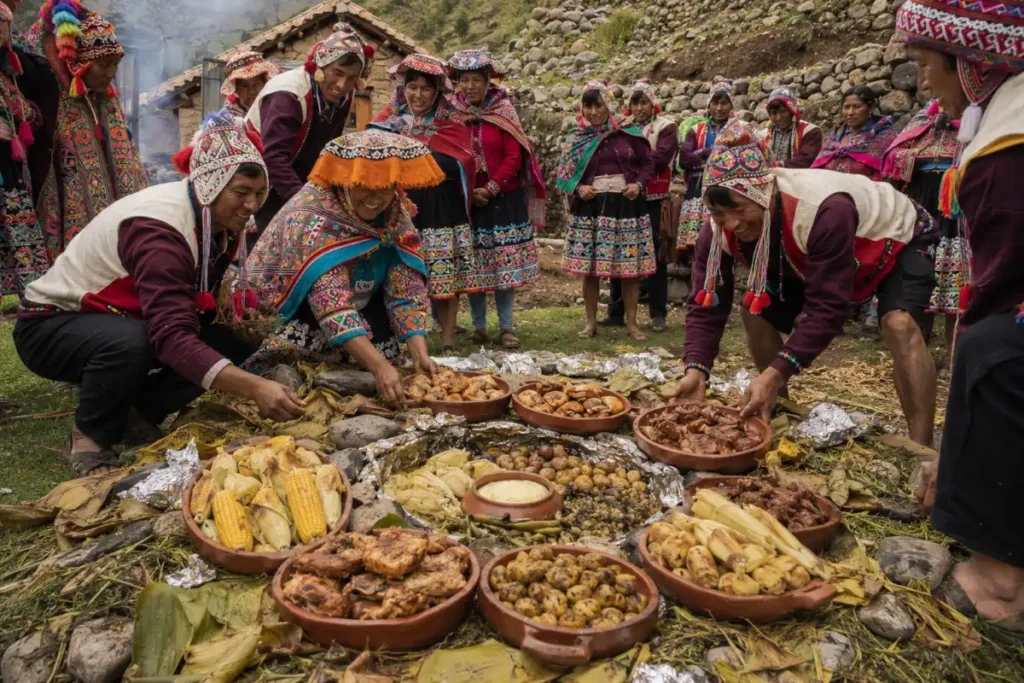
When travelers venture into the heart of the Peruvian Andes, they often seek the towering peaks of the Cordillera or the enigmatic ruins of Machu Picchu. However, there is a deeper, more visceral way to touch the spirit of this land: through its flavors and its most sacred culinary ritual. The Pachamanca experience in the Sacred Valley is not merely a lunch; it is a profound communion with the “Pachamama” (Mother Earth) that has survived for over a millennium.
At Climb Sunday, we believe that travel should be an invitation to slow down and listen to the stories told by the landscape. In the quiet town of Calca, far from the hurried crowds of Cusco’s main squares, the Pachamanca serves as a bridge between the past and the present. It is a slow-cooked feast, a spiritual offering, and a celebration of community all buried beneath the very soil you walk upon. In this guide, we will explore the history, the ritual, and the magic of this ancestral banquet.
You might also be interested in: Maras Moray: The Ultimate Guide to the Sacred Valley’s Engineering Marvels
What is Pachamanca? Etymology and Spiritual Significance
To understand the Pachamanca, one must first understand its name. Derived from the Quechua words Pacha (earth/world/time) and Manka (pot), it literally translates to “earth pot” or “pot of the earth.” But in the Andean worldview, names carry weight. This is not a metal pot sitting on a stove; the earth itself becomes the vessel for transformation.
For the indigenous people of the Andes, the Pachamanca is a ritual of reciprocity. By cooking food inside the earth using heated volcanic stones, the community is symbolically returning the gifts of the land to the Pachamama before consuming them. It is a cycle of gratitude. When you join a Pachamanca experience in the Sacred Valley, you aren’t just observing a cooking method; you are participating in a ceremony that honors the fertility of the soil and the life-giving energy of the sun.
The Ancient Roots: A History That Defies Time
The history of the Pachamanca is much older than the Inca Empire itself. Archaeological evidence suggests that prehistoric Andean cultures, such as the Wari and the Chavín, were already using earth ovens to cook their harvests as far back as 500 A.D. When the Incas rose to power, they refined the ritual, turning it into a cornerstone of their religious and social festivals (Raymi).
During the Spanish conquest, many Andean traditions were forced underground, quite literally. While other customs were suppressed, the Pachamanca remained a staple of rural life because it was a celebration of the harvest that required no specialized tools, only the stones and the earth. Today, it stands as a monument to Andean resilience. It is a living piece of history that has remained virtually unchanged for fifteen centuries, offering modern travelers a rare, authentic glimpse into a world where man and nature exist in perfect harmony.
The Architecture of the Oven: The Ritual of the Stone
The preparation of a Pachamanca is a craft that requires patience and precision. It begins with the selection of the stones. Not just any stone will do; we use volcanic or river stones that can withstand intense heat without cracking or exploding.
- The Building of the ‘Horno’: The stones are stacked into a beehive-shaped dome over a bed of dry wood. This “horno” is then lit, and the fire must roar until the stones turn glowing white or bright red.
- The Collapse: Once the stones have reached their maximum heat, often after two hours of burning the dome is carefully collapsed. This layer of glowing stones becomes the floor of the earth oven.
- The Layering: This is where the magic happens. The food is placed in a specific order based on cooking time. Harder items like tubers go at the bottom, followed by marinated meats, and finally delicate items like beans or tamales on top.
This process is a communal effort. In our experiences in Calca, the building of the oven is as important as the eating, often accompanied by local music and a sense of shared anticipation.
The Flavors of the Highlands: Ingredients and Secret Herbs
The secret to an authentic Pachamanca experience in the Sacred Valley lies in the biological diversity of the soil and the purity of the ingredients. In the Andes, food is a direct reflection of the altitude; each ingredient is chosen for its ability to withstand the intense pressure of the earth oven while absorbing the smoky essence of the heated stones. We source everything from the local markets of Calca, ensuring that the flavors are as fresh as the mountain air and that every bite tells a story of local heritage.
The Tubers:
Peru is the undisputed birthplace of the potato, boasting over 3,000 varieties that differ in color, texture, and nutritional value. For a traditional Pachamanca, we don’t use standard supermarket potatoes. Instead, we select:
- Papas Nativas (Native Potatoes): Varieties like Peruanita or Huayro are prized for their floury texture and their ability to soak up the juices from the marinated meats. Their skins often carry shades of deep purple, red, and gold, providing a visual feast as much as a culinary one.
- Camote (Sweet Potato): These provide a necessary sugary contrast to the salty, herbaceous profile of the meats. In the earth oven, the sugars in the camote caramelize against the hot stones, creating a candy-like exterior and a creamy interior.
- Oca: This is a traditional Andean tuber that looks like a small, wrinkled carrot but tastes like a cross between a potato and a chestnut. When cooked in a Pachamanca, the oca loses its natural acidity and becomes incredibly sweet and tender.
- Mashua: Often included for its medicinal properties, this tuber has a sharp, peppery flavor that mellows out beautifully during the long, slow-steaming process.
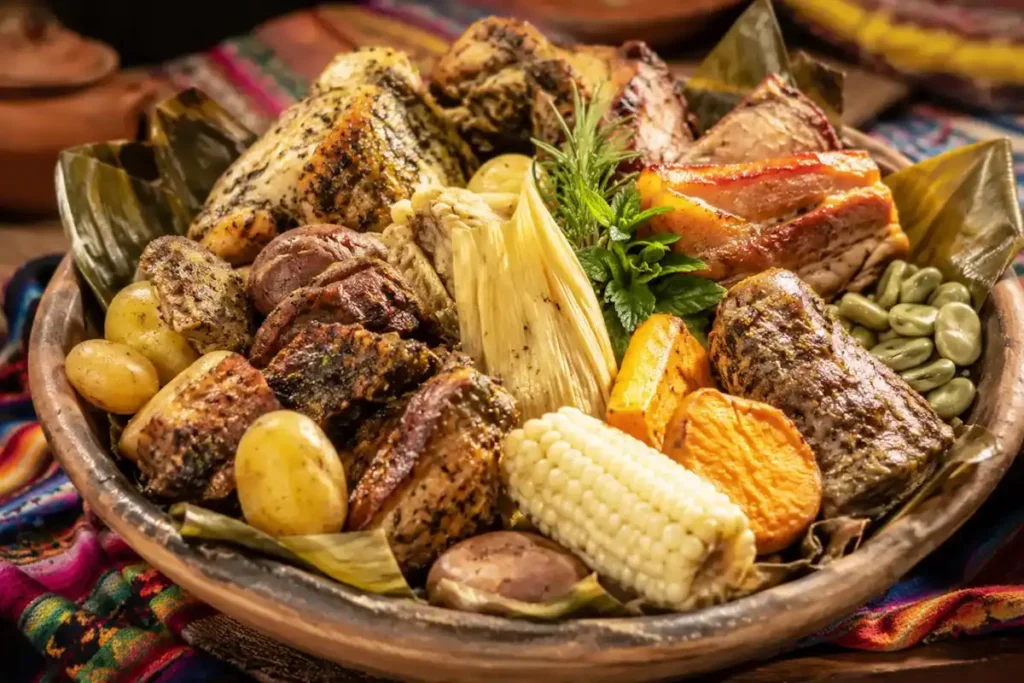
The Meats
A classic Pachamanca feast is a carnivore’s dream, featuring a trio of meats that represent the fusion of indigenous and colonial influences. To ensure the meat is “fall-off-the-bone” tender, it must undergo a 24-hour marination process:
- Lamb (Cordero): Perhaps the most iconic meat of the highland feast. The high-fat content of Andean lamb allows it to stay moist under the intense heat of the stones, while the smoke from the eucalyptus wood infuses it with a rugged, outdoorsy flavor.
- Pork (Chancho): We choose cuts with a good balance of fat and lean meat. As it cooks, the pork fat renders down, acting as a natural basting liquid for the potatoes and beans below it.
- Chicken (Pollo): A lighter addition that absorbs the herbal marinade more deeply than the red meats, offering a burst of flavor in every bite.
- Cuy (Guinea Pig): For the most adventurous travelers, the traditional addition of cuy represents the ultimate link to Incan nobility. It is seasoned with local salt and cooked at the very top of the meat layer.
The Sacred Herbs
If the stones are the heart of the Pachamanca, the herbs are its soul. You cannot replicate this dish anywhere else in the world because these aromatic plants only reach their full potency in the high-altitude soil of the Andes:
- Chincho: This is the most critical flavor component. Closely related to the marigold, Chincho has small, serrated leaves and a pungent, citrusy, and minty aroma. It is the primary preservative and flavoring for the meat, giving it a bright, “forest-like” finish.
- Huacatay (Andean Black Mint): Known by its scientific name Tagetes minuta, Huacatay is a cornerstone of Peruvian gastronomy. Its flavor is a complex blend of mint, basil, lemon, and tarragon. In the Pachamanca, entire branches of Huacatay are laid over the food, creating a fragrant steam blanket that permeates every layer of the oven.
Legumes and Corn
The final layer of the oven is reserved for the delicate items that require steaming rather than direct contact with the most intense heat:
- Habas (Broad Beans): These are placed inside the oven still in their pods. The steam turns them into buttery, emerald-green morsels that are often the favorite “snack” while waiting for the larger cuts of meat to be served.
- Choclo (Andean Large-Kernel Corn): Unlike the sweet corn found in the US or UK, Andean choclo has massive, chewy kernels and a savory, nutty flavor. It is essential for balancing the richness of the pork and lamb.
- Humitas: These are small cakes made from freshly ground corn, mixed with lard and either cinnamon and raisins (sweet) or local cheese (savory). They are wrapped in corn husks (pancas) and steamed to perfection, acting as the “bread” of the Andean banquet.
By the time the oven is opened, these diverse ingredients have merged into a singular, harmonious profile a flavor that is impossible to achieve in a modern kitchen and only possible through the ancient alchemy of the Pachamanca.
The Sacred Wait: Cooking in the Womb of the Earth
Once all the ingredients are inside, they are covered with a thick layer of banana leaves, agave stalks (penca), and finally, a heavy shroud of damp earth. This creates a natural pressure cooker. The heat from the stones and the moisture from the leaves steam the food perfectly, infusing every piece of meat and potato with the smoky aroma of the volcanic rocks and the essence of the Andean herbs.
The “wait” is a sacred part of the day. For about 45 to 90 minutes, the earth works its magic in silence. During this time, we often lead our guests through the surrounding fields of Calca, explaining the local agriculture or simply enjoying the panoramic views of the Sacred Valley. It is a time for reflection, a reminder that the best things in life cannot be rushed.
Beyond Food: A Lesson in Local Economy and Sustainability
At Climb Sunday, our commitment to the Sacred Valley goes beyond providing a great tour. The Pachamanca is a perfect example of a sustainable, circular economy.
- Zero Waste: No electricity or gas is used. The “fuel” is dry wood or eucalyptus branches, and the “disposable” items (the leaves) are returned to the earth as compost.
- Supporting Farmers: We don’t buy our ingredients from large supermarkets. Instead, we work directly with the families in Calca. When you sit down to eat, you are directly supporting the farmers who grew those potatoes and the shepherds who raised the livestock.
- Preserving Heritage: By choosing an authentic experience over a commercial buffet, you are helping to keep these ancient techniques alive for future generations of locals.
Why Choose Calca for Your Pachamanca Experience?
While many agencies offer “tourist” Pachamancas in Urubamba or Ollantaytambo, Climb Sunday chooses Calca for a reason. Calca is the agricultural heart of the Sacred Valley. It is less commercialized, meaning the experience remains intimate and true to its roots. Here, you aren’t just another number; you are a guest in a family’s home. The backdrop of the Pitusiray and Sawasiray peaks adds a majestic, spiritual dimension to the meal that you simply cannot find elsewhere.
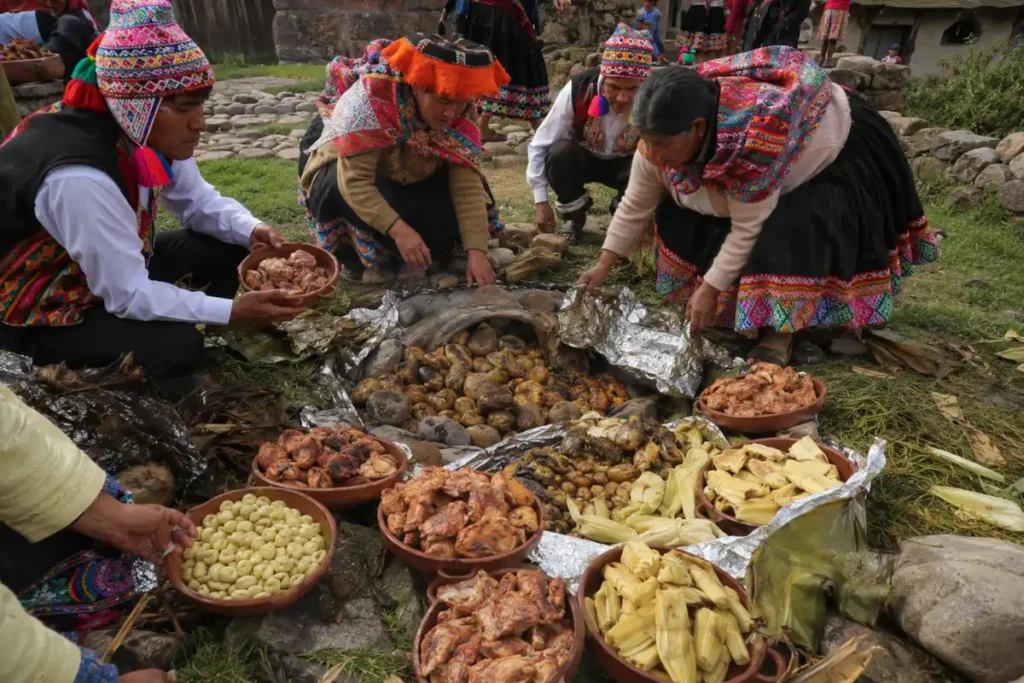
What to Expect: Preparing for Your Culinary Adventure
If you are planning to join us for a Pachamanca experience in the Sacred Valley, here are a few tips to make the most of it:
- Dress in Layers: The weather in the Andes can change in minutes. It may be hot while the oven is being built and chilly once the sun dips behind the mountains.
- Bring an Appetite: This is a feast designed for celebration. The portions are generous, and the flavors are rich.
- Respect the Ritual: We often begin the meal with a small libation to the earth (the chicha offering). It is a beautiful moment to join in the local customs.
- Sustainability Mindset: We encourage our guests to bring reusable water bottles to help us keep the Sacred Valley pristine.
An Unforgettable Connection to Peru
The true beauty of the Pachamanca experience in the Sacred Valley isn’t just the delicious, tender meat or the perfectly steamed potatoes. It is the feeling of sitting on the grass, surrounded by the people who prepared your food, and realizing that you are part of a tradition that has outlasted empires.
When you leave the Andes, the taste of the Chincho herb and the warmth of the earth-baked stones will stay with you far longer than any souvenir. It is a lesson in gratitude, a celebration of life, and a reminder that we are all, ultimately, children of the earth.
