

Tick, tick. The Inti Raymi festival is coming to continue creating unforgettable experiences that connect travelers to one of the most important ceremonies of the Inca culture, which is evidence of the strong connection it had with their gods and their worldview in general. For Peruvians, Inti Raymi is a very important celebration, because it reaffirms the connection with our ancestors, and we revalue all their legacy. And what better way to share it with visitors? So, embark on an unprecedented adventure and visit Cusco during Inti Raymi 2025.
You might also be interested in: The Mystery of the Nazca Lines
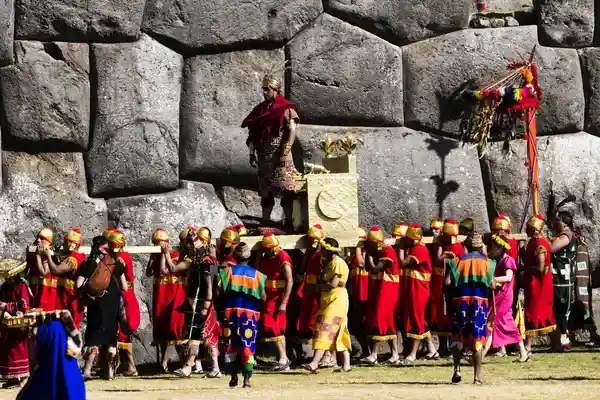
What is Inti Raymi?
For the Incas, Inti wasn’t just a deity—he was life itself. Inti, the Sun God, was considered the most powerful and benevolent force in the Andean sky, the giver of warmth, light, and fertility. Every ray of sunlight was believed to be a blessing, and every harvest, a direct gift from Inti. The festival of Inti Raymi—meaning “Festival of the Sun” in Quechua—was created to honor this sacred bond between the Inca people and their cosmic protector.
More than a religious ritual, Inti Raymi symbolized the Inca worldview: a deep respect for nature, cycles, and celestial harmony. The ceremony took place during the winter solstice, the shortest day of the year, when the sun seemed most distant. It was the Incas’ way of calling Inti back—pleading for his return to the heavens to bless the land with warmth and abundance once more.
Even today, this spiritual connection remains alive. Locals who participate in Inti Raymi don’t just reenact history—they reaffirm a living relationship with the sun, the earth, and their ancestral identity.
A brief history of the ancient celebration
Inti Raymi was first celebrated in the 15th century under the rule of Pachacútec, the ninth Sapa Inca and one of the greatest builders of the Inca Empire. It was held annually in Cusco, the capital of Tawantinsuyo, to mark the winter solstice and the start of a new agricultural cycle. According to chroniclers like Garcilaso de la Vega, more than 25,000 people gathered for this nine-day event, filled with sacred rituals, dances, and sacrifices to ensure the sun’s return and the prosperity of the empire.
But when the Spanish colonizers arrived in the 16th century, they outlawed the festival, viewing it as pagan and idolatrous. For centuries, the celebration disappeared from public life, preserved only in oral traditions and the hearts of Andean communities.
It wasn’t until 1944 that Inti Raymi was revived in Cusco, thanks to historian Faustino Espinoza Navarro, who scripted a theatrical reenactment based on historical texts. Since then, the festival has become a powerful act of cultural resilience, blending historical memory, spiritual symbolism, and Andean pride into a vibrant modern-day spectacle.
You might also be interested in: Inca calendar: How ancient timekeeping shaped Andean life
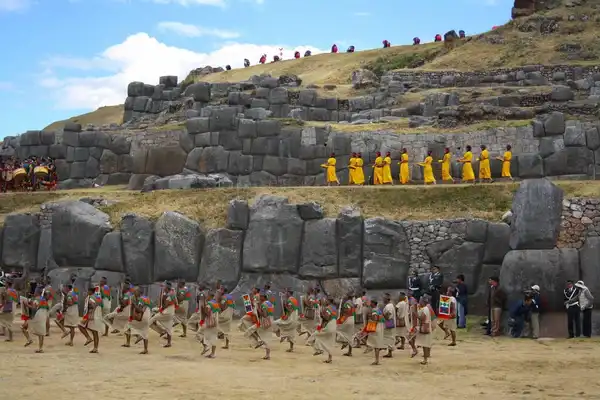
Inti Raymi today and at the height of the Inca Empire
Inti Raymi was born during the reign of Pachacútec, the visionary Inca ruler who transformed Cusco into the epicenter of one of the greatest civilizations in the Americas. The festival honored the Sun God Inti and celebrated the winter solstice—the symbolic “rebirth” of the sun after its longest journey away from Earth.
Held in the vast Haukaypata (now Plaza de Armas), it was one of the grandest ceremonies of the year. Priests, nobles, warriors, and representatives from the four suyus (regions) of the empire gathered to offer coca leaves, chicha, and even animal sacrifices in a plea for good harvests and balance in the cosmos. The Inca emperor himself played a central role, acting as the direct descendant of Inti.
Its revival in modern Cusco since 1944
After centuries of colonial suppression, Inti Raymi returned in 1944 thanks to the efforts of Cusco-born historian Faustino Espinoza Navarro. Drawing inspiration from Inca chronicles, he reimagined the ritual as a theatrical performance to reconnect Peruvians with their ancestral roots.
Since then, every June 24th, Cusco becomes the stage for a majestic reenactment. With thousands of locals in traditional costumes, powerful Quechua chants, and symbolic offerings to the sun, the city transforms into a living temple that bridges the past and present.
Differences between the ancient and modern versions
Before it became a spectacle admired by thousands of visitors from around the world, Inti Raymi was a deeply sacred ritual that unified the vast Inca Empire under the light of the Sun God. To truly understand its meaning today, we need to travel back to the 15th century, when the Inca emperor stood at the center of it all—and then return to modern Cusco, where this ancient festival has been reborn as a powerful expression of identity, memory, and pride.
| Aspect | Original Inti Raymi (15th century) | Modern Inti Raymi (since 1944) |
| Purpose | Spiritual connection and agricultural renewal | Cultural revival and tourism celebration |
| Duration | 9 days of rituals, dances, offerings, and feasts | 1 day, with key symbolic acts condensed into 3 locations |
| Location | Plaza Haukaypata (Cusco), Qoricancha, Sacsayhuamán | Qoricancha, Plaza de Armas (symbolic), Sacsayhuamán |
| Participants | Inca elite, priests, warriors, messengers from all 4 regions | Local actors, musicians, dancers, and thousands of tourists |
| Ritual elements | Animal sacrifices, sacred fire, offerings, fasting | Symbolic gestures, theatrical performance, no sacrifices |
| Language | Entirely in Quechua, the sacred language of the empire | Primarily in Quechua, with Spanish explanations available |
| Role of the Inca | The Inca was worshipped as the son of the Sun | Portrayed by an actor as a cultural figure |
You might also be interested in: Peruvian superfoods: ancient treasures for modern health
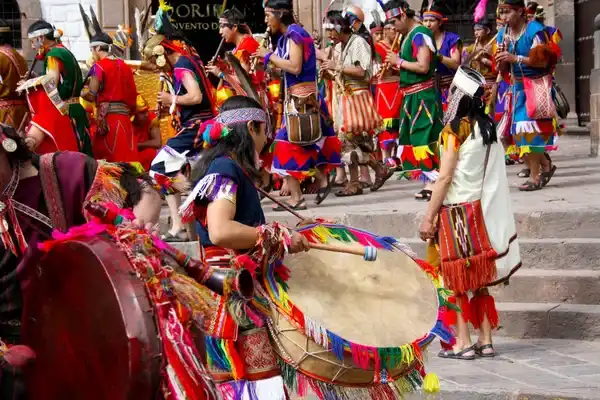
Where is Inti Raymi celebrated today?
Cusco, the heart of the Inca Empire
Today, Inti Raymi is celebrated in Cusco, the ancient capital of the Inca Empire and the spiritual heart of the Andes. Walking through its cobblestone streets in late June, you can feel the pulse of a city preparing to honor its most sacred tradition. Colorful flags wave from balconies, musicians rehearse in plazas, and locals dress in traditional attire, proudly embodying their heritage.
For travelers, Cusco is more than just a starting point for Machu Picchu tours—it’s a living museum where history and ceremony converge. During Inti Raymi, the entire city becomes a vibrant stage, blending sacred ritual and cultural pride in one breathtaking celebration.
The three key locations of the modern ceremony
The modern Inti Raymi unfolds across three symbolic locations in Cusco, each representing a piece of the ancient Andean worldview:
- Qoricancha (Coricancha) – Once the most sacred temple of the Inca Empire, dedicated to the Sun God Inti. The celebration begins here with a ceremonial greeting to the sun, accompanied by traditional dances and music. The Inca emperor appears and delivers a prayer to the sun in Quechua. This spot is a highlight of many Coricancha tours, and during Inti Raymi, it glows with spiritual energy.
- Plaza de Armas (Haukaypata) – In Inca times, this was the empire’s political and ceremonial center. Here, the Inca is officially welcomed by nobility and offers rituals to Pachamama (Mother Earth). Though the performance is symbolic, the emotion is very real, especially as the crowds gather to witness the spectacle.
- Sacsayhuamán – The final and most impressive act of the festival takes place in this massive stone fortress above the city. With panoramic views and a dramatic atmosphere, the Inca leads offerings, dances, and symbolic rituals of fire, corn, and chicha to invoke blessings for the coming year.
Experiencing all three sites in a single day is like stepping into a time machine—each location revealing a different layer of a civilization that continues to live through its people and traditions.
When is Inti Raymi celebrated in 2025?
Date and schedule for Inti Raymi 2025
Inti Raymi is celebrated every year on June 24th, marking the winter solstice in the Southern Hemisphere—the shortest day of the year and a turning point in the Inca agricultural calendar. In 2025, the festival will take place on Tuesday, June 24th, and the city of Cusco will once again transform into a living canvas of ancestral rituals, music, and color.
Here’s a quick look at the main events and times to keep in mind for Inti Raymi 2025:
| Time | Location | Activity |
| 9:00 AM | Qoricancha | Opening ritual and invocation to the Sun |
| 11:00 AM | Plaza de Armas | Inca’s greeting and tribute to Pachamama |
| 1:30 PM | Sacsayhuamán | Main ceremony with offerings and performances |
It’s important to note that streets will be closed and access to some areas restricted, especially in the historic center. Booking your spot in advance is essential—many travelers plan their entire trip around this festival.
Best time to arrive and what to expect
If you want to fully enjoy the magic of Inti Raymi, plan to arrive in Cusco at least 2–3 days before the event. This gives your body time to adjust to the altitude and allows you to explore the city while it gears up for the celebration. The days leading up to June 24th are filled with cultural events, folkloric parades, and open-air concerts that offer a deeper look into Andean traditions.
Many visitors choose to start with a Cusco city tour to better understand the historical context of the festival—from the sacred Qoricancha Temple to the colonial streets built atop Inca foundations. Expect large crowds, vibrant energy, and moments of genuine awe as you witness an ancient empire come back to life under the Andean sun.
You might also be interested in: Altitude sickness in Peru: Everything you need to know before your trip
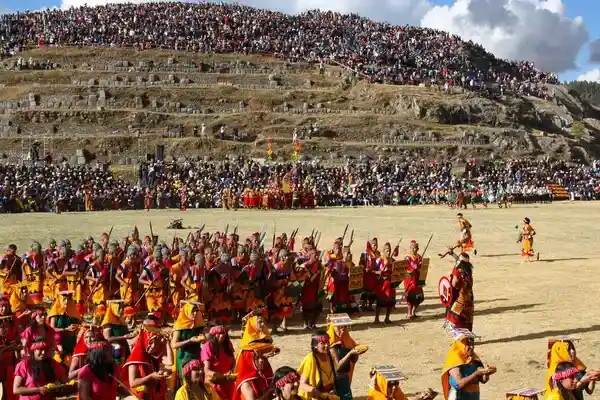
Who celebrates Inti Raymi and how?
Local participation and Inca descendants
Inti Raymi is not just a show—it’s a living ritual carried in the hearts of Cusqueños and Andean communities. For many locals, especially those with Inca ancestry, participating in the festival is an act of cultural resistance and pride. Hundreds of actors, musicians, dancers, and artisans rehearse for months, preparing every detail with precision and devotion. They don’t just “perform”—they embody their ancestors.
The main roles, such as the Sapa Inca and the Coya (his queen), are typically portrayed by respected local figures chosen for their leadership and connection to Quechua culture. Entire families take part in the processions, the rituals, and the creation of traditional garments, reviving ancient skills passed down for generations.
For these communities, Inti Raymi is not a reenactment—it’s a continuation of an ancestral bond with the sun, the land, and the spirit of the Andes.
Tourist experience: how to join the festival
Every year, thousands of travelers from around the globe gather in Cusco to witness this extraordinary festival—and you can be part of it too. The key is planning ahead, as Inti Raymi is one of Peru’s most attended events and tickets to certain areas (especially Sacsayhuamán) sell out weeks in advance.
There are two main ways to experience it:
- Free viewing areas in Plaza de Armas and near Qoricancha, where you can watch the ceremonies alongside locals.
- Reserved seating at the Sacsayhuamán fortress, where the main performance takes place in grand style.
To get the most out of your experience, consider joining a guided cultural tour that includes historical context, local insights, and transportation. Some tours also combine the festival with visits to nearby attractions like the Sacred Valley or even Machu Picchu, making it a once-in-a-lifetime cultural journey.
Whether you’re standing among the crowds in Cusco’s historic center or sitting atop the terraces of Sacsayhuamán, what you’ll feel is something unforgettable: the heartbeat of an ancient empire, still echoing in the Andes.
You might also be interested in: 7 most impressive traditional dances of Peru
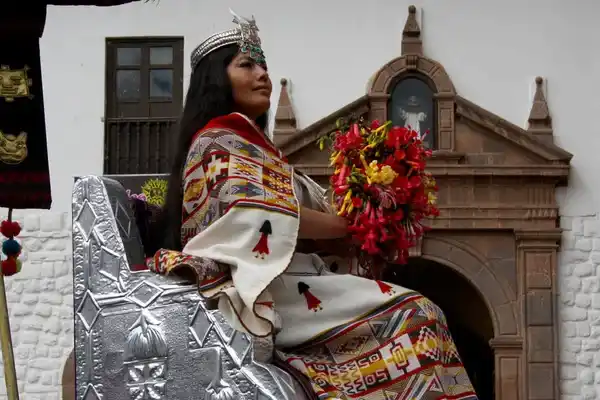
The role of women in the Inti Raymi festival
Ñustas and the feminine energy in Andean culture
In the Andean worldview, masculine and feminine forces coexist in harmony, each playing a vital role in maintaining cosmic balance. This duality—known as yanantin—is reflected in every aspect of Inti Raymi, especially through the presence of the Ñustas.
Ñustas were Inca princesses, women of noble blood who carried spiritual authority and embodied the sacred feminine. In today’s celebration, local women step into these roles with grace and pride, wearing traditional garments adorned with intricate embroidery and gold accents that reflect the sun’s radiance. As they accompany the Sapa Inca through the city, their presence is a reminder that women were never just spectators in Andean tradition—they were protectors of life, fertility, and cosmic order.
This reverence for feminine energy still pulses through the Andes today. You can even feel it on an Inti Punku hike, where the sun’s first rays break through the gate and illuminate the path—an act often seen as a symbolic “birth” of light, embraced by both masculine and feminine elements of the earth.
Women’s symbolism in offerings and rituals
Offerings made during Inti Raymi are deeply symbolic, and many reflect the nurturing, life-giving energy traditionally associated with women. Chicha de jora (a fermented corn drink), coca leaves, and flowers are among the most common elements, all tied to Pachamama—Mother Earth—who is always honored alongside Inti.
In the ceremony at Sacsayhuamán, you’ll often see groups of women dancers representing the four regions of the Inca Empire. Through synchronized movements, they invoke blessings of fertility, protection, and harmony. Their role is not decorative—it is spiritual. They act as channels between the people and the divine, helping to restore equilibrium in both the natural and human world.
In modern Cusco, the revival of Inti Raymi has also reignited conversations about the empowerment of Indigenous women and the importance of safeguarding ancestral knowledge passed down through matriarchal lines.
The importance of Qhapaq Ñan in Inti Raymi
Sacred roads and the spiritual connection
The Qhapaq Ñan, or “Great Inca Road,” was more than a transportation network—it was the lifeline of an empire. Stretching over 30,000 kilometers across mountains, valleys, deserts, and jungles, these ancient paths connected every corner of Tawantinsuyo, the four-part Inca realm. But beyond their physical function, these roads held deep spiritual significance.
The Incas believed that these roads were extensions of the earth’s energy lines, guiding not only people and goods, but also prayers, blessings, and the will of the gods. Many of the rituals associated with Inti Raymi involved messengers (chaskis) running along these roads to carry sacred messages, offerings, and invitations to the festival. Each step taken on the Qhapaq Ñan was a ceremonial act, a reaffirmation of the connection between the Inca, the sun, and the land.
Today, walking a stretch of these ancient roads—especially around Cusco or to sites like Machu Picchu—is more than a hike; it’s a spiritual journey that brings you closer to the heart of Andean identity.
Pilgrimage, movement, and cultural unity
During the original Inti Raymi, pilgrims from all four suyus of the empire would travel for days or weeks along the Qhapaq Ñan to reach Cusco. These journeys weren’t just practical—they were symbolic. Each step represented devotion, unity, and the reaffirmation of shared values across vast and diverse lands.
This movement brought together different languages, customs, and communities under a single purpose: to honor the Sun God Inti and ask for blessings for the year ahead. The act of walking the road was a form of meditation, a ritual in itself that prepared the body and spirit for the sacred days to come.
In modern times, while the empire no longer exists, this sense of unity continues. The revival of Inti Raymi and the recognition of the Qhapaq Ñan as a UNESCO World Heritage Site have sparked a cultural awakening among Andean communities, who now see these roads as living threads that still connect them to their past—and to each other.
What does Inti Raymi mean for modern Peruvians?
Cultural revival and pride in heritage
For many Peruvians—especially those from the Andean highlands—Inti Raymi is more than a celebration; it’s a homecoming. After centuries of silence imposed by colonial rule, the revival of this ancient festival represents a powerful act of cultural resistance and rebirth.
When locals reenact the rituals of their ancestors, they are not just remembering history—they are reclaiming it. Every embroidered tunic, every beat of the drum, every step in the sacred dance is an affirmation of identity. For Indigenous communities, it is a way to honor their heritage with pride, in public and on their own terms.
Schools, universities, and cultural organizations across the country use the occasion to teach younger generations about their roots, helping to keep Quechua language, traditional music, and ancestral knowledge alive. Inti Raymi reminds Peruvians that their past is not a museum artifact—it’s a living, breathing legacy.
Inti Raymi as a symbol of national identity
Though born in the high Andes, Inti Raymi has grown into a symbol of Peru’s multicultural identity. Each year, as the Inca raises his hands to greet the rising sun, thousands of spectators—Peruvian and foreign alike—stand in reverent silence. In that moment, the ancient and the modern merge, and Peru speaks proudly through its heritage.
For the nation, Inti Raymi is not just an Inca tradition—it’s a celebration of unity, diversity, and resilience. It bridges the gap between rural and urban, Indigenous and mestizo, ancient and contemporary. As Peru continues to grow and redefine itself on the global stage, Inti Raymi remains a cultural compass, reminding its people where they come from and what values continue to guide them.
It is, ultimately, a celebration not just of the sun, but of identity, dignity, and the enduring power of memory.
You might also be interested in: The Inca’s Capital: Exploring the traditions and customs of Cusco

How to experience Inti Raymi 2025 as a traveler
Tips for attending the celebration in Cusco
Attending Inti Raymi in Cusco is a once-in-a-lifetime experience—but it helps to be well-prepared. The festival draws thousands of visitors, so a little planning goes a long way in ensuring a stress-free and immersive adventure.
Here are a few tips to make the most of your Inti Raymi journey:
- Arrive at least 2–3 days early to acclimate to the altitude. Cusco sits at over 3,300 meters (11,000 ft), and giving your body time to adjust will help you enjoy the celebration without discomfort.
- Wear layered clothing. June is dry season in the Andes, with chilly mornings and strong midday sun. A hat, sunscreen, and a warm jacket will keep you comfortable throughout the day.
- Bring water and snacks, especially if you’re heading to Sacsayhuamán where amenities are limited during the event.
- Respect local customs and space. Inti Raymi is sacred to many locals, so witnessing it with humility and appreciation is key.
- Consider a guided experience to understand the deeper meanings behind the rituals and sites. Local guides often share insights you won’t find in a brochure.
How to get tickets, book tours, and avoid crowds
The most coveted spot to watch Inti Raymi is at Sacsayhuamán, where the main performance unfolds with full ceremonial splendor. To access this site, you’ll need to purchase a ticket—and the earlier, the better.
Here’s how to make sure you don’t miss out:
- Book through a trusted Peru travel agency. They can secure your ticket, provide transportation, and even arrange bilingual guides to walk you through the ceremony’s history and symbolism.
- Choose your seating section (Orange, Green, or Blue) based on your budget and viewing preferences. Some packages even include lunch or cultural add-ons.
- Avoid the rush by walking to Sacsayhuamán early or arranging transport in advance—many roads are closed to vehicles during the event.
- If you prefer to skip the crowds, consider watching the early morning ritual at Qoricancha or the midday gathering in Plaza de Armas—both are free and deeply atmospheric, especially when shared with locals.
No matter where you choose to watch, remember: Inti Raymi is not just a performance—it’s an invitation to connect with Peru’s living heritage. And with the right preparation, you won’t just observe it—you’ll feel part of it.
Why you should include Inti Raymi in your Peru travel plans
A once-in-a-lifetime cultural immersion
There are trips that check boxes—and then there are journeys that change you. Inti Raymi is one of those rare experiences that goes beyond sightseeing. It’s a chance to step into the heart of a living culture, to witness a people reconnecting with their roots, and to feel history breathe through rhythm, fire, and sun.
As a traveler, you’re not just watching a ceremony—you’re entering a sacred space. You’ll hear Quechua prayers echo against ancient stone, feel goosebumps as the Inca raises his hands to the sky, and see the pride in the faces of locals who carry centuries of tradition in every step.
If you’re seeking more than postcards—if you want a story you’ll tell for the rest of your life—Inti Raymi is waiting for you.
Combine Inti Raymi with Machu Picchu or the Sacred Valley
June is one of the best times to visit the Andes: dry skies, cool weather, and nature at its most majestic. That makes it the perfect opportunity to combine Inti Raymi with other unforgettable destinations like Machu Picchu or the Sacred Valley.
- After the energy of the festival, head to Machu Picchu, where the silence of the citadel contrasts beautifully with the music of Inti Raymi.
- Explore Pisac, Ollantaytambo, and Chinchero, where the same traditions you witnessed in Cusco are woven into everyday life.
- Or go deeper on a community-based experience, learning from weavers, farmers, and families who keep the spirit of the Andes alive all year long.
By weaving Inti Raymi into your journey, you don’t just visit Peru—you connect with its soul. And you return home carrying more than memories—you carry meaning.
Conclusion
As you could read throughout the blog, Inti Raymi is a ceremony for Peruvians, especially for those who maintain a special connection with ancestral practices and still promote them. That is why they have taken it upon themselves to continue promoting this festival that honors the Sun so that more people can be part of it and share this unique bond. Don’t miss this incredible celebration and save your tickets because Inti Raymi 2025 is just around the corner.
